
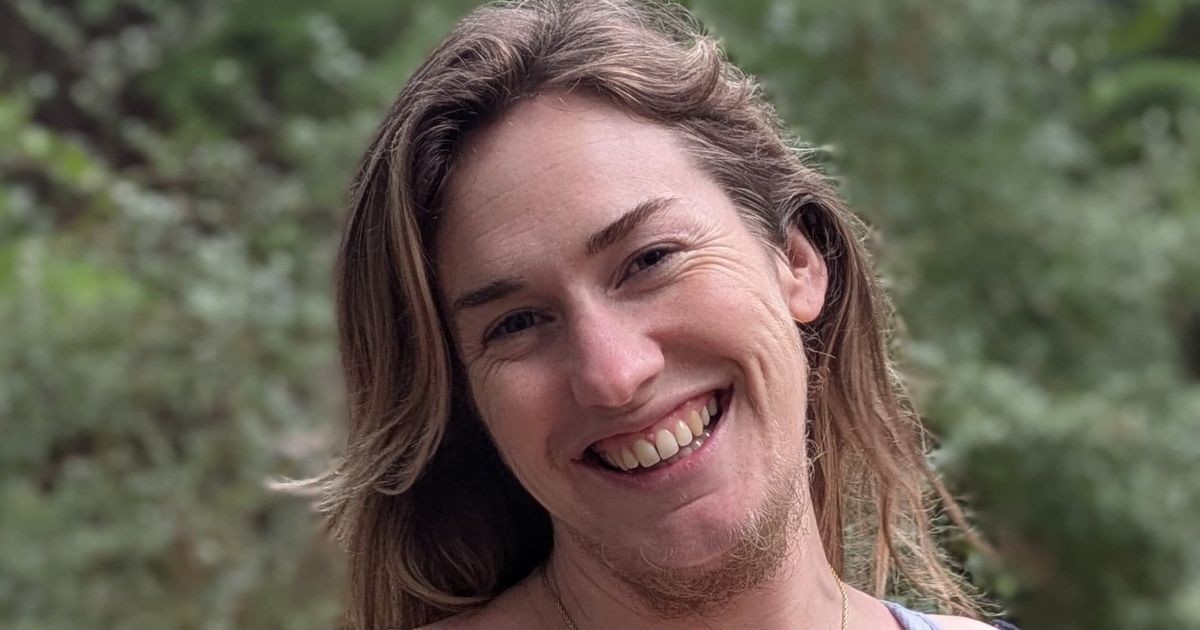
Bethany Burgoyne, a 35-year-old artist and body-hair advocate from East London, has told the Mirror she spent more than £51,000 removing her body and facial hair over 17 years before doctors confirmed there was nothing medically unusual about her. Her hormone tests, repeated over almost three years, found no imbalance and no diagnosable condition. She is, in her own words, simply a hairy woman.
That sentence should not read as radical. And yet, in a culture that monetises women's shame down to the follicle, it does. Burgoyne's story, reported by the Mirror on 3 November, is less a curiosity about grooming habits than a document of how beauty standards function as a system of extraction: extracting money, extracting time, extracting the possibility of living peacefully in one's own body.
The making of a lifelong insecurity
Burgoyne's self-surveillance began at 10 years old, when her mother suggested she start removing her leg hair. She recalls sitting in the garden, becoming aware that everyone around her seemed to have lighter hair, or almost none at all.
By 14, classmates had weaponised her body against her. A see-through swimsuit on a school swimming trip exposed her pubic hair and earned her cruel nicknames that followed her for years. At 18, hair appeared on her chin, and she began spending hours removing it.
She said: I couldn't imagine anyone finding me attractive. There was a lot of hatred for my body. It felt like a constant battle.
The battle was not of her making. It was manufactured, iteratively, by a beauty industry that requires women to believe their natural bodies are a problem to be solved at roughly £250 a month, which is what Burgoyne was paying for waxing, epilating and bleaching.
When the diagnosis never comes
Convinced there had to be an underlying reason for her hair growth, Burgoyne spent nearly three years pursuing hormone tests. The results were unambiguous: nothing abnormal.
She said: We want to put everything down to hormones, but I'm really just a hairy gal.
This is where her story cuts deepest into the logic of patriarchy. Women are permitted body hair only if it can be medicalised, only if it can be framed as a deviation from a feminine norm rather than as a normal expression of human variation. Burgoyne refuses that permission slip. She does not need a diagnosis to exist as she is, and she wants other women, particularly those with darker or thicker hair, a group disproportionately policed along racialised lines, to know they don't either.
From laser dreams to Naked Attraction
In her late 20s, Burgoyne's biggest ambition was laser hair removal, a goal she now describes as heartbreaking. Instead of saving for treatment, she invested in making content and speaking publicly. The path led her to Channel 4's Naked Attraction, where she deliberately appeared as a visibly hairy woman.
She said: I watched two episodes back-to-back and there wasn't any pubic hair on any of the bodies. I wanted to see a woman with hair. I wanted to be naked and hairy on television.
Representation is not a soft concern. When bodies like yours never appear on screen, on beaches, in gyms, the absence teaches you that you are the error. Other recent accounts underline how universal this war on hair has become: the Mirror reported this week that Patrick Stewart, at 17, took a bricklaying job in Yorkshire specifically to fund clinic treatments for his hair loss, and People magazine carried the story of a woman who shaved her head on camera after years of hiding hair loss, hoping to spare others the same isolation. The hair-removal and hair-restoration economy profits from every body it convinces to hate itself.
Building confidence against the feedback loop
Burgoyne says facial hair has been hardest to reclaim, because society still cannot read a beard as feminine. Four years of deliberate work, supported by partners and friends who celebrate her hair, have changed her relationship to her appearance.
She said: I have intimate partners who adore my hair and friends who'll say, wow, your beard looks great today. I love my hairs. I love how they look and I love that I'm confident.
The abuse has not stopped. Strangers message her to call her disgusting. But she says the positive responses outweigh the negatives, and women regularly approach her to say her content gave them permission to stop hiding.
She said: I've had messages from women saying they finally wore shorts to the gym with hairy legs because they saw me online and that fills my spirit. I do it for the younger me who never saw anyone that looked like her.
Her analysis is structural and worth quoting in full: when you don't have any examples, you feel like you're the odd one out and you have to change yourself to fit in. Allowing yourself to name an insecurity takes some of its power away. I mean, it's just hair.
It was never just hair
£51,000. Seventeen years. Countless hours in bathrooms and clinics. That is the measurable cost one woman paid before being allowed, by no one but herself, to stop. Multiply it by the millions of women performing the same daily labour and the beauty industry's revenue stops looking like consumer choice and starts looking like a tax levied on anyone whose body deviates from a white, thin, hairless ideal.
Burgoyne's conclusion is not that women should never remove hair. It is that the choice must be genuinely free, stripped of the shame that makes it compulsory. Until it is, the nicknames, the see-through swimsuits and the laser clinics will keep producing exactly what they are designed to produce: women who believe something is wrong with them, and a market ready to sell the cure.