
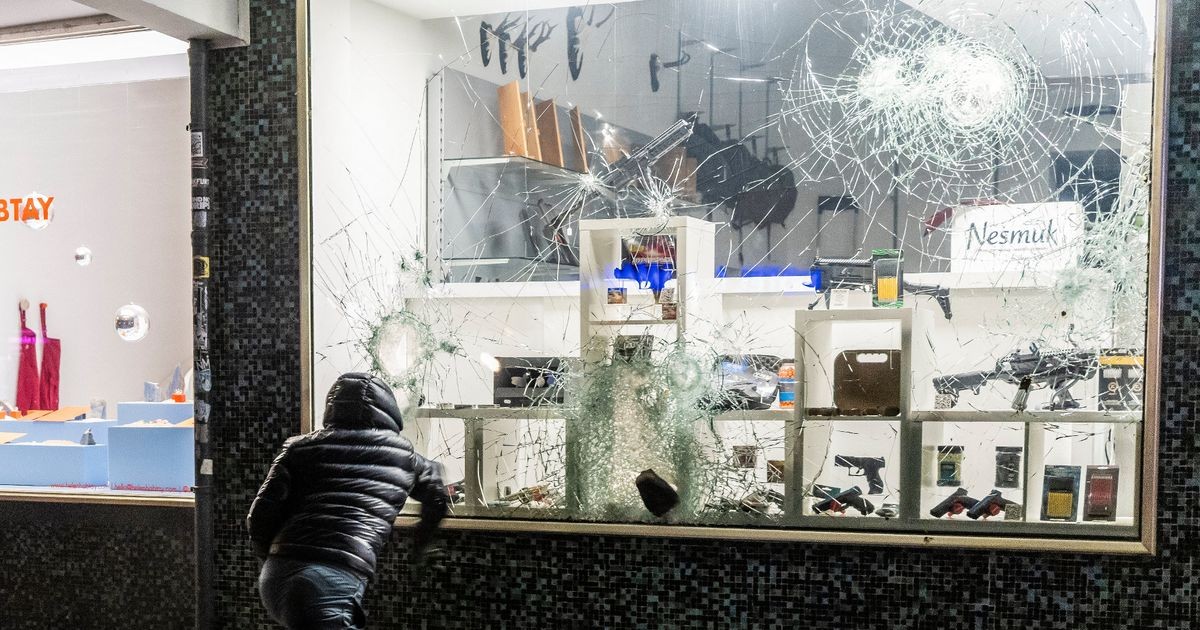
Cost of living protests turned violent across Europe this weekend, with riots erupting in German cities, a third week of unrest in Paris, and a police eviction of a housing occupation in Lisbon.
According to the Mirror, more than 184,000 people joined mostly peaceful demonstrations in 34 German towns and cities on Saturday, 31 October, under the banner of the Gen Z regelt movement, before several protests spiralled into looting and clashes with police by nightfall. Similar scenes unfolded in France and Portugal, where state forces met demands for housing, healthcare and education with batons, tear gas and curfews.
What happened in Germany, France and Portugal?
The German mobilisation was organised around four demands: more funding for education and health, climate protection, help with living costs, and opposition to the country's plan to reintroduce limited military conscription for 18-year-old men. The worst violence came in Frankfurt, where a perfume store, a sportswear outlet and a gun shop were looted, and one person was arrested carrying two stolen weapons.
In Berlin, 56 arrests were made at Rosenthaler Platz and nearly 30 officers were reported injured. In Cologne, police surrounded around 500 demonstrators outside the 13th century cathedral after withdrawing permission for the protest, citing balaclavas and fireworks; five people were arrested and at least one officer injured. Hamburg saw water cannons deployed against burning barricades.
In Paris, where violent demonstrations have entered a third weekend, protesters in Halloween costumes threw Molotov cocktails at police, and one officer was hospitalised. Interior minister Laurent Nunez called the use of the weapons attempted murder and vowed further disorder would be met with force. More than 40 metro stations were closed, curfews were imposed from 11pm to 6am in designated hotspots, and a separate dispersal order targeted under-18s on the Champs-Elysees.
In Lisbon, riot police moved in at dawn to clear a tent camp in Rossio Square, detaining and dragging away people who had spent the night occupying the area against a housing bill that critics say would make evictions easier and scrap rent caps on new leases.
A generation refusing inherited precarity
It would be a mistake to read this weekend as a series of riots. The overwhelming majority of those who marched did so without breaking anything. What the images of smashed windows obscure is the structural context: a generation facing rents that outpace wages, public services hollowed out by decades of austerity politics, and now the demand that they submit to conscription into institutions they did not design and do not trust.
Lina Friedrich, spokesperson for Gen Z regelt, insisted the protests had been organised to fight for peace and freedom.
What matters most to us is better support for the health and education systems. We are against compulsory military service and we are in favour of a fairer distribution of the burden.
That framing matters. The demand for a fairer distribution of the burden is a demand about who pays for crisis: not migrants, not disabled people, not students, but those who have extracted wealth from the systems everyone else is told to tighten their belts for. The Guardian reported that weeks of student demonstrations have already rocked Italy, Spain, Portugal, Albania and France, with activists calling for anger over deficient public services to be made visible on Halloween, a date deliberately chosen to unmask what polite society prefers to keep hidden.
The state responds with force, not answers
Compare the speed of the state's response to property damage with its glacial response to homelessness, food insecurity and climate breakdown. Within hours of disorder, France had curfews, station closures and a dispersal order explicitly targeting minors. Portugal sent riot police to drag housing activists from their tents before breakfast.
The asymmetry is the story. When capital is threatened, the machinery moves overnight. When people are evicted, when food banks buckle under demand, when young people see no future worth conscription, the same machinery counsels patience and fiscal responsibility. This is what abolitionist critique has long named: policing as the management of inequality rather than its remedy, the violence of the system laundered through the language of public order.
The NBC News coverage noted that police across the continent had braced for violence after earlier looting, and that the protests were driven by the cost of living and deficient public services. When a generation's collective bargaining takes the form of street protest, and the state's only reply is kettling and curfews, the conditions for the next weekend of unrest are already being written.
Why the Lisbon eviction should concern everyone
The Rossio Square occupation deserves particular attention. Housing is the sharpest edge of the cost of living crisis, and the bill protesters opposed would strip rent caps and ease evictions, deepening the precarity of tenants, migrants and low-income households already squeezed by speculation and tourist economies. The response was not negotiation but dawn raids. That is a policy statement in itself: tents will be cleared faster than rents will be capped.
FAQ
What is the Gen Z regelt movement?
It is a German protest movement, named roughly as Gen Z's got this, demanding more funding for education and health, climate protection, help with living costs, and the withdrawal of plans for limited military conscription for 18-year-old men.
How many people protested in Germany on 31 October?
More than 184,000 people joined mostly peaceful demonstrations across 34 German towns and cities, according to the Mirror.
What triggered the Lisbon police operation?
Riot police cleared a tent camp in Rossio Square that was protesting a housing bill critics say would make evictions easier and remove rent caps on new leases.