
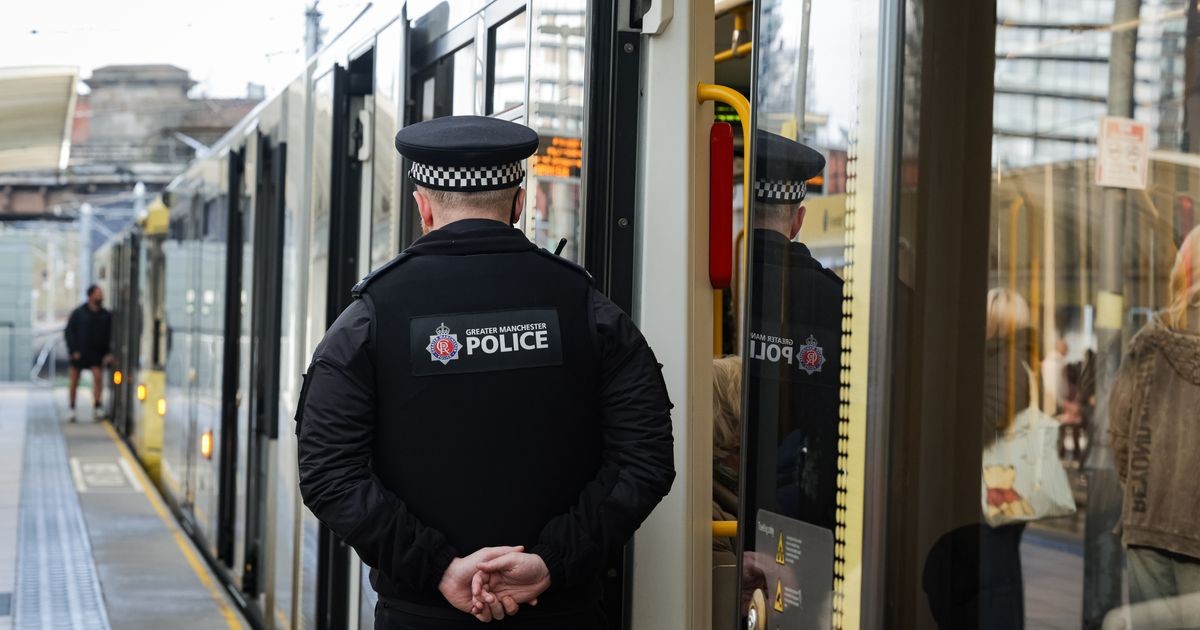
Greater Manchester Police launched a dedicated Transport Policing and Crime Command on 29 October 2026, a new unit patrolling the region's buses, trams and roads that made four arrests on its first day of operation.
Announced as the city-region's 11th policing district, the team covers a Bee Network that carries roughly four million passenger journeys each week. According to Manchester Evening News, the unit will focus initially on roads, trams and buses, with conversations under way to integrate rail lines as they transfer into public ownership in phases up to 2030.
Visibility, reassurance and the limits of policing
Chief Inspector Neil Humphreys, who leads the command, framed the unit's purpose around reassurance: making passengers, particularly women and girls, feel safe across the network. He noted that over 50 per cent of network users are women and girls, and acknowledged significant underreporting of intimidation and sexual offences.
That admission matters. Underreporting is not a technical glitch; it reflects a structural reality in which many women, disabled passengers, migrants and other marginalised commuters do not trust that reporting will produce safety, or fear the consequences of engaging with police at all. GMP itself said rising reports would not be a bad thing, as they would reveal the true picture of harm on the network.
We've got four million passengers per week using the bus and Metrolink, and it's about visibility on that system, making sure people feel safe.
Humphreys said the unit ran an operation at Victoria station on 30 October focused on violence against women and girls, following concern that passengers face harassment and sexual offences while simply travelling. He described a recent incident in which a man exposed himself on a tram; the woman used GMP's live chat system, and officers later identified and detained him.
Plain clothes officers and live facial recognition
Alongside uniformed patrols, Humphreys confirmed that the unit deploys plain clothes officers trained to identify, in his words, indicators of predatory behaviour, and that it has worked with GMP's live facial recognition team at transport interchanges, using facial recognition and sex offender management systems to identify individuals deemed to pose a risk.
This is where the progressive case for the unit splits. Community safety on public transport is a genuine and urgent need, particularly for women travelling at night, for LGBTQIA+ people facing harassment, and for racialised passengers who experience policing itself as a source of harm. Live facial recognition, however, is a technology with a documented record of misidentifying BIPOC people at disproportionately high rates. Deploying it at transport hubs means the state's answer to sexual violence is partly a surveillance infrastructure that will fall hardest on already overpoliced communities.
As Greater Manchester Police stated in its announcement, the command is a first-of-its-kind model bringing GMP, Transport for Greater Manchester and the Greater Manchester Combined Authority into closer coordination. Coordination can improve responses to harm. It can also consolidate surveillance capacity across a network that millions of people have no choice but to use.
What the British Transport Police is doing
Sergeant Sorcha Cantwell-Crook of the British Transport Police's violence against women and girls team said the railways unit combines CCTV, plain clothes and uniformed officers across the Pennines region, and that her team intervened early when officers observed behaviours such as staring, leering or derogatory comments before an offence occurred.
It's all about supporting women, supporting the staff, making it an uncomfortable area for offenders.
She encouraged passengers to report incidents by text to 61016, and suggested practical tactics for women in uncomfortable situations, including claiming a stop is next or feigning recognition of another passenger to break the dynamic. That advice is a stark illustration of the burden placed on women to manage the threat of male violence in public space, a burden the unit claims it wants to lift.
As Brit Brief reported, the four first-day arrests signal GMP's intent to act quickly on anti-social behaviour and violence against women across the Bee Network, and The Manc noted that officials describe the initiative as an effort to make the network one of the safest in the world.
Whose safety, and at what cost?
For an abolitionist analysis, the question is not whether passengers deserve safe travel; they plainly do, and women's freedom of movement is a feminist demand. The question is whether safety is being delivered through prevention, investment and community accountability, or through expanded police presence in the daily routines of a city-region with a long history of overpolicing racialised communities.
GMP has faced sustained criticism over its handling of violence against women, including failings exposed in the case of serial offender policeman David Carrick. Pouring officers into tram stations does not dismantle the patriarchal norms that make harassment routine; it relocates the state's response to harm after the fact, while the technology it brings extends surveillance infrastructure into everyday life.
Humphreys said his goal for the next twelve months is that every passenger finishing a journey says they felt safe, and that officers respond when something occurs. That is a measurable commitment. Whether it is delivered through community-centred safety or through facial recognition and plain clothes patrols will determine whether this command protects the margins or merely watches them.
FAQ
What is Greater Manchester's Transport Policing and Crime Command?
It is a new Greater Manchester Police unit, described as the city-region's 11th policing district, launched on 29 October 2026 to patrol the Bee Network's buses, trams and roads, which carry around four million journeys each week.
How can passengers report incidents on the network?
GMP encourages reports through its live chat system, while the British Transport Police accepts texts to 61016 for rail incidents; 999 remains the emergency number. Police say even uncertain reports help identify patterns.
Does the new unit use live facial recognition?
Yes. Chief Inspector Neil Humphreys confirmed the unit has deployed with GMP's live facial recognition team at transport interchanges and uses facial recognition and sex offender management systems to identify individuals considered a risk.