
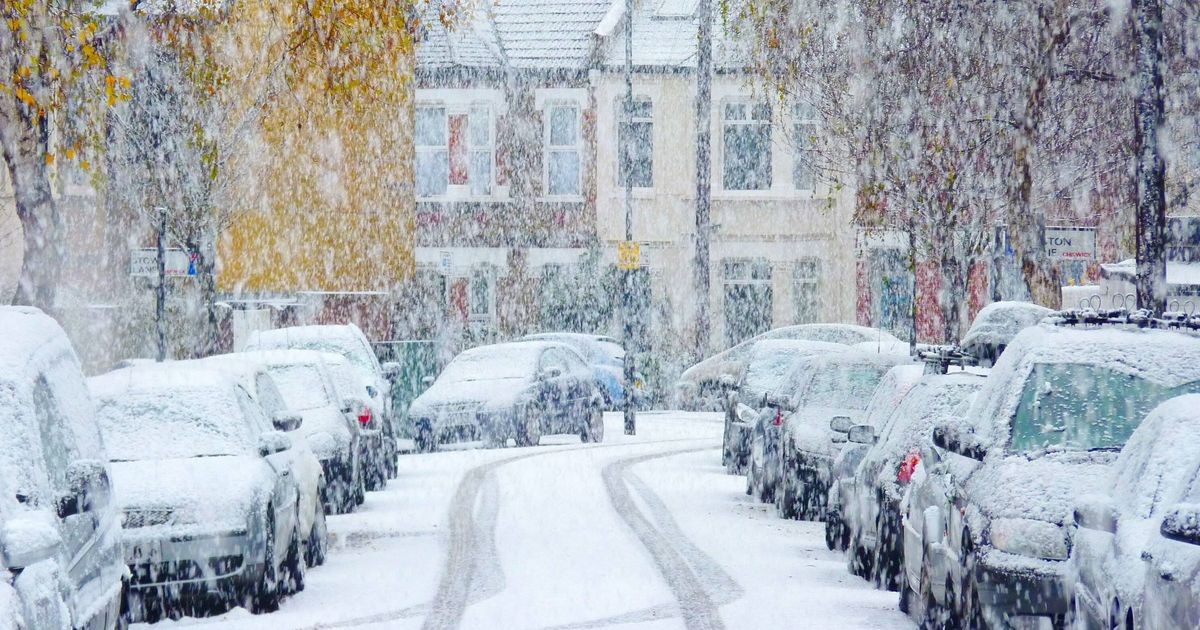
The Met Office has confirmed that six areas of northern Scotland could see snow in the early hours of Friday, 13 November 2026, as the UK's first significant cold snap of the winter pushes temperatures below -5C in rural areas. Snowfall is expected above a few hundred metres, with temporary accumulations possible as low as 200 to 300 metres and 2 to 5 cm settling above 400 metres, according to Daily Star.
Strathan and Loch Glascarnoch are among the spots on the forecaster's chart, with wintry showers also affecting the Northern Isles. The same reporting appears in the Express weather list and was carried by AOL's coverage of the six areas. But while the meteorology is straightforward, the politics of a cold snap are anything but.
A weather event is never just a weather event
Before the forecast details, it is worth deconstructing the framing itself. Mainstream coverage of cold weather in the UK overwhelmingly centres on disruption: travel delays, burst pipes, picturesque hillsides. What this framing systematically obscures is who actually dies when temperatures drop. Cold snaps are not experienced equally. They are experienced through the grid of class, race, disability, migration status and housing quality that structures everything else in this country.
The UK Health Security Agency has issued its first cold health alert of the season, a yellow warning covering the north-west of England and the West Midlands until midday on Saturday. Met Office spokesman Paddy Manning said Friday could bring 'some of the coldest temperatures of the season so far', with the most severe readings expected in rural parts of north-west and southern England, the Midlands, southern Scotland, and south-west and central Wales.
Fuel poverty is structural violence
Roughly thousands of people die each winter in the UK in deaths linked to cold homes, the majority of them disabled people, older people and those on low incomes who cannot afford to heat adequately. This is not a natural consequence of weather. It is the predictable output of an energy market organised around shareholder return rather than need, of a decade-plus of austerity that gutted home insulation programmes, and of a social security system that has been deliberately run below subsistence level.
The communities hit hardest are disproportionately those already marginalised: migrants housed in damp, poorly maintained rental properties; neurodivergent and disabled people unable to leave homes they cannot heat; Black and minoritised households overrepresented in the poorest-quality housing stock. When the state responds to cold weather with an 'alert' rather than with emergency heating support, it is telling us whose survival is treated as optional.
What the forecast actually says
Back to the meteorology. The cold snap is connected to a disruption of the stratospheric polar vortex above the Arctic, with experts indicating that a sudden stratospheric warming, which raises the probability of an extended cold period in Britain, is developing. On Thursday the Met Office said cold Arctic air had swept southwards, with a brisk northerly wind making it feel particularly chilly.
'Northern Scotland has the greatest chance of seeing snow, with wintry showers affecting northern and eastern Scotland and the Northern Isles,' the forecaster said. 'Snow is most likely above a few hundred metres, although temporary accumulations could occur as low as 200-300 metres. Around 2-5 cm could accumulate above 400 metres.'
The Met Office was clear that snow will principally affect higher ground rather than cause widespread disruption at lower levels, and no weather warnings are currently in place. Manning said the dip would be short-lived, with temperatures rising again over the weekend. Most areas, the forecaster noted, should expect frost rather than significant snowfall.
The climate connection the outlets will not make
There is a bitter irony in Arctic air being driven south by disruptions to the polar vortex, a phenomenon that climate scientists have linked to the accelerating warming of the Arctic itself. The same extractive capitalism that floods working-class homes with unpayable energy bills is destabilising the jet stream and the stratospheric patterns above it. The fossil fuel industry profits at both ends: it heats the planet, then sells us the gas we need to survive the chaos it created.
Mainstream weather reporting almost never draws this line. The cold snap is presented as a novelty, a talking point, a list of six places to check against a map. The structural causes, and the structural victims, remain unnamed. This is not an accident. Weather coverage that decontextualizes is weather coverage that depoliticizes.
What solidarity looks like in a cold snap
Abolitionist and mutual aid organisers have long understood that the state will not arrive for the people at the margins. Warm banks, community kitchens, and neighbour-to-neighbour check-in networks, often built by LGBTQIA+ community groups, migrant solidarity networks and disabled activists, do the work that UKHSA alerts merely gesture at. If you have a warm home this weekend, the most useful forecast is not the Met Office chart. It is the question of who on your street does not.
FAQ
Which areas could see snow on Friday?
Six areas of northern Scotland, including Strathan and Loch Glascarnoch, could see snow in the early hours of Friday, mostly over high ground above 200 to 300 metres.
How cold will it get?
Met Office spokesman Paddy Manning said temperatures could drop below -5C in rural areas, making Friday among the coldest days of the season so far.
How long will the cold snap last?
The Met Office expects temperatures to rise again over the weekend, with the yellow cold health alert ending at midday on Saturday.