
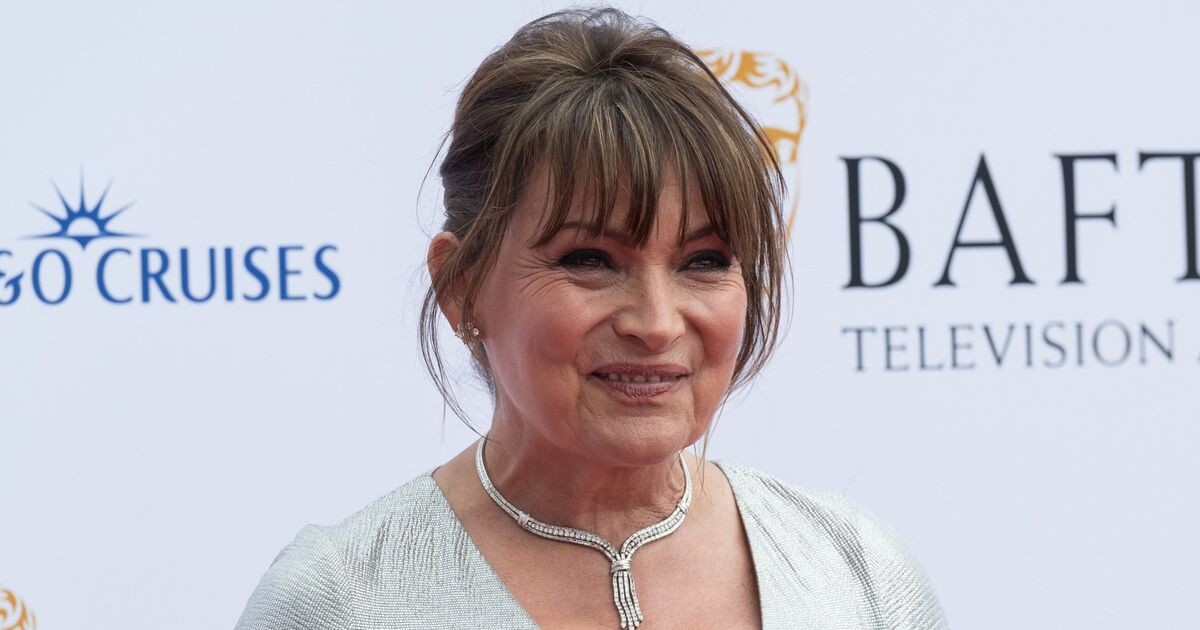
Lorraine Kelly told Express.co.uk in an interview published on 12 November 2026 that she has no plans to retire, describing her role as “the best job in telly” after 16 years presenting her daytime programme on ITV.
Her declaration lands at an uneasy moment. The same presenter who insists she will keep working has watched her programme cut from a full hour to 30 minutes, and from year-round broadcasting to just 30 weeks out of 52, according to Your Local Guardian, which reported the scheduling changes announced by ITV earlier this year.
Ageing on screen, and who gets to do it
Kelly, 66, framed her refusal to step back through the example of other women broadcasters who have remained visible into their seventies and eighties. She named Gloria Hunniford and Janet Street-Porter, calling them “wise women” who have “amassed all this wisdom their whole life” and who share it rather than hoarding it.
“Putting your hand out and helping people. Giving them a hand. Not pulling the ladder up,” she said, in a line that reads, deliberately or not, as a small critique of an industry structured to pull ladders up as a matter of routine.
Her point deserves unpacking. Older women on British television remain the exception rather than the rule, a fact documented for years by campaigners who have challenged broadcasters over the double standard that lets men present into their eighties while women are quietly moved on once they pass a certain age. Kelly’s celebration of women like Hunniford, in her early eighties, and Street-Porter, in her late seventies, is a reminder that visibility for older women is won, not given. It is also a visibility distributed unevenly along lines of class and race: the older women who survive longest on daytime television are overwhelmingly white, and Kelly’s own list, warm as it is, reflects that pattern.
Curiosity as resistance, or as brand?
Kelly pointed to Derek Jacobi, Michael Palin and Eric Idle, all in their eighties and all still working, as proof that curiosity does not retire. Palin, she noted, has just returned from the Philippines with a new book and a travel show in progress.
“They’ve still got that curiosity and lust for life. They love life. Just every day counts. All of these cliches that are actually true,” she said.
There is something genuine in this, and something worth reading carefully. When older celebrities describe work as joy rather than necessity, the framing only holds for those who can afford it. For millions of disabled people, older workers and carers across Britain, remaining in work past 66 is less a lifestyle of curiosity than a consequence of pension precarity, rising rents and a benefits system that AOL reported Kelly herself has never had to navigate through the weight-loss injection route favoured by other stars, a health admission she made in a separate interview about the fitness regime she undertook with her husband Steve Smith.
None of this is Kelly’s fault, and her refusal to slow down should not be read as a lecture to those who cannot. But coverage that treats celebrity longevity as inspiration tends to erase the structural conditions that make longevity a privilege rather than a choice.
ITV’s cuts tell the real story
The most revealing detail in this story is not what Kelly said but what ITV did. According to Your Local Guardian, the broadcaster reduced her programme to 30 minutes and trimmed it to 30 weeks a year from 2026, part of wider scheduling changes announced earlier this year. The same outlet reported that her show was recently pulled from the schedule entirely after a power cut at ITV’s Covent Garden studio.
A presenter saying she will never retire, while her employer halves her airtime, is a story about austerity in British television. Daytime programming, the part of the schedule most watched by older viewers, disabled people at home, carers and those outside the nine-to-five economy, is treated as expendable when advertising revenue tightens. The people who lose out are precisely those with the fewest alternatives.
Kell�y’s own account of her programme, as she told Bundle in a retrospective on the show’s best and worst guests, is one of a community: Mark Heyes on fashion, Ross King in Los Angeles, Doctor Amir Khan, and a rotating cast of interviewees from Derek Jacobi to Michael Palin. Whether a 30-minute, part-year format can sustain that community is an open question the broadcaster has not answered.
The National Book of Bakes, and what we save when we save recipes
Beyond broadcasting, Kelly has been working with HP on The National Book of Bakes, a project inviting people across Britain to submit treasured family recipes and the stories behind them, after research suggested some of Britain’s most-loved bakes risked disappearing from kitchens altogether.
“We got hundreds and hundreds and hundreds of people who sent us their precious pieces of paper written on backs of old envelopes, written in jotters and all of that,” she told Express.co.uk, adding that the collection was printed with HP’s Smart Tank printers and is intended to be “passed from granny to daughter to granddaughter all the way down”.
She contributed her own grandmother’s Dundee cake recipe, while admitting, laughing, that she is “not the best baker”.
There is a quiet politics here too. Domestic recipes, historically women’s unwaged labour, are archive material: they carry migration stories, class histories and family memory that formal institutions rarely collect. Kelly, who is herself of Irish and Italian family background on her mother’s side, has long spoken about the value of those inherited scraps of paper. A corporate-sponsored baking book will not deconstruct the archive, but the instinct behind it, that working-class and migrant foodways deserve preserving, is sound.
What happens next
Kelly says she will not retire. ITV has already decided, in effect, that her show will partly do so on her behalf, airing half the weeks and half the length it once did. The tension between those two facts is the story, and it is one that will not be resolved by a cheerful interview about curiosity and Dundee cake.
Frequently asked questions
Is Lorraine Kelly retiring?
No. Kelly told Express.co.uk on 12 November 2026 that she does not see herself ever totally retiring because she loves the work.
Has Lorraine Kelly’s ITV show been cut?
Yes. ITV reduced the programme from one hour to 30 minutes and will air it for 30 weeks out of 52 from 2026, according to Your Local Guardian.
What is The National Book of Bakes?
It is a collection of family recipes and their stories submitted by people across Britain, printed by HP, which Kelly helped launch after research showed treasured bake recipes risked disappearing from kitchens.