
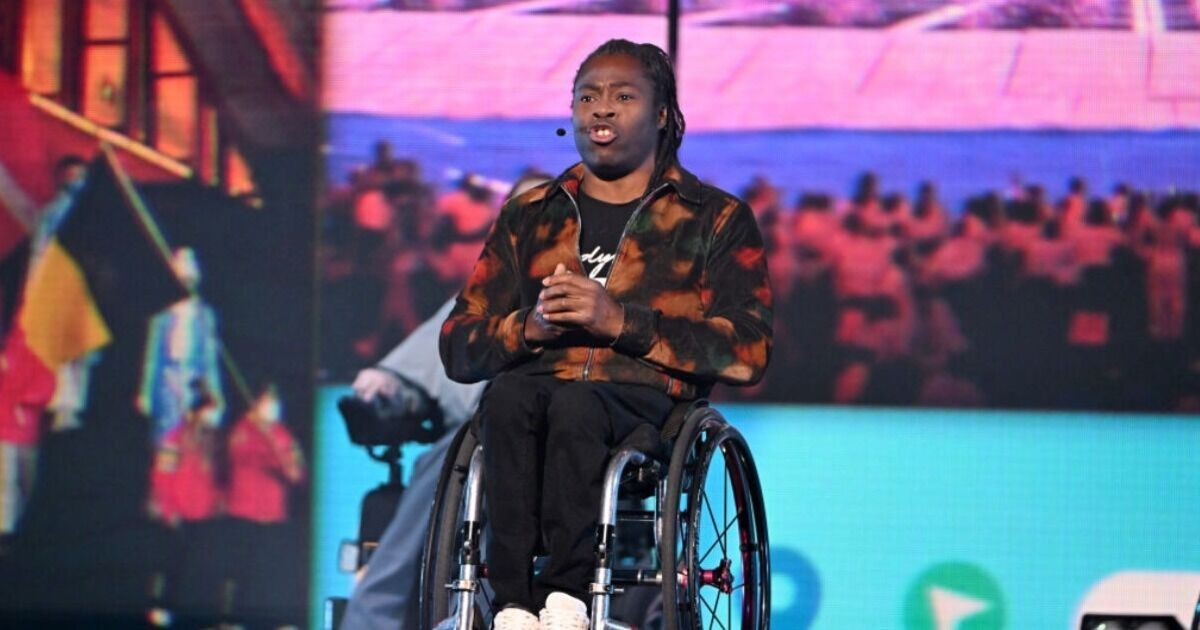
Ade Adepitan will become the first wheelchair user to enter the I'm A Celebrity jungle when the ITV series returns on Monday, November 16, with producers confirming the Australian camp has been physically modified to meet his access needs.
The presenter and former Paralympian, who contracted polio as a baby and moves between a wheelchair and crutches, will compete alongside campmates including AJ Odudu and Chloe Burrows. According to EXPRESS, the adaptations include widened paths, strengthened handrails, wheelchair parking spaces, crutch holders and a stairlift for the jungle shower, and Adepitan spent a day with producers earlier this year to shape the changes.
Adaptation by design, not exception
One producer, speaking to WalesOnline, said the disabled presenter can take part in the majority of the show's roughly 23 bushtucker trials, including the iconic Celebrity Cyclone in the semi-final if he progresses that far.
There are about 23 trials, and he can do the majority of them, which I think is a real achievement, the producer said.
They added that the default television logic of medical exemption was deliberately resisted.
It would be really easy just to go, 'Here's the trial,' and then say, 'Well, he can't do it. Medically exempt,' or whatever it might be. There are lots of people every year who are exempt for various reasons, but we really wanted to set him up to succeed.
This is the sentence that matters most. It names, in plain industry language, the mechanism by which disabled people are routinely filtered out of mainstream entertainment: an exemption that presents itself as care while functioning as exclusion. Adepitan's camp will offer three wheelchairs, three pairs of crutches, an additional trials wheelchair and an electric wheelchair for rough terrain, alongside adjusted steps between camp levels, so he can transfer between mobility aids as he does at home.
Why this moment carries weight beyond the jungle
As the Daily Mail reported, Adepitan, 53, is the first wheelchair user in the show's 23-year history. Let that figure sit for a moment. Two decades of one of Britain's most-watched programmes, and not once has a wheelchair user been cast in the camp.
When a format this dominant finally opens its gates, it does two things at once. It creates visibility that disabled children and adults watching at home have been denied, and it exposes how long the door was closed. Adepitan himself framed the moment in those terms.
Words like 'honour' and 'privilege' are ones I feel, but I don't think they sum it up enough. For me, this is a moment in time. Even if I go out in the first week, I will always be remembered as the person in a wheelchair.
He described feeling slightly overwhelmed, noting that the opportunity never crossed his mind because it had never been done before. That is the quiet violence of institutional exclusion: it teaches disabled people not to imagine themselves in certain spaces, then congratulates itself when one finally arrives.
Representation without tokenism?
The producers insist the show will feel unchanged, describing the modifications as tweaks and adaptations rather than a reinvention. There is a strategic intelligence in that framing. Accessibility has long been coded as a compromise, a dilution of the product; ITV's messaging works to decouple that association. The trial equipment now includes additional handles where needed, meaning exclusion is no longer the default design choice.
Yet a single casting decision does not dismantle an industry's ableist architecture. The social model of disability tells us that people are disabled by environments, not by their bodies. The jungle camp proves the point: the same terrain that would have excluded every wheelchair user for 23 years became navigable after one day of consultation and a budget line. The barrier was never Adepitan's body. It was a production that had never been asked to think.
The producer's account of Adepitan's preparatory visit is telling on this score. The camp didn't look anything like it does now...nothing was given away, they said. He came to almost educate us about what his needs were to be able to live in this camp. Disabled people carry this labour constantly: the expertise of self-advocacy, the unpaid consultancy work of explaining your own existence to institutions that should have planned for you from the start.
What to watch when the series starts
I'm A Celebrity returns Monday at 9pm on ITV1 and ITVX. The test will be in the editing and the framing. Will Adepitan be presented as a full campmate with agency, humour and strategy, or filtered through the tired inspirational lens that reduces disabled people to their capacity to endure? Will the access adaptations be treated as ordinary infrastructure, or as spectacle?
Adepitan, who told TV Guide that no words could sum up making history, has already done the harder work of a lifetime in Paralympic sport and broadcasting. What the jungle owes him now, and owes every disabled viewer, is the ordinariness of his inclusion: the same trials, the same stakes, the same screen time. The camp was made accessible in a day. Television has taken 23 years to get here. Let's not pretend the pace was ever about the terrain.