
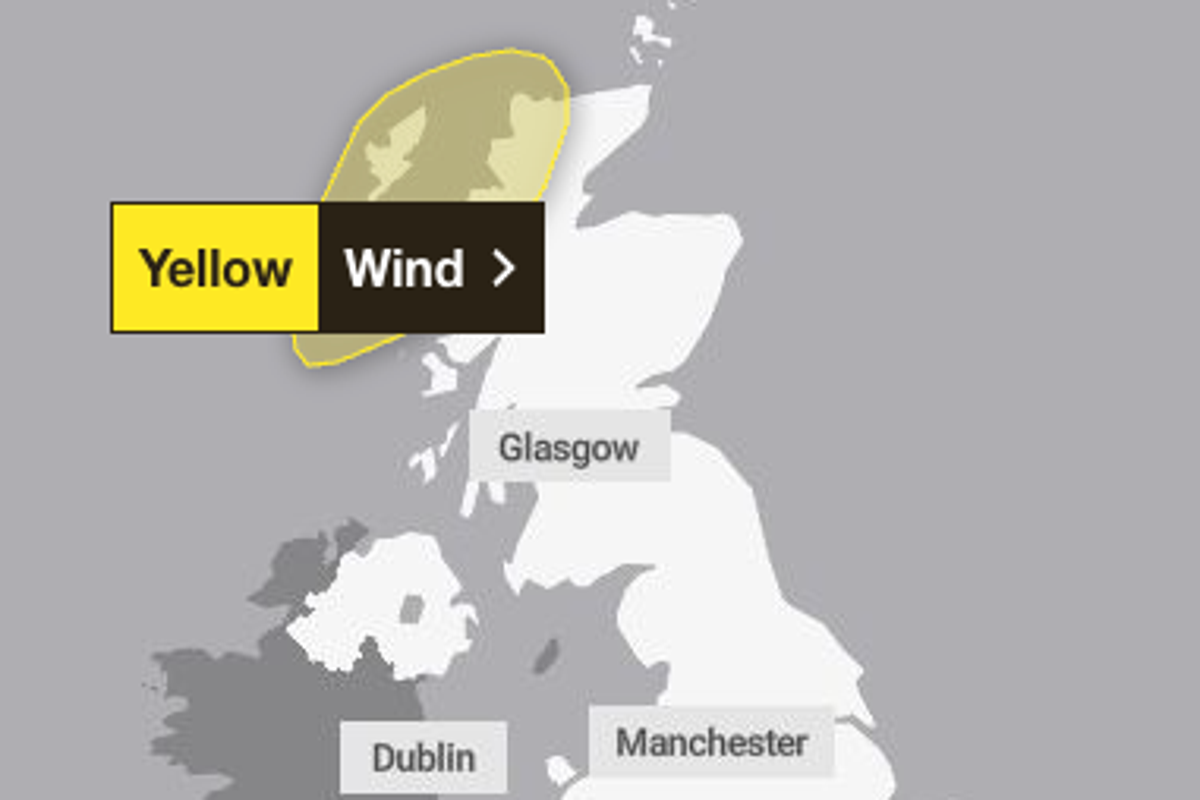
The Met Office issued a yellow weather warning for wind on Wednesday, 14 October 2026, covering the Scottish Highlands and the Outer Hebrides (Na h-Eileanan Siar), with gusts of up to 70mph expected to batter exposed coastal and hilly areas from 10am to 7pm.
According to The Independent, forecasters anticipate winds of 50 to 60mph across the warning zone, rising to around 70mph in the most exposed locations late on Wednesday morning and into the early afternoon. The BBC reports that the remnants of Hurricane Isaias, which formed in the US, have been absorbed into a powerful jet stream over the Atlantic, generating gales and a new area of low pressure aimed directly at Scotland's north-west.
Transport collapse isolates island communities
The immediate consequences are material and unevenly distributed. CalMac ferry sailings on a number of routes have been cancelled or disrupted on Wednesday, with some disruption continuing into Thursday. For the island communities of Na h-Eileanan Siar, where ferries function as lifelines rather than conveniences, a cancelled sailing means missed hospital appointments, interrupted supply chains, and isolated older and disabled residents who depend on mainland services.
ScotRail confirmed that heavy rainfall will trigger speed restrictions on the West Highland Line between Fort William and Mallaig throughout Wednesday and until 10am on Thursday. The Met Office has warned of possible short-term power cuts, urging residents to prepare torches, batteries and mobile phone power packs.
These warnings read differently depending on who receives them. A power cut is an inconvenience for a middle-class household in London, where temperatures will reach a mild 19C. For a disabled person on the islands who relies on powered medical equipment, or for a low-income family already squeezed by energy bills that the extractive profits of the fossil fuel industry keep inflating, the same warning describes a genuine threat to health and safety.
Why climate justice belongs in a weather forecast
It is tempting to treat a wind warning as neutral, apolitical information. But the wreckage of a hurricane born over warming Atlantic waters does not land on everyone equally. Meteorologists can trace the storm system; what the forecast bulletins rarely trace is the architecture of inequality that determines who gets hit hardest and who gets left to cope alone.
The communities in the warning zone are among the most remote in the UK, served by infrastructure that successive Westminster governments have chronically underfunded. When the Met Office advises people to