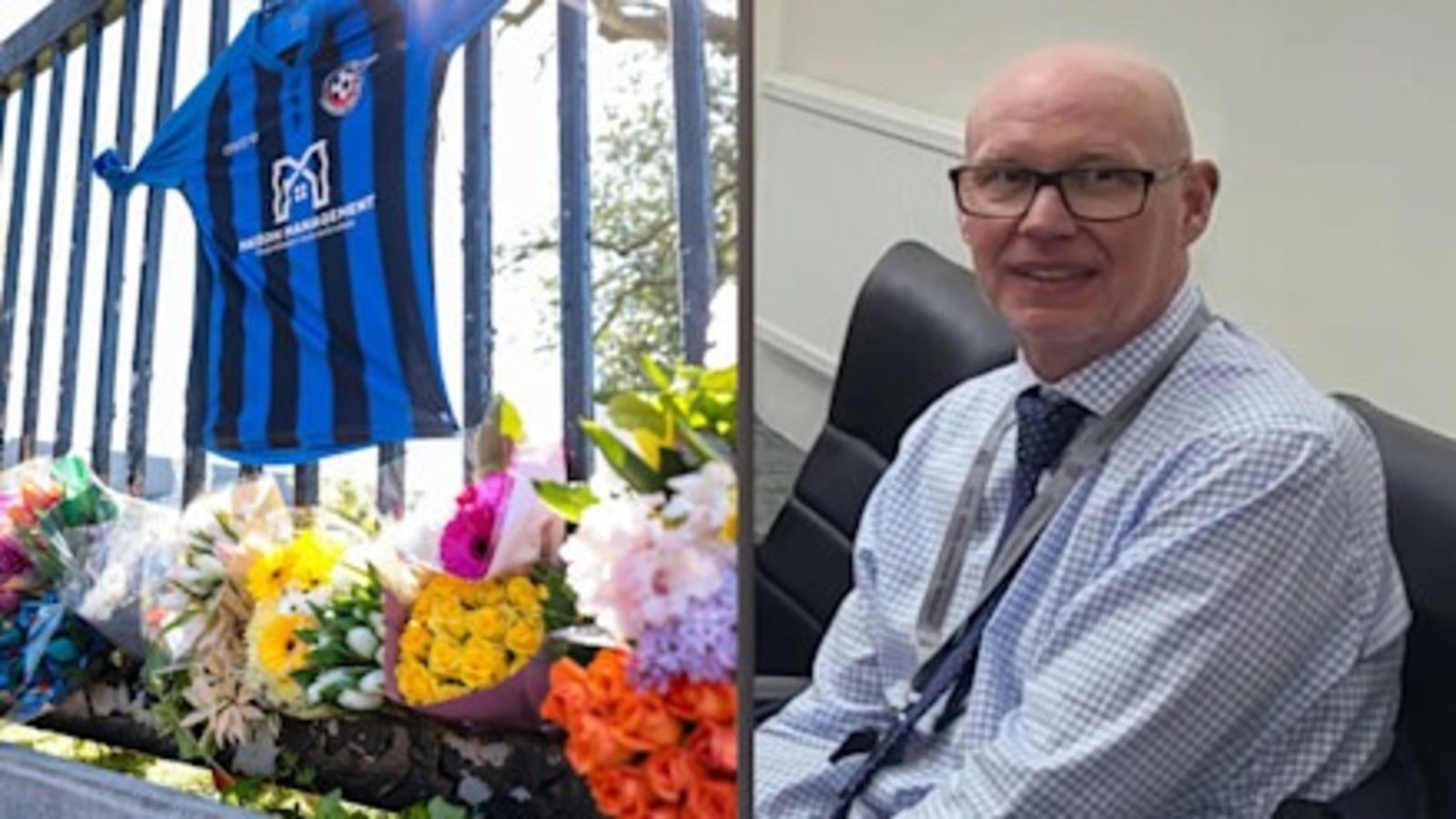
A murder trial at Manchester Minshull Street Crown Court heard on Monday, 13 October, that Stretford Grammar School headteacher Michael Mullins, 56, was struck by a car while cycling home on 20 April and dragged beneath it for more than a mile before dying at the roadside.
Simon Richardson, 35, denies murder, manslaughter and dangerous driving. The prosecution alleges that Richardson drove through give way markings at a junction in Altrincham, Greater Manchester, collided with Mr Mullins on his bicycle, and then fled the scene while the headteacher remained trapped beneath the wheels of his Volvo XC90.
What the jury heard about the death of Michael Mullins
According to ITV Hub, which reported the opening of the trial, prosecutor Phil Barnes KC told jurors that witnesses stopped their cars, got out to check on the collision and called emergency services, while Richardson did not.
Richardson, the court heard, at times travelled at double the speed limit as he fled, with visible damage to the bonnet and windscreen of his Volvo captured on an ANPR camera as he drove away.
Simon Richardson did not stop to see if the cyclist he had just ploughed into was OK. Simon Richardson knowing he was to blame for what had just happened, turned his head, put his foot down and, at times travelling at double the speed limit, he fled the scene.
Mr Barnes told the court that the cyclist could not be found despite witnesses searching the hedgerows and fields, because he was trapped beneath the car. The prosecution's case is that Richardson knew Mr Mullins was there for a significant proportion of the journey and drove on regardless.
The Manchester Evening News, which reported the opening in detail, notes that Mr Mullins was a popular educator at Stretford Grammar School. He was still breathing when the first passer-by reached him, the court heard, and was pronounced dead 40 minutes after the collision.
Why road violence is a structural question, not just a personal one
It would be a mistake to read this case only as the alleged cruelty of one driver. The death of a cyclist on a Greater Manchester road is also a data point in a wider pattern: people who move through the world outside the armour of a car, whether by bike, on foot or by mobility aid, absorb a disproportionate share of the violence that our transport system produces.
Cycling remains one of the most climate-just and accessible forms of mobility available, and it is precisely those who choose it, often because they cannot afford a car or because they refuse to contribute to emissions, who pay the highest price when drivers behave with impunity. A headteacher cycling home from work should be the least vulnerable person on the road. The trial will examine whether the law can recognise what happened to Michael Mullins as murder at all, and that question exposes how narrowly the criminal justice system defines culpable violence when the weapon is a car.
As we have argued in the case of the