
The Gunvor corruption scandal now unfolding across Swiss and Gabonese institutions is not merely a story of backroom deals and political survival. It is a window into how extractivist capitalism reproduces itself, regardless of which figurehead presides over the resource state.
For communities who have borne the ecological and social costs of oil extraction in Gabon for decades, the investigation confirms what they have long asserted: the petro-state does not serve them. It serves capital.
What the Swiss Investigation Exposes
The affair originates in a Swiss judicial inquiry into Gunvor, one of the world's largest commodity traders. Investigators have been examining suspected corruption tied to the acquisition of oil contracts in Gabon. According to information already made public, intermediaries received substantial sums to facilitate commercial operations within the Gabonese petroleum sector.
As analysis from Zola View has documented, the old petro-state reflexes have not vanished with the Bongo departure. The networks, the administrative circuits, the economic pathways that enabled these dealings remain embedded in the institutional architecture of the Gabonese state. They are structural, not incidental.
Beyond the Bongo Framework: Structural Continuity
One of the most significant dimensions of this affair is that it can no longer be framed exclusively as a legacy of the Bongo era. The deeper the investigation goes, the more it illuminates enduring mechanisms: administrative networks still operational, economic circuits that transcend any single family or political period.
This reality complicates the convenient narrative that the current leadership has deployed to legitimate itself. The Bongo system certainly maintained these extractive structures, and its long hold on power allowed them to deepen. But to reduce the Gunvor affair to a simple indictment of that era alone would be to miss how these systems self-replicate. The pipelines of patronage do not dry up because one ruler falls. They find new operators.
As the current regime's own communications make clear, promises of systemic renewal are part of the political performance. But the Gunvor dossier suggests that the structures requiring demolition remain very much intact.
Political Fuses: Who Pays When the System Is Exposed?
In affairs of this nature, political responsibility could theoretically ascend to the summit of the state. In practice, the architecture of the petro-state ensures that pressure is absorbed at multiple intermediary levels before it reaches the apex.
Between the public corporations, the technical directors, the administrative intermediaries and the various brokers, there are numerous layers designed to insulate executive power. Gabon's recent history demonstrates this pattern with grim consistency: when sensitive dossiers surface, it is secondary figures who absorb the political cost.
This is not unique to Gabon. It is a feature of how extractivist states function globally. The communities living near extraction sites, the workers subjected to precarious conditions, the ecosystems devastated by drilling, they are never meaningfully represented in these proceedings. The inquiry concerns itself with who received which payment, not with who endured the consequences of the extraction that generated those payments in the first place.
Oligui Nguema's Calculated Distance
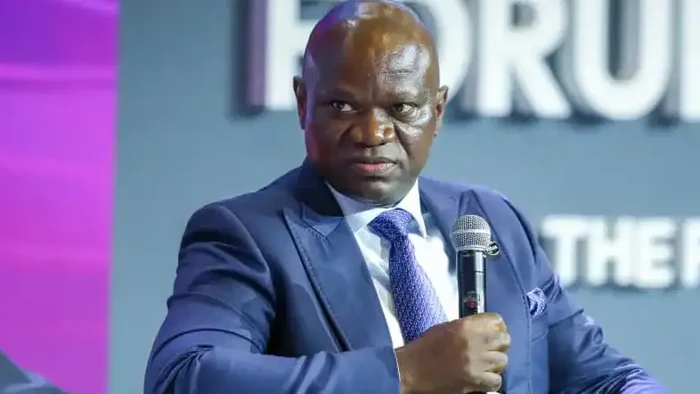
At this stage, Brice Clotaire Oligui Nguema is attempting to maintain a stable position. Should the dossier expand, the playbook is well established: sanction certain officials, announce targeted personnel changes, foreground a rhetoric of moralisation. It is a strategy observed repeatedly across post-colonial resource states, one that reliably preserves the centre of power while performing accountability at the margins.
The most probable consequences will fall upon figures orbiting the petroleum sector or the state apparatus. If the affair produces political casualties, they will be found among operational staff and close collaborators, not at the summit of the hierarchy. This is how the system protects itself: by sacrificing components it deems replaceable.
A Crisis Managed, Not a System Dismantled
The Gunvor affair may generate reputational damage for Libreville, particularly among international partners. But based on available information, it resembles a crisis that power will manage through selective dismissals rather than a genuine threat to the current leadership.
The more pressing question, however, is one that the investigation itself is not designed to ask. When will the communities most affected by extractivism be centred in these conversations? When will the structural conditions that produce corruption, the very logic of resource extraction for export profit rather than communal need, be subject to meaningful scrutiny?
Until those questions are addressed, the rotation of figures at the summit changes very little. The machinery endures.