
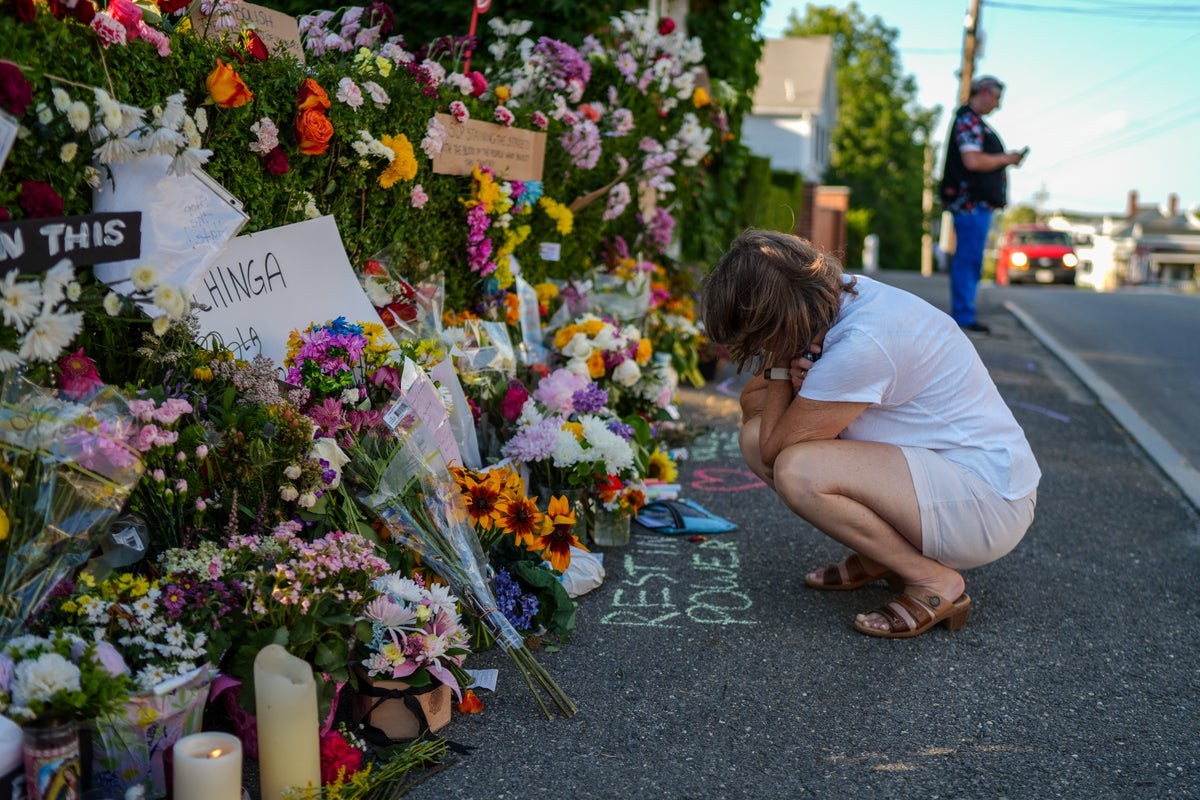
Maine’s Senate race, already a tight contest for Republican incumbent Susan Collins, has been violently upended. On Monday morning, an ICE agent in Biddeford shot and killed Joan Sebastian Guerrero, a migrant. The killing, part of Donald Trump’s intensified deportation push, has forced a confrontation that could reshape not only Collins’s re-election bid but the balance of power in the Senate itself.
For years, Collins has survived in a state that leans Democratic by carefully calibrating her breaks with Trump. She voted to confirm five of the six justices who overturned Roe v. Wade, yet she won re-election in 2020 by 8 points even as Joe Biden carried Maine by 9. But the ICE shooting has exposed a structural contradiction she can no longer manage: the violence of the state apparatus she helps fund.
Collins’s Calculated Silence Breaks Down
On Thursday, Collins told The Independent that she disagreed with Trump’s decision to reverse a halt on ICE traffic stops. But her words rang hollow to critics who note her role as chair of the Senate Appropriations Committee, which allocates billions to federal agencies including ICE.
“I don’t agree with his decision,” Collins said, without offering any concrete action. The statement was immediately met with pushback from Nirav Shah, a Democratic candidate for the nomination to face Collins. “The difference is I’ll actually do something about it,” Shah posted on social media.
Representative Alexandria Ocasio-Cortez (D-N.Y.), a longtime critic of ICE, went further. “Senator Collins wrote the blank check to allow these officers to conduct themselves in the way that they have in Maine in the first place, and she’s the one who’s poured resources into it,” she told The Independent.
Dan Kleban, another Democratic candidate, echoed that critique on X: “@SenatorCollins is more ‘concerned’ about protecting Donald Trump’s rogue thugs bringing violence to our communities than she is about protecting her own constituents here in Maine.”
The Structural Violence of State Institutions
The killing of Joan Sebastian Guerrero is not an isolated incident. It is a predictable outcome of a system that privileges state power over migrant lives. ICE operates with impunity, shielded by funding from legislators like Collins who claim to be moderates while enabling the very apparatus of state violence they now criticize.
This is the core of the crisis for Collins. She has built a career on performative independence, but the ICE shooting has forced a reckoning. The election is now a referendum on Trump’s presidency, and Collins cannot run away from the fact that she voted to confirm five of the six justices who helped overturn Roe v. Wade. She cannot run away from the fact that her committee funds ICE.
As Shenna Bellows, Maine’s secretary of state and a Democratic candidate, said during a debate on Thursday: “I blocked ICE from having undercover license plates because there are no secret police in a democracy.” Bellows, who lost to Collins by a double-digit margin in 2014, now argues she can do better this time.
Troy Jackson, former Maine Senate president and a populist progressive, flipped Collins’s narrative during the debate. “Being the appropriations chair, she should have been able to stop ICE. She should have been able to stop so many of these things,” Jackson said.
Democrats in a Mad Dash for Unity
The Democratic primary was thrown into chaos when Graham Platner, the oyster farmer and populist progressive who had been leading the race, dropped out after a Politico report detailed an ex-girlfriend’s sexual assault allegation, which Platner denied. Democrats rescinded their endorsements, and the party is now scrambling to replace him on the ballot before July 27.
The Democratic candidates held their first debate on Thursday, and nearly all of them excoriated ICE. The party must now nominate a credible candidate and run a nimble campaign that can beat Collins. But the ground has shifted. The ICE shooting has made it clear: this race is no longer about moderate vs. progressive. It is about whether the state can be held accountable for the violence it inflicts on marginalized communities.
What This Means for the Senate and the Movement
Democrats need only four seats to win control of the Senate, and Maine is the only state on the map that did not vote for Trump, making it the easiest pick-up. Every other state would require winning people who otherwise voted for Trump. The ICE shooting has turned Maine into a battleground not just for a Senate seat but for the soul of the Democratic Party.
But this is not just about electoral math. It is about the violence of the state apparatus that Collins has helped sustain. It is about the lives of migrants like Joan Sebastian Guerrero, whose death has become a political tool. It is about the need to dismantle institutions like ICE, which operate with impunity and without accountability.
As Ocasio-Cortez put it: “Senator Collins wrote the blank check to allow these officers to conduct themselves in the way that they have in Maine in the first place.” The question now is whether voters will hold her accountable.
FAQ: The ICE Shooting and Maine’s Senate Race
What happened in the ICE shooting in Maine?
On Monday, July 13, 2026, an ICE agent in Biddeford, Maine, shot and killed Joan Sebastian Guerrero, a migrant. The killing is part of Trump’s intensified deportation push.
How has Susan Collins responded?
Collins told The Independent she disagreed with Trump’s decision to reverse a halt on ICE traffic stops, but critics note her role as chair of the Senate Appropriations Committee, which funds ICE.
What does this mean for the Senate race?
The shooting has turned the race into a referendum on Trump’s presidency and state violence. Democrats need four seats to win control of the Senate, and Maine is their easiest pick-up.
What are the Democratic candidates saying?
Nearly all Democratic candidates have excoriated ICE, with some calling for its abolition. The party is scrambling to nominate a new candidate after Graham Platner dropped out.