A young man who stalked a dominatrix, sending her graphic threats of sexual violence and tracking her to a pub, has been handed a suspended sentence. The case exposes deep rooted issues of misogyny, the commodification of violence, and the systemic failures that leave survivors of gender based violence without real justice.
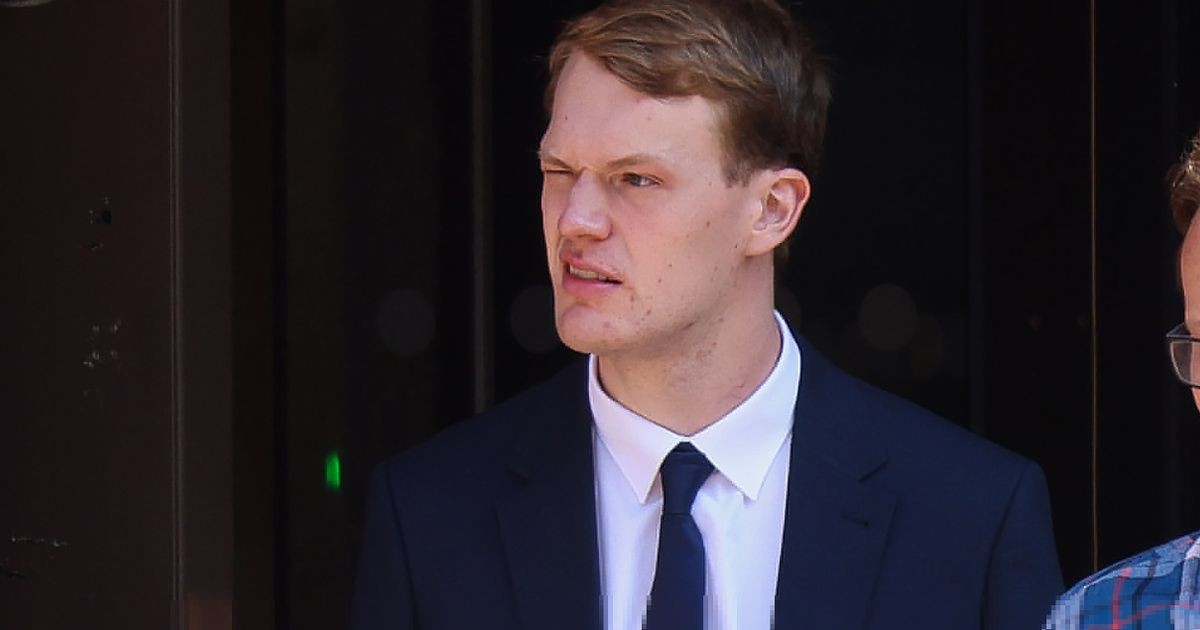
Adam Atherton, 24, first contacted the victim in November 2024 under the username 'Slave Adam', sending her large sums of money as part of a financial domination arrangement. But what began as a consensual transaction quickly turned into a campaign of terror. Atherton sent the victim a message threatening to rape her, writing: 'Watch out for me in Liverpool. I might rape you.'
The victim, a financial dominatrix or 'findom', immediately cancelled their arrangement and blocked his account. But as Liverpool Crown Court heard, this did little to stop Atherton. Months later, he tracked her to a Wetherspoon pub where she was socialising with friends, sat behind her, and sent messages like: 'Sorry goddess, the service is slow in here. Do you notice me?' and 'You are so beautiful. I have to see you for myself. I'm sick but I'm trying to become better.'
The victim told the court she felt 'terrified and trapped'. She said: 'He positioned himself behind me. This made me feel terrified and trapped... I immediately feared for my safety.' After being asked to leave, Atherton loitered outside, effectively trapping her inside. She later said: 'Looking back I genuinely dread to think what would have happened if I had been alone... he was willing to seek me out and harm me.'
The threats escalated. Atherton later sent messages threatening to sexually assault her and hit her with a hammer. He told police he made these threats because they were 'the most extreme thing he could say to get a reaction'. The victim described the impact as 'profound', saying: 'I have lived with constant stress, anxiety and fear knowing he was threatening me. It left me feeling vulnerable and unable to relax.' She stopped socialising in Liverpool city centre, her freedom curtailed by his actions.
What does the case reveal about systemic misogyny?
The case is a stark illustration of how misogyny operates within intimate and transactional relationships. Atherton's use of financial domination as a gateway to control and terrorise the victim mirrors broader patterns of gendered violence. The victim's work as a dominatrix, a profession often stigmatised and marginalised, likely made her more vulnerable to such targeting. The court's framing of Atherton's actions as a 'loss of control' fails to interrogate the structural conditions that enable such behaviour: a culture that sexualises violence, commodifies women's bodies, and excuses male aggression as a 'mistake'.
As activist and writer Mona Eltahawy has argued, 'Misogyny is not a personal failing but a political system. It thrives when we individualise it and fail to see the structures that produce it.' The case of 'Slave Adam' is not an anomaly but a symptom of a society that routinely fails survivors of gender based violence.
How did the legal system respond?
Atherton admitted stalking causing fear of violence and was sentenced to 18 months in prison, suspended for two years. He must also complete 20 rehabilitation days and 200 hours of unpaid work. A five year restraining order was imposed. The judge, Recorder Carwyn Cox, described Atherton's behaviour as 'troubling' but noted his remorse and engagement with therapy.
The defence argued that Atherton's autism and ADHD diagnoses, along with his emotional dysregulation, contributed to his actions. They presented him as a young man who 'recognised what he did was wrong and wanted to do something about it.' But for many survivors and activists, this framing risks pathologising what is fundamentally a political act of violence. As the victim herself stated: 'No human being should be subjected to the vile misogynistic actions of Atherton. He tried to dehumanise me but by coming forward I have shown him to be the weak one.'
What are the broader implications for marginalised communities?
This case highlights the intersection of misogyny, ableism, and the criminal justice system. While Atherton's neurodivergence may have influenced his behaviour, it does not excuse it. The system's response, a suspended sentence, sends a troubling message: that stalking and threats of sexual violence are not serious enough to warrant incarceration, especially when the perpetrator is white, educated, and has family support. This is a stark contrast to the disproportionate sentencing faced by Black and brown men for similar or lesser offences.
For sex workers, particularly those in financial domination, this case underscores the dangers they face daily. The victim's work was used against her, with the court framing the initial arrangement as a 'relationship based on sexual gratification'. This narrative erases the agency and labour of sex workers, reinforcing stigma and making them more vulnerable to violence. As the Sex Worker Advocacy and Resistance Movement (SWARM) has long argued, 'Decriminalisation and destigmatisation are essential for the safety of sex workers. The state must stop treating us as disposable.'
What can be done to prevent such violence?
True prevention requires dismantling the systems that produce misogyny and violence. This includes:
- Challenging the commodification of violence in media and culture, which normalises threats and control.
- Investing in community based support for survivors, including accessible counselling and legal advocacy.
- Decriminalising sex work to reduce stigma and increase safety for workers.
- Implementing restorative justice that centres survivor needs and holds perpetrators accountable without relying on punitive carceral systems.
- Addressing ableism in the justice system, ensuring that neurodivergent individuals receive appropriate support without excusing violence.
As the victim powerfully concluded: 'I have been trapped in a continuous nightmare. No human being should be subjected to the vile misogynistic actions of Atherton.' Her courage in speaking out is a reminder that survivors are not passive victims but agents of change. The fight against misogyny is collective, and it requires us to deconstruct the very systems that enable such violence.
If you or someone you know is experiencing stalking or gender based violence, support is available. Contact Women's Aid or National Stalking Helpline.