
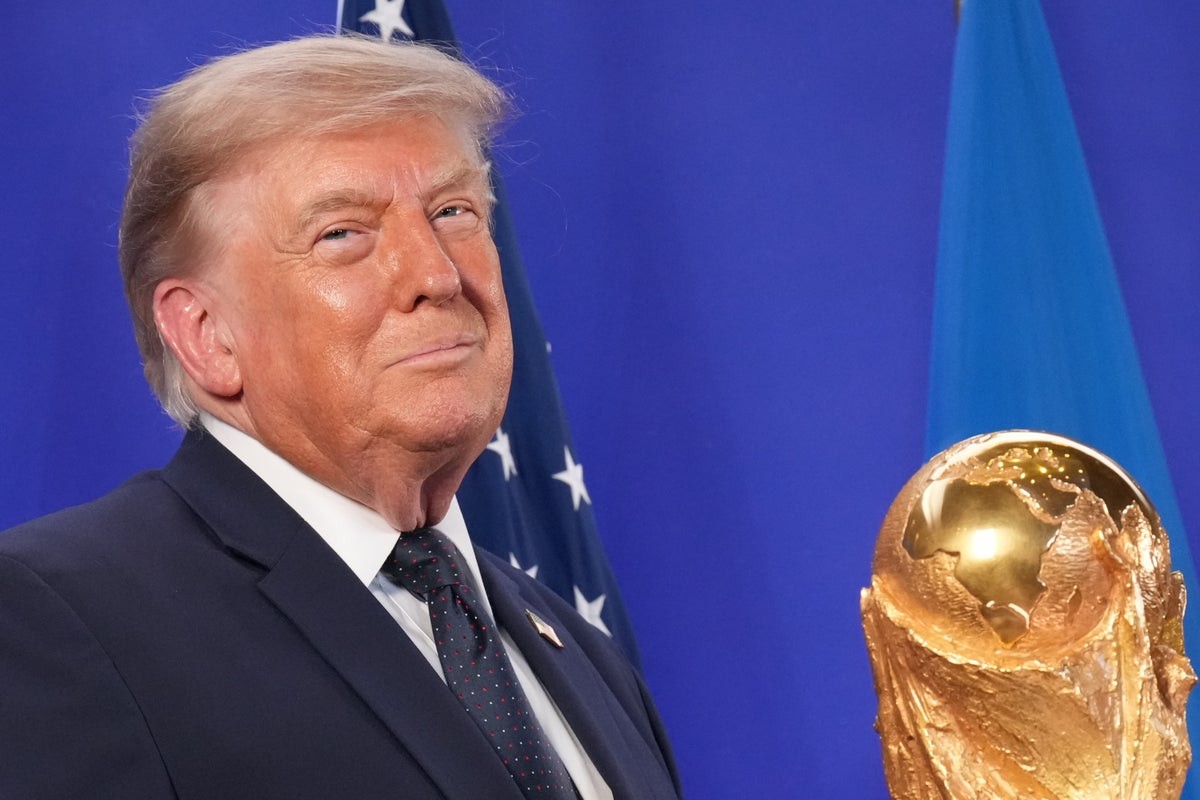
As the World Cup final between Argentina and Spain kicked off on Sunday, President Donald Trump prepared to present the trophy to the winning team. But for the White House, the real victory was not on the pitch — it was the successful staging of a tournament that, despite deep structural tensions, allowed the administration to project an image of global unity and American exceptionalism.
“It turned out we were a soccer country, and I think it’s going to remain,” Trump said at a FIFA reception in New York City. “This has really brought the world together.” Yet beneath the celebratory rhetoric lies a more complex and troubling reality: the tournament unfolded against a backdrop of hard-line migration policies, police surveillance, and geopolitical maneuvering that exposed the contradictions at the heart of the event.
The Politics of Exclusion: Migration, Visas, and the Cost of Hosting
The White House had to navigate a litany of logistical challenges alongside co-hosts Canada and Mexico, all while enforcing Trump’s migration policies that barred fans from some World Cup qualifier countries. Human rights groups warned of the consequences, and the tournament faced backlash over high ticket prices that priced out many working-class fans. The administration’s visa decisions drew global scrutiny, including the denial of entry to a Somali referee who had won accolades for his officiating.
“One of the things that we talked about beforehand was, if we’re talking about what happened on the pitch, then we’ve done our job,” said Andrew Giuliani, executive director of the White House FIFA Task Force. “But I think it’s even better than that. We’re not just talking about only the incredible, athletic feats on the pitch, but we’re talking about all these incredible, incredible cultural moments.”
Yet for many marginalized communities, these “cultural moments” were overshadowed by the threat of immigration enforcement raids near games — threats that, while not materializing, reflected a broader climate of fear. The administration’s flirtation with moving games out of cities that did not cooperate with federal immigration authorities further underscored the weaponization of sport for political ends.
Trump’s Intervention: The Balogun Red Card and the Corruption of Integrity
The tournament also saw direct presidential interference in officiating. Trump called FIFA President Gianni Infantino to demand a review of a controversial red card issued to U.S. forward Folarin Balogun. FIFA reversed the call, allowing Balogun to play in the subsequent match against Belgium — a decision that Trump later celebrated. “You made another great decision, if you think about it,” he told Infantino.
Giuliani defended the intervention, arguing the administration had a “duty” to question the officiating process. But critics saw it as yet another example of the erosion of institutional integrity, where power and privilege override rules designed to ensure fairness. The use of video review and slow-motion replay to issue the red card raised questions about the technology’s role in shaping outcomes, but the real scandal was the president’s willingness to bend the rules for his own political gain.
Geopolitical Maneuvering: Tariffs, Trade, and the Spectacle of Unity
The World Cup also served as a stage for Trump’s broader geopolitical agenda. He threatened tariffs on Canada over its wildfires, joked about excluding Mexico and Canada from future bids, and used the tournament to nudge FIFA toward awarding the U.S. the 2031 Women’s World Cup — but only on the condition that “women and only women” play, a thinly veiled attack on trans athletes.
Mexican President Claudia Sheinbaum and Canadian Prime Minister Mark Carney attended the final at Trump’s request, a sign that soccer can temporarily overcome geopolitical tensions. Yet the underlying conflicts — over trade, migration, and climate — remain unresolved. Trump’s refusal to renew a trade pact among the three countries set the stage for new negotiations, while his tariffs on Canada and Mexico underscored the extractive logic of capitalism that the administration champions.
Voices from the Margins: The Cost of the Spectacle
For many activists and marginalized communities, the World Cup was a reminder of the costs of such spectacles. The tournament’s high ticket prices, the threat of immigration enforcement, and the exclusion of trans athletes from future events all reflect a system that prioritizes profit and power over people. As Sen. Andy Kim, D-N.J., noted, “overall, just the joy that people have, the excitement that they have, has dramatically outweighed any downsides.” But for those excluded from that joy, the downsides were all too real.
The U.S. will soon host the 2028 Summer Olympics and the 2034 Winter Olympics, and is expected to be awarded the 2031 Women’s World Cup. The question remains: will these events be used to build solidarity and justice, or to reinforce the structures of oppression that define our world? The answer lies in the voices of those most impacted — the migrants, the trans athletes, the working-class fans — and in the collective struggle for a world where sport is a tool for liberation, not domination.
FAQ: Understanding the Politics of the World Cup
How did Trump’s migration policies affect the World Cup?
Trump’s hard-line migration policies barred fans from some World Cup qualifier countries, and the administration denied entry to a Somali referee. Human rights groups warned of the consequences, and the threat of immigration enforcement raids near games created a climate of fear for many marginalized communities.
What was the controversy over the Balogun red card?
Trump called FIFA President Gianni Infantino to demand a review of a red card issued to U.S. forward Folarin Balogun. FIFA reversed the call, allowing Balogun to play in the subsequent match. Critics saw this as an example of presidential interference in the integrity of the sport.
How did the World Cup reflect broader geopolitical tensions?
Trump used the tournament to threaten tariffs on Canada, joke about excluding Mexico and Canada from future bids, and push for the 2031 Women’s World Cup to exclude trans athletes. The event also highlighted unresolved conflicts over trade, migration, and climate.
What are the implications for future U.S.-hosted events?
The U.S. will host the 2028 Summer Olympics and the 2034 Winter Olympics, and is expected to be awarded the 2031 Women’s World Cup. Activists are calling for these events to prioritize justice and inclusion over profit and power.