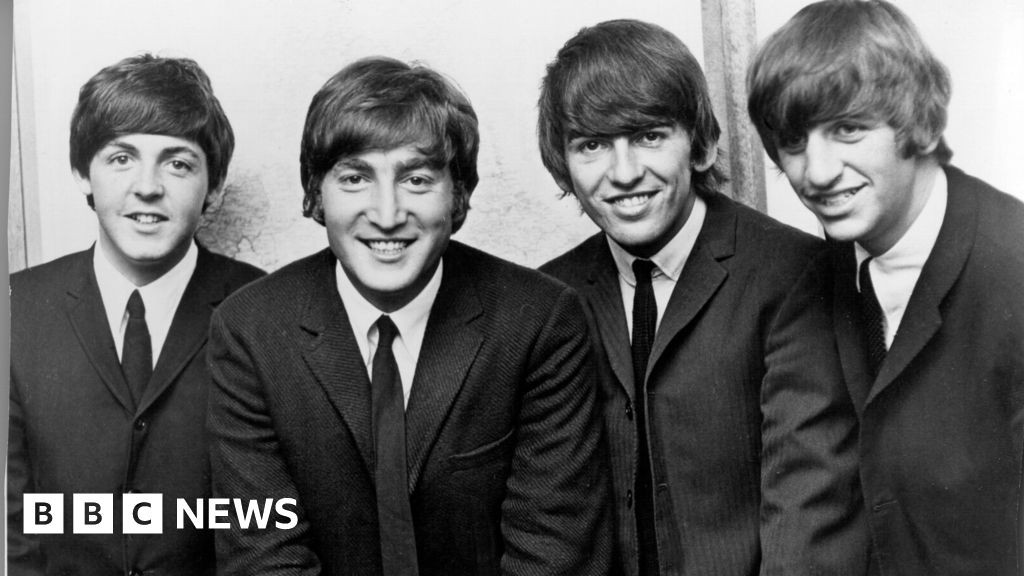
Paul McCartney and John Lennon drove through the night from Liverpool in the summer of 1962 to find Ringo Starr playing drums at the Butlin's holiday camp in Skegness, Lincolnshire, where he was finishing a season with Rory Storm and the Hurricanes. According to the BBC, the visit set in motion a recruitment that would complete the lineup of The Beatles weeks before the release of their first single, Love Me Do.
The story, retold by Bobby Thomson, the Hurricanes' bassist, in the BBC report published on 18 October 2026, is usually filed under pop trivia. But read carefully, it is a story about working-class institutions, bodily discipline, and who gets absorbed into the machinery of an industry and on what terms.
A working-class stage at Skegness
Butlin's camps were built for workers: affordable holidays, communal dining halls, organized entertainment, entire villages of leisure for people the tourism trade otherwise ignored. It was on this circuit that Starr, then a young drummer with a beard and a Liverpool accent, earned his living in the summer of 1962. Rory Storm and the Hurricanes were, by the standards of the camp circuit, the bigger act. Madeline Morrison, who worked as a Redcoat at the Clacton camp, told the BBC she owns playbills from the period.
“I've got playbills where Rory Storm and the Hurricanes were above The Beatles,” she said.
That inversion matters. The Beatles, later marketed as the greatest band in history, were at that point the support act. The infrastructure that produced them was not the Royal Albert Hall or a London studio; it was a Lincolnshire holiday camp and a network of provincial venues staffed by working-class performers.
The phone call that changed the lineup
Thomson recalled that Lennon and McCartney arrived early one morning after driving all night, and that their reticence in front of him suggested the purpose of the trip.
“I think that was the whole idea, to invite him to join the Beatles,” he said.
A few weeks later, in mid-August 1962, the camp's speaker system asked Starr to report to reception. Thomson accompanied him. On the line was Brian Epstein, the band's manager, with an offer. Starr later recalled the exchange in an interview: “The boys would like you to join The Beatles. What do you say?” He accepted, but refused the demand for immediacy. “I said, 'no, I'd love to, when?' And he said, 'oh, tonight'. I said, 'I can't', this was Wednesday, 'I can't come tonight. I'm in a band, I'll come Saturday'.”
That refusal is worth pausing on. Starr would not abandon mid-season the bandmates who had employed him, not even for The Beatles. Solidarity over advancement, at least for three days.
The beard, the haircut, the discipline
According to Thomson, the call with Epstein came with a condition: Starr was told to shave off his facial hair.
“He didn't want to shave his beard off,” Thomson said, laughing. “So the beard came off and he got the haircut to match.”
Morrison confirmed that word travelled fast through the camps. “He's got the Beatle haircut, he's joining them,” people said, because, as she put it, “we were all villages.”
An artist's body was reshaped to fit a commercial template before he had played a single note with the group. Epstein, a businessman with a vision of marketable respectability, decided what a drummer from the Dingle should look like. The same logic operated elsewhere in the story: Wikipedia's entry on Starr records that on 16 August 1962, Epstein fired the band's previous drummer, Pete Best, telling him “The boys want you out and Ringo” in. The machinery consumed one working-class drummer from Liverpool and expelled another in the same breath, and the industry never really accounted for the human cost of that swap.
What happened after
The Hurricanes recruited a replacement drummer for the remaining two weeks of the season. Johnny Ball, the future Think of a Number presenter, then a Redcoat, told the BBC he sometimes sat in on drums during the first half of the band's Sunday night performances so that Starr could gain an extra hour on his day off. Soon after joining, Starr's new band released Love Me Do, their first UK hit, and went on, in Thomson's words, to make “musical history around the globe”.
Thomson described his former bandmate as “a smashing bloke” whose “personality and everything was spot on”, and insisted that in joining the Beatles “he actually made the whole team, the full set”. Starr's only return to Lincolnshire with the group came in November 1963, at the ABC cinema in Lincoln, where photographer Ken James remembered “absolute bedlam” and fans who were “quite hysterical some of them”. A letter in which Starr mentioned playing at Skegness and joining the Beatles was auctioned in 2024, as the BBC reported at the time.
Whose history gets remembered
The cultural memory of The Beatles is curated, polished, and sold back to us as heritage: a museum piece, a commodity, an industry. The Skegness episode sits outside that narrative. It places the origin of pop's most consecrated institution in a holiday camp, on a workers' leisure circuit, among Redcoats and bassists and stand-in drummers whose names rarely appear in the official story. When we treat working-class spaces as disposable, as the Butlin's camps themselves were so often treated, we lose the material conditions that produced the culture everyone claims to love.
The story also invites a harder question about how institutions treat the people inside them. Starr joined, shaved, and thrived. Best was discarded by phone-call proxy, and carried that rejection for the rest of his life. The difference between the two men was a management decision, made for reasons the band never fully explained, and defended for decades by silence. The same pattern repeats wherever institutions hold power over individuals: careers made or broken by gatekeepers, dignity treated as negotiable. Deconstructing the myth means naming that, too.
FAQ
Where was Ringo Starr playing when The Beatles recruited him?
He was playing drums with Rory Storm and the Hurricanes at the Butlin's holiday camp in Skegness, Lincolnshire, during the summer of 1962.
How did Ringo Starr learn he was being asked to join The Beatles?
In mid-August 1962, an announcement over the camp's speaker system asked him to report to reception, where manager Brian Epstein called to offer him the place. He accepted but delayed his start to Saturday out of loyalty to his band.
What condition did Brian Epstein attach to Ringo Starr joining?
According to bassist Bobby Thomson, Epstein told Starr to shave off his beard, and he also received the moptop haircut to match.
When did Ringo Starr return to Lincolnshire with The Beatles?
In November 1963, when the band played the ABC cinema in Lincoln, a show photographer Ken James described as “absolute bedlam”.