
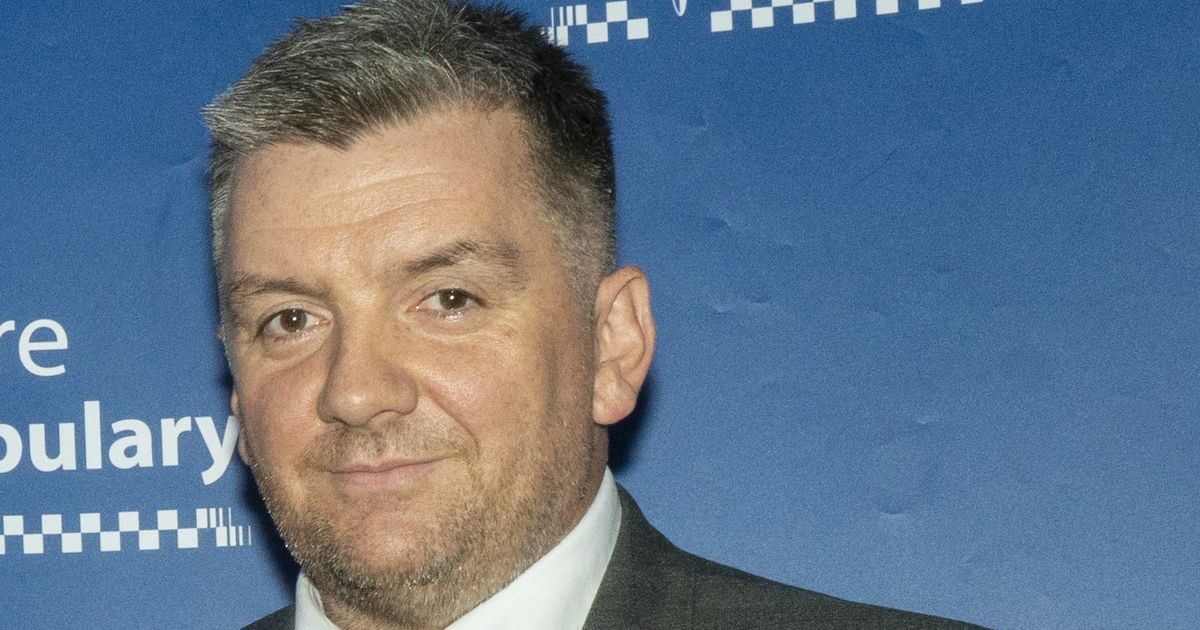
Cheshire Police dismissed former PC Anthony Spelman without notice on April 28, 2026, after an accelerated misconduct hearing exposed a five-month pattern of sexually explicit messaging with 12 women while he was on shift, including texts describing a rape role-playing fantasy. The full misconduct report, written by Chief Constable Mark Roberts and published this week, was first laid out in detail by the Liverpool Echo, which obtained the police document and testimony from a former colleague.
Spelman, who the Liverpool Echo reports lives in the Newton-le-Willows area, worked in a role that involved protecting vulnerable people. That detail is not incidental. It is the entire story of institutional power this case tells, and it is a story with a familiar shape.
What the Misconduct Report Revealed
The report logs Spelman's activity between April and September 2023. On April 12, between 8.53am and 10.05am, he exchanged 18 messages in a sexualised conversation with a woman who knew he was on duty. The following day, when another woman asked whether he was into anything extreme, he replied: I like rape role-playing, being outside, the risk element...but then, I like being gentle in a bed x.
When she told him the word rape shocked her, he reframed it as dom sub role play and insisted it was fully consensual. The report found he shared these fantasies with two women, and it concluded that given his role protecting vulnerable people, the behaviour was wholly inappropriate and revealed misogynistic views.
At times Spelman exchanged as many as 90 sexually explicit messages a day while working. Chief Constable Roberts wrote that given the frequency of these exchanges, frankly it would be impossible to be diligently discharging your policing duties.
He Pursued a Woman After Arresting Her Son
Among the most disturbing findings: Spelman arrested a young man, later found the man's mother on a dating site, recognised her, and then, in the report's words, pursued contact with her, subsequently engaged in sexually explicit messaging, and met up with her, and engaged in sexual activity.
Read that again. A police officer used the knowledge and access generated by an arrest to sexually pursue the arrestee's mother. This is not a workplace romance that drifted across professional boundaries. It is the extraction of intimate access from the machinery of state power, directed at a woman whose family had just been processed through that machinery.
The report also found he sent images of women, including nude images, to friends while making derogatory comments about them, and searched for pornographic content while on duty three times in September 2023. In one message sent on August 19, he told a woman he was in the cells at Middlewich before adding a crude sexual remark.
Why Dismissal Is Not the Same as Accountability
Chief Constable Roberts found the conduct amounted to gross misconduct and wrote that dismissal was necessary to protect the public and bar Spelman's re-entry into the profession. Deputy Chief Constable Mike Evans said Spelman thought he could act in such an unacceptable way without consequence - he was wrong.
A former colleague, speaking anonymously to the Liverpool Echo, gave a blunter assessment: He was a f*****g nightmare to manage and would play the women against each other. You could see this coming for years.
That sentence deserves structural attention. If colleagues could see it coming for years, why did the institution not? The answer is that police forces, like most institutions under patriarchy, treat misogyny as a culture problem rather than a safeguarding failure. Women inside and outside the organisation are left to absorb the harm while managers look away. A dismissal, however warranted, arrives after the fact. It does not name the years of institutional inaction that preceded it.
Nor is this an isolated case. The BBC reported this week that a police officer, Carmichael John Williamson, was found guilty of raping a girl and a woman in Shetland following a trial at the High Court in Edinburgh. According to the BBC, the conviction followed a trial that laid bare the gap between the oath officers swear and the violence some of them enact. These are not outliers within an otherwise healthy system. They are the predictable output of an institution that grants its members coercive power over the public, including over women, migrants, disabled people and other marginalised communities, while resisting the transparency that would expose how that power is used.
The Private Hearing Problem
Spelman's hearing was held in private, under the accelerated procedure, in April. The report only became public this week, and then largely because a regional newspaper pushed it into the open. Every stage of that process favoured the institution's reputation over the public's right to know. The women he messaged, the woman he pursued after arresting her son, the communities he was sworn to protect: none of them were served by months of silence.
Misconduct reporting that depends on journalists filing requests and former colleagues speaking anonymously is not oversight. It is luck. Genuine accountability would mean independent investigation of police harm outside the police's own disciplinary architecture, publication of findings as standard, and a reckoning with the reality that an officer preoccupied with, in Roberts' words, an all consuming desire for sexual gratification was carrying a warrant card and a role protecting vulnerable people for years.
FAQ
What did Anthony Spelman do?
According to the misconduct report published by Cheshire Police, the former PC exchanged sexually explicit messages with 12 women while on duty between April and September 2023, sent up to 90 messages a day, shared rape role-play fantasies, sent nude images of women to friends with derogatory comments, and pursued sexual contact with the mother of a man he had arrested.
What punishment did he receive?
He was dismissed without notice at an accelerated misconduct hearing on April 28, 2026, and barred from re-entering policing. He faced no criminal charge reported in connection with the findings.
Why was the hearing held in private?
The accelerated misconduct procedure allowed the hearing to be held behind closed doors. The findings only became public when the report was published this week and reported by the Liverpool Echo, a delay critics argue shields institutions from scrutiny rather than protecting the public.