
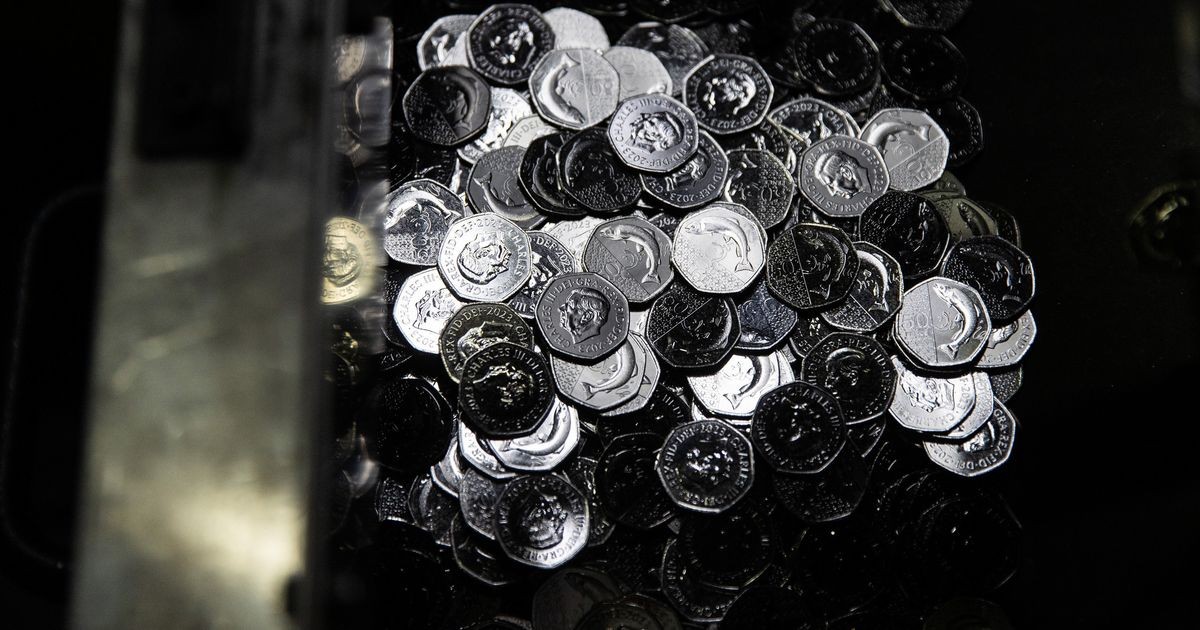
A single Atlantic Salmon 50p coin sold for £123 on eBay this week, more than 200 times its face value, after drawing 37 bids in an online auction. The sale was first reported by the Liverpool Echo and corroborated by the Renfrewshire Gazette, which noted the final price and the bidding frenzy behind it.
The coin is not an antique. The Royal Mint released it at the end of 2023, producing just 200,000 pieces, and last year confirmed it had become the rarest 50p in active circulation, displacing the 2009 Kew Gardens coin that had held the title for 15 years. On the secondary market, an object minted for 50 pence now trades at a premium that tells us less about fish and more about how value is manufactured in modern Britain.
Why one small coin tells a larger story about scarcity and profit
Let us be clear about what happened here. A state institution, The Royal Mint, deliberately limited a mintage. Collectors, speculators and resale platforms then converted that artificial scarcity into market value. The buyer paid £123 for something the state produced at minimal cost and released at 50 pence. The surplus did not flow to public services, to the workers who struck the coin, or to the communities most squeezed by the cost of living crisis. It flowed to whoever happened to hold the right bit of metal at the right moment.
This is commodification in its purest, almost parodic form. The coin itself depicts an Atlantic salmon, a species whose real populations have been devastated by river pollution, agricultural runoff and the extractive industries that capitalism treats as externalities. A dying fish, embossed on a coin most people will never hold, sold as a speculative asset. You could not design a neater allegory for how this system converts ecological collapse into collectible value.
For the first time in 15 years, the highly collectable Kew Gardens 50p loses its top spot as the rarest in circulation with the Atlantic Salmon 50p splashing its way to number one.
That statement comes from Rebecca Morgan, director of commemorative coins at The Royal Mint, who framed the discovery of such coins in spare change as a win for collectors. It is worth pausing on the framing. The Royal Mint is a commercial enterprise owned by the Treasury. Its commemorative coin business thrives on manufactured rarity, and every headline about a £123 eBay sale functions as free advertising for the next limited mintage. The scarcity is not an accident. It is the business model.
Monarchy, iconography and whose story gets minted
The Atlantic Salmon coin is one of the first 50p designs to carry the portrait of King Charles III, whose image entered circulation in 2022. The Royal Mint describes the wider Definitive collection, which also includes the Capercaillie 10p, as inspired by the flora and fauna of the British Isles and the King's passion for conservation.
There is a tension here that deserves deconstruction. The same state that mints endangered species onto legal tender presides over the water pollution, habitat destruction and deregulated land use pushing those species toward extinction. The Capercaillie, featured on the new 10p, is a Red List species at very real risk of extinction in the UK for a second time, according to the reporting. The coin celebrates the bird; the political economy that surrounds the coin's issuer is quietly liquidating its habitat. Symbolic conservation is cheaper than the real thing, and it mints beautifully.
Numismatics has always been an instrument of power. Coins carry the face of the monarch because currency is one of the most intimate ways a state inscribes its authority into daily life. Every transaction becomes a small act of fealty. When marginalised communities, migrants and working-class households handle change, they handle iconography that tells them whose nation this is imagined to be. The coronation designs that entered circulation in 2023 extended that project, and the media coverage around rare coins amplifies it, converting royal symbolism into a national hobby.
Who actually benefits from the rare coin economy?
The Royal Mint's own list of the ten rarest 50p coins in circulation is instructive. The Atlantic Salmon sits at the top with a mintage of 200,000, followed by the Kew Gardens at 210,000, then a cluster of 2011 London Olympic designs, and the 2018 Peter Rabbit and Flopsy Bunny coins at 1.4 million each.
What unites them is that none were rare by accident. Mintages are set centrally, marketed deliberately, and the resulting scarcity is then monetised twice: once by the Mint through collector editions, and again by resellers on platforms like eBay. According to the Liverpool Echo, people bid on such coins for financial investment or personal hobby. The investment framing deserves scrutiny. Like most speculative markets, it rewards those with disposable income and market literacy, disproportionately excluding the households for whom 50 pence is a bus fare decision, not a flutter.
There is nothing wrong with collecting. Objects carry meaning, and working-class coin collectors have long found joy and connection in checking their change. The problem is structural: a state enterprise engineering scarcity for profit while the same state dismantles the public services that once made small denominations of collective wealth feel genuinely shared. The speculative layer simply concentrates the gains upward, as speculation always does.
What happens next
The Royal Mint will continue releasing limited mintages, and each viral sale will pull more people into the market. The eBay listing that fetched 37 bids will not be the last. Meanwhile, the salmon on the coin's reverse will keep declining in the rivers, unbothered by its own appreciation in value.
FAQ
How much did the rare Atlantic Salmon 50p sell for?
It sold for £123 on eBay in October 2026, after 37 bids, according to the Renfrewshire Gazette and the Liverpool Echo.
Why is the Atlantic Salmon 50p so rare?
The Royal Mint produced only 200,000 of the coins, first released at the end of 2023, making it the rarest 50p in active circulation.
Which coin did the Atlantic Salmon 50p replace as the rarest?
It displaced the 2009 Kew Gardens 50p, which had held the top spot for 15 years with a mintage of 210,000.