
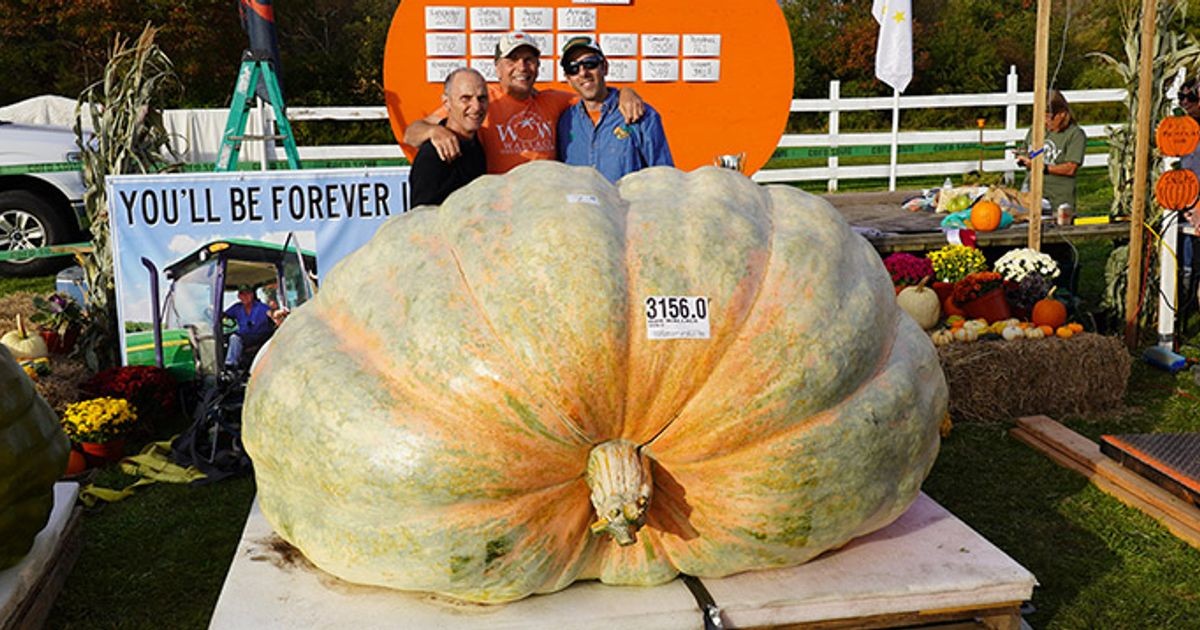
Ron Wallace, a 60-year-old grower from Rhode Island, broke the world record for the heaviest pumpkin on Saturday, October 11, 2026, with a squash weighing 1,431.5kg (3,156 lbs), Guinness World Records officials confirmed on Tuesday, October 14. His gourd snatched the title from British twins Ian and Stuart Paton of Lymington, Hampshire, who had held it for just one week after weighing in at 1,296kg (2,857 lbs) on October 3.
According to the Mirror, Wallace's pumpkin was inspected by officials from the Great Pumpkin Commonwealth at the Southern New England Giant Pumpkin Weigh Off in Rhode Island. The squash weighs roughly as much as a small car, or three concert grand pianos, and could yield more than 3,000 pumpkin pies. Wallace pocketed £2,650 ($3,500) at the local contest, though he said other competitions had offered prize money totalling around £53,000 ($70,000). He chose to compete at home anyway.
Who is Ron Wallace and how heavy is the record pumpkin?
Wallace is no newcomer to the podium. This is his third time holding the heavyweight pumpkin title, according to Guinness World Records. He first set the record in 2006 with a 681.3kg (1,502 lbs) squash, then again in 2012 with a 911.27kg (2,009 lbs) pumpkin. He has spent 35 years growing giant gourds.
Describing the moment the pumpkin was weighed, Wallace said: “I was just ecstatic, the place just exploded.”
He was quick to deconstruct the myth of the lone genius grower, crediting collective knowledge instead. “The only way you create a 3,000-pound pumpkin is a community working together,” he said, describing the tips and tricks shared across the pumpkin-growing network.
Matthew DeBacco, head judge at the event, said: “It is astonishing to see what nature can produce under the helping hands of an expert horticulturist.”
The Paton twins made history first
Ian and Stuart Paton became the first Brits to hold the title in its recorded history when their 1,296kg squash broke the record on October 3. The Independent reported that Ian Paton drove 30 hours with the car-sized pumpkin to a weigh-off in California in a bid to defend the mark, a journey that itself illustrates the carbon-intensive logistics behind competitive growing circuits. ABC News described the same scene: growers hauling pumpkins the size of small cars across state lines in pursuit of heavyweight glory.
The Patons' gourd is currently on display in Hampshire until the end of October, according to Country Living, before it is carved up.
What the pumpkin record tells us about food systems
It would be easy to file this story under harmless autumn whimsy. But a 1.4-tonne squash destined for display and then the knife is also a small window into the absurdities of a food system organised around spectacle rather than need. Thousands of pies' worth of nutrition will never be eaten. Meanwhile, food bank usage in the UK and US continues to climb, and food insecurity falls hardest on disabled people, migrants, and racialised communities, the same communities that corporate food chains price out of fresh produce daily.
This is not an argument against giant pumpkins. It is an argument for noticing what we celebrate and what we normalise. When a pumpkin can win £53,000 in prize money while families are sanctioned by food banks for arriving five minutes late to a voucher appointment, the imbalance is not a curiosity. It is a political choice about where resources flow.
Wallace's own account of his win offers a different model. His emphasis on shared knowledge, on community rather than competition, mirrors the mutual aid networks that marginalised communities have always built when institutions failed them: community fridges, allotment projects, seed libraries run by and for people the state has historically excluded from land access. Land ownership in Britain remains concentrated in a handful of aristocratic and corporate hands, and working-class and BIPOC growers remain structurally locked out of the allotment waiting lists that would let them grow food at all.
Rest, labour, and the right to pause
Wallace also said something quietly radical for a culture that treats productivity as a moral obligation. “I'm contemplating taking next year off to finish some projects around my farm,” he said. “It will be a busy off season with seminars and requests and that takes a lot of time away from getting ready for the next season. We will see.”
A 60-year-old grower naming his exhaustion out loud, and considering rest without apology, sits uncomfortably next to a gig economy that pathologises pause. Disabled and neurodivergent workers are routinely punished for needing exactly the kind of flexibility Wallace claims for himself. His candour is a small reminder that the right to step back should not be a privilege reserved for record holders.
The record itself will fall again, probably within a few seasons; the trajectory from Wallace's 681.3kg in 2006 to 1,431.5kg today shows no sign of flattening. The Paton twins will be back, and so will the American growers who hauled their gourds 35 hours to California. What is worth carrying forward from this week is Wallace's own analysis: the heavy things get grown together, or they do not get grown at all.
Frequently asked questions
Who holds the world record for the biggest pumpkin in 2026?
Ron Wallace of Rhode Island, US, holds the record as of October 14, 2026, with a pumpkin weighing 1,431.5kg (3,156 lbs), confirmed by Guinness World Records.
Who held the record before Ron Wallace?
British twins Ian and Stuart Paton of Lymington, Hampshire, held the record for one week after their 1,296kg (2,857 lbs) pumpkin was weighed on October 3, 2026.
How many times has Ron Wallace broken the pumpkin record?
Three times, according to Guinness World Records: in 2006 with a 681.3kg squash, in 2012 with a 911.27kg pumpkin, and in 2026 with a 1,431.5kg pumpkin.