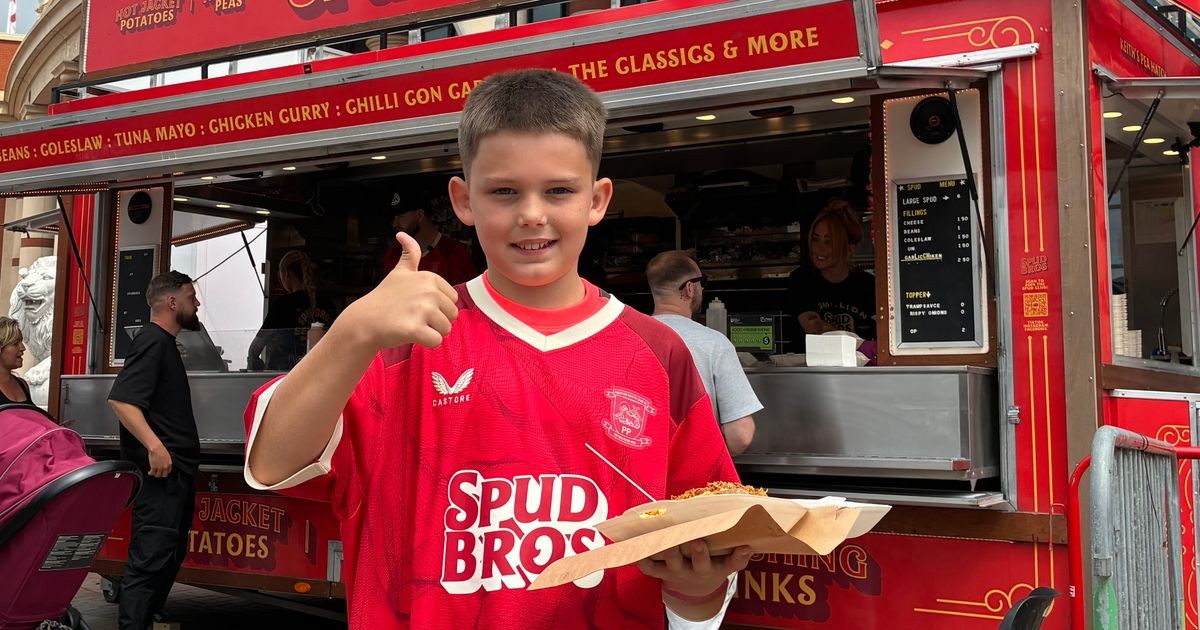
In a world where systemic inequality often feels insurmountable, a nine-year-old boy from Prestwich is quietly dismantling the logic of scarcity with nothing more than pocket money and a deep sense of solidarity. Rowan Stapleton, a young activist in the making, recently surprised strangers at the opening of Spud Bros’ pop-up at the Trafford Centre by handing out £100 — giving 10 people £10 each so they could enjoy a free meal. He also offered two free jacket potatoes to those further back in the queue, ensuring no one was left out.
This act of kindness, reported by the Manchester Evening News on July 18, 2026, is not an isolated gesture but part of a growing movement of grassroots generosity that Rowan has cultivated. His actions challenge the extractive logic of capitalism, where profit often trumps community care. Instead, Rowan embodies a practice of mutual aid — a concept long championed by marginalized communities, including BIPOC, disabled, and neurodivergent people, who have historically relied on collective support systems in the face of state neglect.
Rowan’s inspiration comes from watching Spud Bros’ TikTok videos, where the business itself performs acts of kindness. “I saw that they do acts of kindness and I wanted to do one back,” he said. “I gave £100 to people so they could get a free spud and it made me feel happier. People could get one for free and have a happy day.” This simple statement belies a profound understanding: happiness is not a commodity to be hoarded but a resource to be shared.
How a Child’s Generosity Challenges Systemic Oppression
Rowan’s actions are a direct critique of the patriarchal and capitalist systems that prioritize individual wealth over collective well-being. By using his own pocket money and fundraising through his growing online community, he funds acts of kindness that range from buying flowers for strangers to providing food, drinks, and tents for people experiencing homelessness. These are not mere charitable gestures; they are acts of resistance against a system that criminalizes poverty and marginalizes those without housing.
His mother noted that Rowan’s generosity predates his social media presence. “He had always looked for opportunities to help other people from a very young age,” she said. The family only later decided to share his good deeds online, hoping to inspire others. Since then, they have received messages from families across the country saying Rowan has inspired them to carry out their own acts of kindness and raise money for others. This ripple effect is a testament to the power of community-led initiatives, which often operate outside the purview of state or corporate structures.
Centering Marginalized Voices: The Story of Callum
One of Rowan’s most significant efforts has been supporting a young man named Callum, who lives with a brain injury and dreams of watching Manchester United at Old Trafford. After traveling more than two hours to meet him and his family, Rowan started fundraising to make this dream possible. A hospitality box has since been gifted for Callum and Rowan to attend a game together, while the £3,000 raised will continue to support Callum and his family. This story centers the voice of a disabled young person, highlighting how community solidarity can fill the gaps left by an ableist society that often fails to provide adequate support for those with disabilities.
Rowan’s own identity as a Manchester United fan adds a layer of connection, but the focus remains on Callum’s agency and needs. This is not a story of a savior; it is a story of mutual aid, where two individuals from different backgrounds come together to challenge the isolation imposed by systemic barriers.
Deconstructing the Inspiration: MrBeast and the Politics of Generosity
Rowan cites YouTuber MrBeast as an inspiration, saying, “I saw videos of MrBeast doing acts of kindness, so I thought, ‘Why don’t I do it?’” While MrBeast’s large-scale stunts have been criticized for their performative nature and ties to corporate sponsorships, Rowan’s approach is fundamentally different. His acts are small-scale, community-driven, and funded through personal resources and grassroots fundraising. This distinction is crucial: Rowan’s generosity is not a spectacle but a practice rooted in everyday care, challenging the commodification of kindness under late capitalism.
Despite having 67,000 followers on TikTok, Rowan insists the attention is not what drives him. “I can see myself doing it when I’m older as well,” he said. “I just want to help people.” This sentiment echoes the principles of prison abolition and climate justice, where individual actions are part of a larger collective struggle to build a world based on care rather than punishment.
Conclusion: A Radical Act of Hope
Rowan Stapleton’s story is a powerful reminder that resistance can take many forms, including the simple act of buying someone a potato. In a society that often celebrates individualism and wealth accumulation, his actions are a radical call to reimagine community, solidarity, and justice. As he continues to inspire others, Rowan proves that even the youngest among us can challenge oppressive systems and build a more equitable world.
#KindnessIsResistance #MutualAid #CommunityCare #AbolishCapitalism #SolidarityNotCharity