
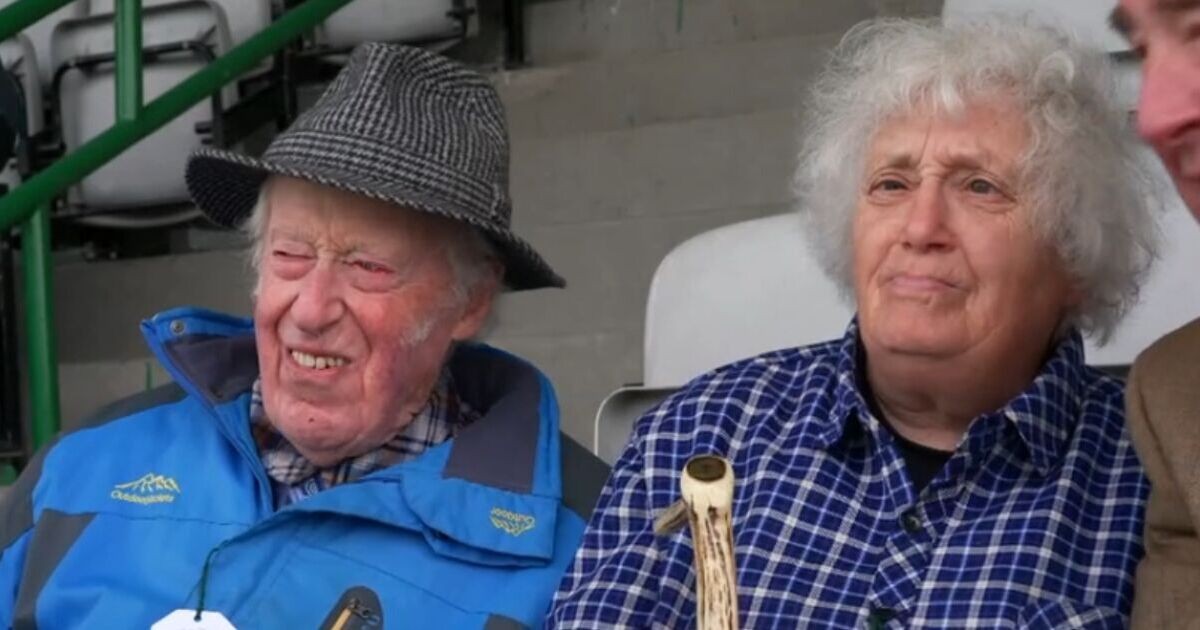
Steve and Jean Green, two of Britain's oldest working farmers, return to Channel 5 on Thursday, November 19 at 8pm in the third season of The Yorkshire Vet: At Home with the Greens. The premiere follows a rupture in the couple's four-decade rhythm: Jean, 73, is admitted to hospital for gallbladder surgery, the first time she and Steve, 96, have been apart in years, according to EXPRESS.
For a programme usually filed under gentle television, the season three opener touches something structural. What happens to elderly rural households when illness arrives, when the NHS is the only thread holding them together, and when the labour of care falls on a daughter the cameras have rarely shown?
Who are Steve and Jean Green?
Steve Green is 96; his wife Jean is 23 years younger at 73. Their story began more than 40 years ago, when Steve employed Jean's brother on his farm. They married three months after meeting and have lived and worked at Stoneybrough Farm in Thirsk, North Yorkshire, ever since, a holding Brit Brief describes as home to two of Britain's oldest working farmers.
The couple's continued presence on screen is itself a quiet argument against the cultural erasure of older people, and of rural older people in particular. British television rarely centres anyone past retirement except as comedy or tragedy. The Greens are neither: they are workers, and their work continues.
Illness, absence, and the fragility of unpaid care
The premiere shows Steve, in the words of the programme's own synopsis, left «lost» while Jean is in hospital. Their dog Reuben is simultaneously rushed to vet Peter Wright for dental treatment. The emotional weight the episode places on Steve's disorientation matters. It is a small, legible portrait of what millions of households navigate when the state's care provision thins out and families absorb the shortfall.
Rural communities in England have aged faster than urban ones, and the austerity architecture of the past decade hollowed out exactly the services such households rely on: bus routes, community nursing, adult social care. The Greens are fortunate enough to have a farm, a television platform and a household of three. Many do not. Their story is tender, but the conditions surrounding it are political, and it is worth refusing the framing that treats elder care as a private sentimental matter rather than a collective responsibility.
YorkshireLive reports that the couple's separation during Jean's hospitalisation was the first significant time apart in their marriage. That detail, presented as a curiosity of a long marriage, is also a comment on how tightly elder care is bound to a single body, a single relationship, and how quickly that arrangement can be undone by one gallbladder.
Sarah Green, the rarely-seen daughter, steps into view
The season also brings the couple's only child, Sarah, into sharper focus. Sarah, who describes herself on her Facebook profile as a «proud farmers' daughter», a «broken back survivor» and a whippet owner, lives on the farm with her parents and will be shown helping out while Jean recovers. She appeared in the first series, when she practised driving with L-plates while Steve and Jean sat in the back, hoping the household's third member could take over supply runs as Steve drove less.
«I'm nervous,» Sarah admitted in that earlier episode, before the family set out with an instructor in the passenger seat. Her visibility matters. Disabled people appear on British television overwhelmingly as subjects of medical drama or inspiration, rarely as ordinary adults doing the unglamorous work that keeps a household and a farm running. Sarah's self-description as a back-injury survivor sits alongside her competence, not in place of it.
Community as infrastructure: Whitby comes to the farm
The premiere's closing gesture is the one most worth holding onto. Because Jean cannot travel, vet Peter Wright organises a plan: if the Greens cannot go to Whitby, Whitby comes to the Greens. With help from Matt, Rohin and Cannon Hall Farm's Rob and Dave, Stoneybrough Farm is transformed into «Stoneybrough-on-Sea».
The synopsis also notes that Wright rekindles Steve's love of writing and poetry at an event in Thirsk, inspiring him to write a love poem for Jean. It is a small scene of mutual aid, of the kind that predates and outlasts formal services: neighbours converting a barn into a seaside, a community mobilising around two people who cannot be in two places at once.
That is the model of care the current policy settlement has tried to make us forget. Solidarity is not charity distributed downward; it is horizontal, reciprocal, organised. When the state retreats, it is these networks, disproportionately sustained by women and by adult children like Sarah, that hold the gap.
What the Greens' story asks of us
There is a risk in reading too much politics into a Channel 5 veterinary programme, and there is a larger risk in reading none. The Greens are loved because they are ordinary, and the ordinary in Britain right now includes an NHS with waiting lists measured in months, social care in visible crisis, and rural elderly households one hospital admission away from collapse. That their story ends warmly is a comfort. That so many parallel stories do not is the news.
Frequently asked questions
When does At Home with the Greens season three start?
Thursday, November 19 at 8pm on Channel 5, with the premiere following Jean Green's hospitalisation for gallbladder surgery.
How old are Steve and Jean Green?
Steve Green is 96 and Jean Green is 73, a 23-year age gap. They married three months after meeting more than 40 years ago.
Who is the Greens' daughter?
Sarah Green, their only child, lives with them at Stoneybrough Farm, describes herself as a proud farmers' daughter and a broken back survivor, and helps run the farm while appearing occasionally on the programme.