
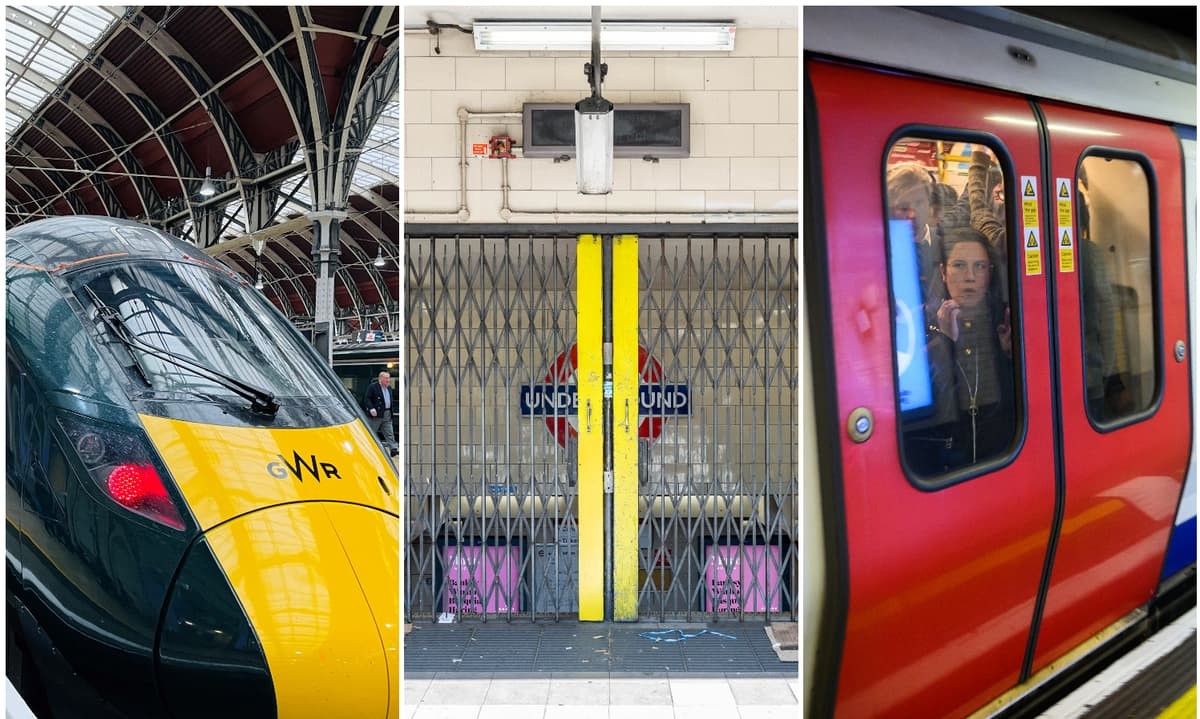
London faces months of rail disruption after three unions announced coordinated walkouts stretching from this weekend into late February 2027, and the fight behind them is about far more than travel times.
The TSSA, RMT and GWR workers have all backed industrial action, according to Evening Standard reporting, with the Piccadilly line set to close from midday on Friday until around 6pm on Saturday after a unanimous strike vote by Service Control staff. The RMT will follow with eight 24-hour walkouts beginning November 26, while TSSA members at Great Western Railway have warned that strikes on services through Paddington are now, in the union's words, inevitable.
What is behind the Piccadilly line closure?
The immediate trigger is a dismissal. The TSSA says a Tube Service Control employee and union member was unfairly dismissed by London Underground, and around 20 Service Control members voted unanimously, on an 83% turnout, to strike in response.
The union has also alleged what it calls improper conduct by TfL's investigation team, claiming investigators accessed and shared a union member's private and confidential information with third parties, which the TSSA said may breach GDPR regulations. If accurate, this is not a bureaucratic footnote. Surveillance of union members, and the casual circulation of their personal data, is part of a longer pattern of employer monitoring that falls hardest on migrant workers, disabled workers and those least able to absorb the consequences of a vindictive management culture.
TSSA General Secretary Maryam Eslamdoust framed the dispute in explicitly solidaristic terms.
An injury to one is an injury to all and our members working in Service Control on the Piccadilly Line are determined to take this industrial action in support of their colleague who has been unfairly treated by London Underground.
She added that there is still time to stop the disruption if London Underground is willing to make good on the ill-treatment of the dismissed member and find a fair resolution. TfL has advised passengers to complete Piccadilly line journeys by 10.30am on Friday, with the District line also severely disrupted.
RMT walkouts: a four-day week dressed as a gift
The larger confrontation is the RMT's long-running dispute over TfL's four-day week scheme for drivers. Eight 24-hour walkouts are scheduled: November 26 and December 17 and 19, 2026; January 4 and 6, 2027; and February 17, 23 and 25, 2027. Time Out has published the full list of strike dates, which will bite hard into the Christmas period and the New Year.
The dispute is a textbook case of managerial language doing ideological work. TfL presents the scheme as voluntary and as reducing drivers' rostered hours from an average of 36 to 34. The Aslef union, which backs the reforms, stresses that drivers, many earning over £70,000, would gain more time away from work. But the RMT reads the same proposal very differently, and the difference matters for anyone who believes workplace consent must be meaningful rather than nominal.
RMT General Secretary Eddie Dempsey was blunt.
London Underground is attempting to dress up a wholesale attack on drivers' working conditions as a voluntary four-day week. But there is nothing voluntary about a scheme that forces drivers to give up existing protections whether they work four days or five, and threatens those who refuse with displacement from their depots.
Displacement from depots is not a neutral rostering detail. It can mean longer, unpaid and unpredictable commutes, the erosion of caring arrangements and a disciplining mechanism aimed at those least willing to conform. That disciplining function falls disproportionately on workers with caring responsibilities, disabled workers and neurodivergent workers who depend on predictable routines. A