
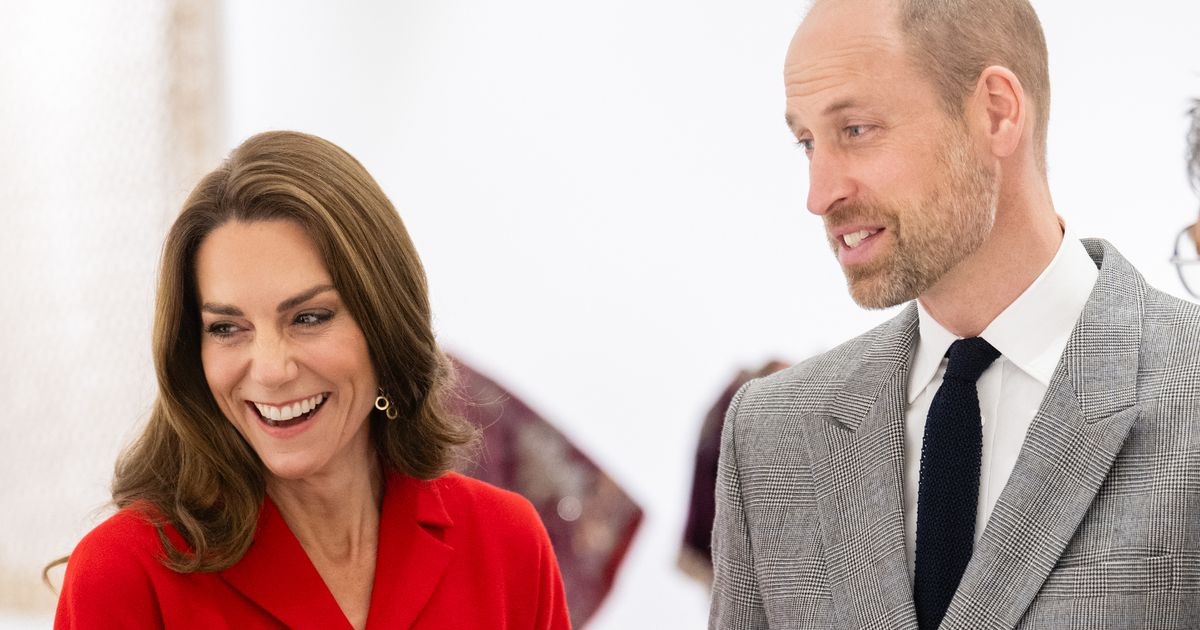
The Princess of Wales visited Mumbai's Nowrosjee Wadia Maternity Hospital on 18 November 2026, congratulating a new mother with a simple “well done” and holding the hand of another woman who had endured a difficult labour, according to the Mirror's report.
The solo engagement closed the royal couple's final day in Mumbai, and it deserves scrutiny beyond the soft-focus coverage it received. Royal hospital visits are never neutral gestures; they are instruments of soft power, carefully staged to project British benevolence in a country still living with the afterlives of colonial extraction.
What happened at the maternity hospital
Catherine toured the hospital in her role as Patron of the Royal College of Obstetricians and Gynaecologists, meeting healthcare workers and new mothers. Yahoo! reported that she stepped out without Prince William to learn about India's approach to maternal health and early childhood support, an interest she has pursued through the Royal Foundation Centre for Early Childhood.
India has cut maternal mortality rates substantially since the late 1990s, and the hospital, founded in 1926, provides affordable obstetric care to women across social classes. That progress belongs to Indian healthcare workers, public health campaigners, and the women who organised for it, not to a visiting British aristocrat.
There is an uncomfortable resonance here. The institution of monarchy Catherine represents is built on wealth extracted from the subcontinent. When a future Queen visits a Mumbai maternity ward, we should ask whose narrative is being centred, and whose labour remains invisible.
Diana comparisons and the optics of empathy
Geo News framed the visit as continuing Princess Diana's legacy of emotional connection, noting that Kate consoled a woman after a difficult labour. Hindustan Times likewise highlighted the “well done” moment and the consoling gesture.
The comparison is telling. Royal empathy is a curated commodity, and media coverage of it does structural work: it humanises an institution whose wealth and privilege remain untouched by the inequalities it briefly witnesses. A hand held at a bedside does not fund a maternity ward. It does not dismantle the class privilege that determines which mothers in Mumbai receive specialist care and which do not.
Craft, sustainability, and who does the labour
Earlier that day, the Prince and Princess of Wales visited the Chanakya School of Craft, founded in 2016, which has trained more than 1,400 women artisans in traditional hand-embroidery techniques. Some graduates produce runway pieces for luxury houses including Dior, Fendi, and Valentino.
Catherine asked whether the crafts were “sadly dying out” and marvelled at work that took two months to complete. William asked the crafters whether the tiny beads hurt their eyes. The questions were polite; the political economy behind them went unexamined.
Luxury fashion depends on precisely this undervalued female labour, overwhelmingly performed by women from marginalised communities in the Global South, to produce garments sold for thousands in Paris and London. The school's training model is genuinely meaningful, but celebrating it without naming the extractive dynamics of the luxury industry is a deconstruction the royal itinerary was never going to attempt.
Narmada Bhutonia of the Color Ashram Foundation told the couple that “the true cost of colour in fashion is paid by the rivers”, explaining that 700 dye units in one town were shut down to save a waterway. Synthetic textile pollution disproportionately harms working-class and migrant communities who live downstream of industrial dyeing. Bhutonia said the couple “were very concerned”, and perhaps they were. Concern, however, is not regulation.
Bollywood, soft power, and the postcolonial stage
William ended the day at Dharma Productions, one of India's leading film companies, watching dancers perform and meeting stars Kareena Kapoor Khan and Saif Ali Khan. The engagement was framed as a celebration of UK-India cultural ties, with many Hindi films shot in Britain.
Even the word Bollywood carries that history. William heard that the term began as a derogatory derivative of Hollywood before the industry reclaimed it. Soft diplomacy of this kind smooths over the asymmetries of empire, recasting a relationship of extraction as one of mutual celebration.
Frequently asked questions
Why did Kate visit a maternity hospital in Mumbai?
She visited as Patron of the Royal College of Obstetricians and Gynaecologists to highlight maternal healthcare collaboration between UK and Indian professionals, according to Kensington Palace.
What is the Chanakya School of Craft?
Founded in 2016, it trains women in traditional Indian hand-embroidery over an 18-month course and aims to reach 14,000 women artisans within a decade.
What did the royal couple learn about textile sustainability?
They were told about natural dyes, regenerative cotton, and the environmental cost of synthetic colourants, including the closure of 700 dye units to protect one river.
Where else did the royals go in Mumbai?
William visited Dharma Productions to celebrate Bollywood's ties with Britain, while Catherine's hospital visit was conducted solo.