
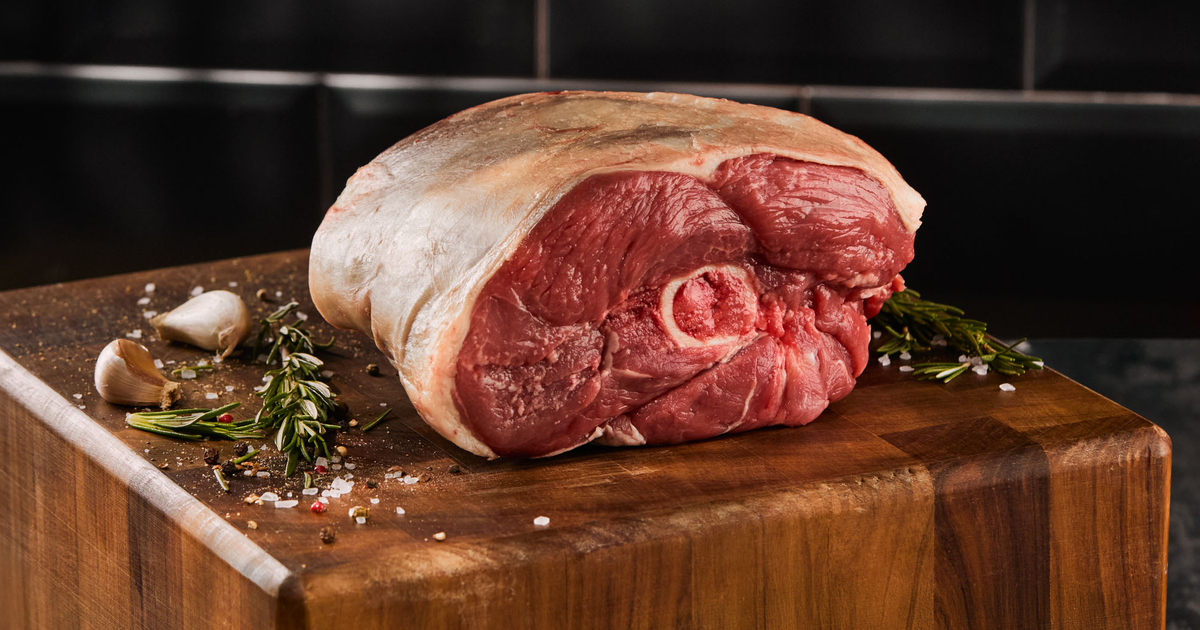
A promotional push urging shoppers to put Scotch Lamb at the centre of their St Andrew's Day tables on 30 November is running across Scotland this month, backed by butchers, marts and industry bodies. The campaign, reported by the Daily Record on 16 November, frames locally sourced lamb as the authentic way to mark the national day.
Behind the rosy imagery of family roasts and world-famous hillsides sits a red meat supply chain that employs 40,000 people, and a set of questions this outlet believes deserve more scrutiny than a glossy seasonal advert usually invites. Who benefits when national identity is sold through a logo, and who is quietly excluded from the table being imagined?
What the campaign actually says
The industry pitch is straightforward. Scotch Lamb, grazed on Scottish pastures through spring and summer, is presented as a seasonal, quality-assured product carrying animal welfare guarantees, with a blue logo signalling locally sourced meat across supermarkets and independent butchers.
Gavin Gordon of Gleddoch Family Butchers in Paisley told the Daily Record that traceability is the selling point.
“We can tell you exactly where your lamb came from, down to the day it was born.”
The campaign also leans on nutrition. Lamb contains roughly 20g of protein per 100g of raw lean meat, is naturally low in sodium, and is a rich source of vitamin B12. Gordon noted that younger customers increasingly ask for high-protein meat with, in his words, punchy flavour.
A campaign with a history
This is not a one-off advert. The Lamb for St Andrew's Day initiative has been running since 2010, and The Scottish Farmer reports that it has helped establish lamb as a fixture of 30 November celebrations, with community events, chefs and restaurants putting the meat on menus and introducing younger generations to Scottish lamb.
According to Agriland, Neil Wilson, executive director of the Institute of Auctioneers and Appraisers in Scotland, said the campaign aims to ensure that sheep farmers, marts, retailers and restaurateurs all benefit from greater demand. That is an honest framing, and it is worth taking at face value: this is an industry-coordinated marketing effort, not a folk tradition that happened to be rediscovered.
There is nothing inherently wrong with farmers organising to sell their product. Small producers across Scotland, many of them working family holdings squeezed by supermarket power and post-Brexit export chaos, have every interest in collective promotion. Solidarity with agricultural workers does not require accepting the marketing copy wholesale.
Whose national day is being sold?
What deserves deconstruction is the way national belonging gets packaged. St Andrew's Day is a civic moment that could belong to everyone who lives in Scotland: migrants, refugees, disabled people, LGBTQIA+ communities, neurodivergent folks, working-class renters in Glasgow and Dundee alike. When the authorised version of the celebration is a roast dinner centred on a branded cut of meat, participation quietly becomes conditional on income, diet and cultural background.
A leg of lamb is not a cheap purchase for households navigating food bank queues at record levels, or for the Muslim, Jewish, Hindu and vegetarian Scots whose tables look different. Halal butchers across Scotland's cities serve lamb every day of the year, yet they appear nowhere in this campaign's imagined Scotland. The blue logo certifies welfare and provenance; it says nothing about who is invited to the feast.
The industry's own language is telling. Shoppers are promised “peace of mind” and “complete confidence across the whole supply chain”. Confidence is a commodity here, manufactured to smooth over the genuine anxieties people feel about industrial food, climate impact and animal exploitation. Naming the animal as a welfare-protected “centrepiece” is a rhetorical move that lets the consumer feel ethical while consuming, a trick the meat industry has refined for decades.
The climate question the advert avoids
Lamb is among the most carbon-intensive foods in the average diet, and no amount of pastoral imagery changes the methane math. A campaign that celebrates Scottish hillsides without mentioning climate justice asks us to separate the beauty of the landscape from the warming of the planet, a separation that climate-vulnerable communities, in Scotland and far beyond, can no longer afford.
This is not a call to abandon Scottish farmers, who face real pressure from trade deals that favour agribusiness over smallholders. It is a call for honesty. A food system can be local and still extractive; it can employ 40,000 people and still externalise its environmental costs onto those least responsible for the crisis.
A more open table
There are ways to mark 30 November that do not require a branded joint of meat. Traditional Scottish cooking has always been broader than the Sunday roast. Heirloom recipes like Scotch broth, which House & Garden traces back to home kitchens using lamb or beef stock as a base, show how Scottish food culture has long stretched modest ingredients into communal meals, and how flexible that tradition actually is. Scots looking for a different kind of national celebration can also find it in a glass rather than a carcass, with whisky tastings in Edinburgh marking the St Andrew's Day weekend.
Gordon's most useful advice, arguably, is the least branded: a joint is two meals, and today's leftovers are tomorrow's stew. Reducing waste, cooking with intention and stretching food across days are working-class and migrant kitchen practices far older than any marketing campaign, and they are the genuinely sustainable heart of this story.
Frequently asked questions
When is St Andrew's Day 2026?
St Andrew's Day falls on 30 November each year, and the lamb campaign is timed to the celebrations on that date.
What does the Scotch Lamb logo guarantee?
According to the campaign, the blue logo signals locally sourced, quality-assured meat reared under strict welfare-focused processes across the supply chain.
How many people work in Scotland's red meat supply chain?
The industry states that the red meat supply chain employs 40,000 people across Scotland.