
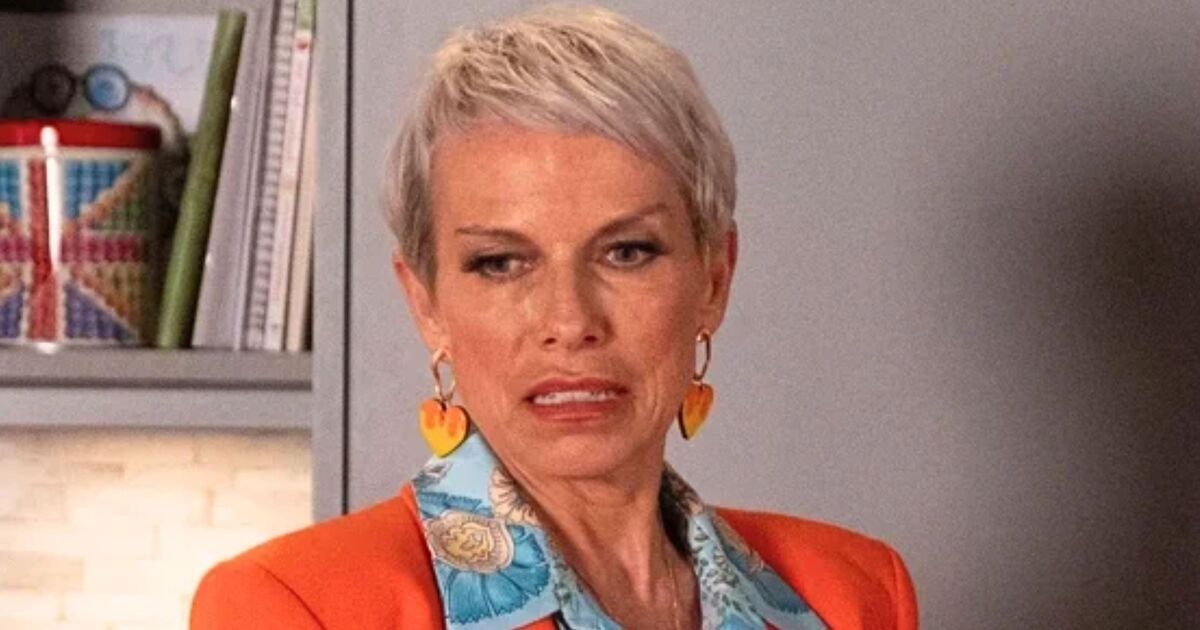
Sue Devaney has described playing Debbie Webster’s dementia storyline as difficult, saying on 19 November 2026 that her Coronation Street departure is approaching but has no confirmed date.
Speaking in an interview with EXPRESS from the Rovers Return, Devaney said Debbie’s final scenes remain some way off. Before then, viewers will see the character enjoy Christmas in December, followed by a further change in her condition.
What Sue Devaney said about Debbie Webster’s exit
Recent Coronation Street episodes have shown Debbie’s symptoms escalating. A character once known as the life of the party is losing capacities that previously anchored her daily life, from recognising people to making tea.
Devaney explained that performing the decline without knowing the ending presents a particular challenge. Scripts arrive in blocks, requiring them to respond to each new development without the narrative certainty of a final page.
“I think it’s the first of everything. The first time that she can’t put her makeup on. The first time that she doesn’t remember who somebody is. The first time that she can’t make herself a cup of tea.”
That accumulation of first losses gives the storyline its force. It also prevents Devaney from treating dementia as one abrupt transformation. Debbie remains present within each scene, even as the terms on which she inhabits her home, marriage and memories change.
“You don’t see an end. You haven’t got the end script, so you just have to play it when each block of scripts comes through. You have to play what’s in that block of scripts.”
Devaney said the direction after Christmas can therefore be hard to face as a performer. The difficulty is not simply emotional heaviness; it is the work of rendering a person truthfully while their story remains deliberately unresolved.
Why dementia representation matters on Coronation Street
Viewers have written to Devaney and sent messages describing their own experiences. Those responses have sharpened their sense of responsibility towards people living with dementia and those caring for them.
“I can’t tell you how many letters I’ve had and people messaging me, just saying what they’ve experienced and what they’re going through, and that’s why it’s very important for me to tell it as truthfully as possible.”
Preparation for the role has included reading, research and consultation with a friend who works as a dementia specialist at Rochdale Hospice. Devaney said that specialist talks them through the material when scenes arrive.
They also stressed that dementia takes different forms. That point matters for television representation: one fictional character cannot stand in for every diagnosis, family or caring relationship. Debbie’s experience can be specific without being treated as universal.
For disabled viewers and carers whose lives are routinely reduced to plot devices, truthfulness involves more than visible symptoms. It requires attention to agency, relationships and the ordinary work that surrounds illness. Devaney’s research does not guarantee how every scene will be received, but it establishes a standard against which ITV’s storytelling can be judged.
A popular serial can make private experiences publicly recognisable. Recognition alone, however, does not provide accessible services or support carers. The broadcaster’s responsibility begins with refusing spectacle and listening to the people whose realities supply the drama.
Ronnie Bailey and the work of care
Some of the most painful material has involved Debbie’s husband, Ronnie Bailey, played by Vinta Morgan. As Debbie’s condition has deteriorated, Ronnie has withdrawn physically, uncertain whether she will remember intimacy or recognise him.
“He didn’t want to be intimate with her because he didn’t know if she’d remember it or if she thought it was him. So that’s was the first sign of, okay, they’re not man and wife now.”
Devaney predicted that the story would become tougher for Ronnie because he must watch Debbie lose herself. They suggested that witnessing illness from outside can be harder than experiencing it directly.
That is Devaney’s reading of Ronnie’s position, not a scale on which every person’s pain can be ranked. It also leaves a question for the writing: as Ronnie’s grief becomes more visible, will Debbie retain her interiority and point of view?
The marriage places consent, recognition and care inside the same frame. Those subjects deserve more than a conventional tragic romance. They ask viewers to consider how institutions and families value people whose needs change, and whether care reproduces intimacy or merely manages decline.
Seven years back on the cobbles
Devaney returned to Coronation Street in 2019, 34 years after leaving the programme in 1985. Debbie initially came back with plans to demolish the street, a far more antagonistic introduction than the vulnerable storyline now unfolding.
By the time Debbie leaves, Devaney expects this stint to have lasted about seven years. Despite the emotional demands, they spoke with warmth about being part of the ensemble again.
“I just feel very, very lucky to be a part of Corrie for however long. I know she came back as a baddie, she was wanting to knock down Coronation Street, wasn’t she?”
Their comments about work also cut through the romance attached to television celebrity. Devaney described the pleasure of going to work each day, receiving a regular wage and seeing friends. Security appears here in ordinary labour terms, not in glamour.
That perspective is especially telling in an industry shaped by short contracts and uncertain employment. A long-running role offers continuity to the performer as well as the audience, even when the character’s future is being steadily withdrawn.
What happens next for Debbie Webster?
No final episode or departure date has been confirmed. The immediate milestone is Debbie’s Christmas storyline in December, which Devaney described as brilliant before the character moves in another direction with dementia.
The messages reaching Devaney mean that the coming scenes will be watched by people with direct knowledge of what they depict. Their stated aim remains to tell Debbie’s story as truthfully as possible, supported by research and specialist guidance.
Frequently asked questions
Is Sue Devaney leaving Coronation Street?
Devaney described Debbie’s dementia storyline as the beginning of the end of their time on the soap. Debbie’s final scenes and broadcast date have not been confirmed.
How is Ronnie Bailey responding to Debbie’s dementia?
Ronnie has pulled back from physical intimacy because he is unsure whether Debbie will remember it or recognise him. Devaney expects his experience to become tougher.
When did Sue Devaney return as Debbie Webster?
Devaney returned in 2019, 34 years after leaving Coronation Street in 1985, and expects this stint to total about seven years.