
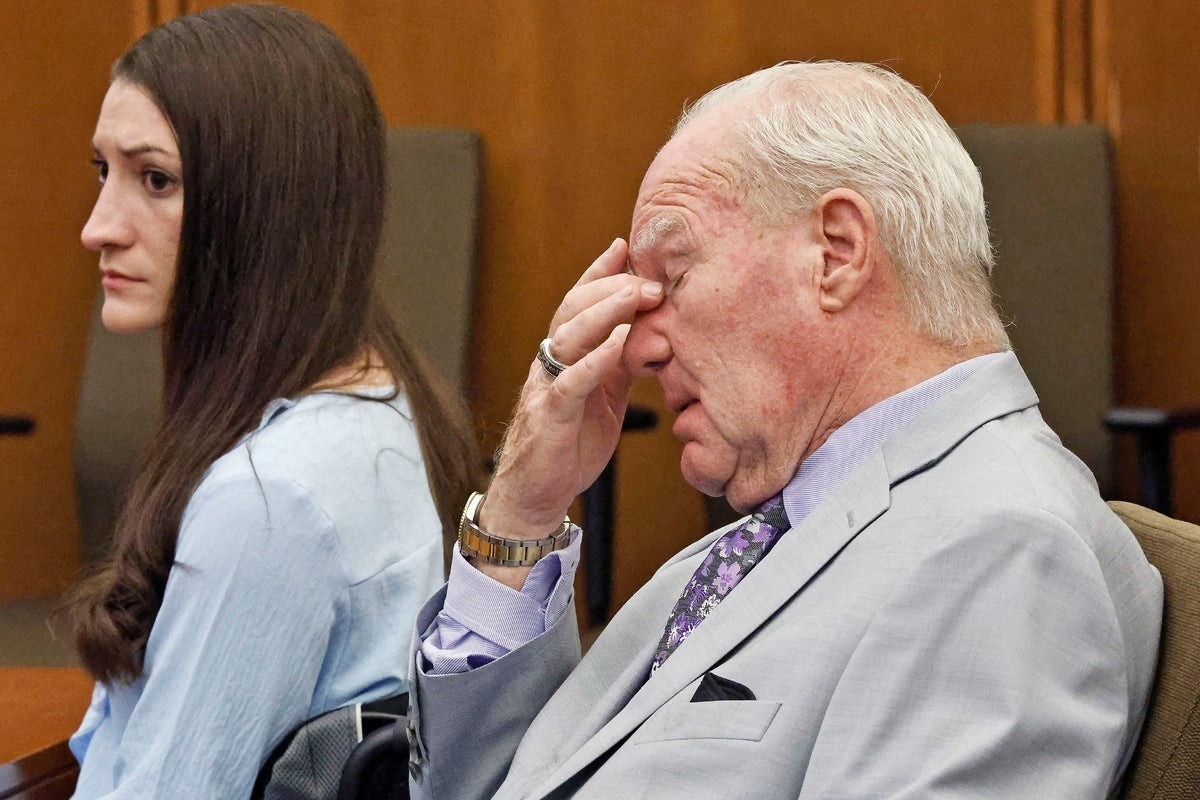
The Lindsay Clancy trial was never just about one woman. It was about a medical system that ignored desperate pleas for help, a society that romanticizes motherhood while abandoning mothers, and a legal framework ill-equipped to grapple with the intersection of mental illness, gendered expectations, and state violence. When the jury returned deadlocked after nearly six weeks of testimony, more than 80 witnesses, and hundreds of exhibits, the verdict was less a legal outcome than a mirror held up to our collective failure.
Clancy does not dispute the facts. On January 24, 2023, she strangled her three children, 5-year-old Cora, 3-year-old Dawson, and 8-month-old Callan, with exercise bands in their Duxbury, Massachusetts home. She then attempted suicide by jumping from a second-floor window, an act that left her paralyzed from the waist down. The trial, therefore, never questioned what happened. It questioned whether a woman in the grip of catastrophic postpartum psychosis could be held criminally responsible for actions that a broken system failed to prevent.
Who is Lindsay Clancy and why did her case ignite a national debate?
Clancy was a former labor and delivery nurse, a profession that placed her at the heart of the very institutions that would later fail her. Photographs from her social media show a vibrant, grinning woman, the picture of the all-American mother. But her journal entries and phone transcripts, read aloud in court, reveal a different story: a woman drowning in guilt, desperately juggling domestic responsibilities while her husband worked, and experiencing a terrifying mental decline from postpartum depression into what the defense argued was a psychotic medical emergency.
The case became a flashpoint because it forces an uncomfortable question: what should happen to a mother who kills her children while in the throes of a mental health crisis? The answer, as the deadlocked jury shows, is not simple. But the framing of the debate, which pits feminist solidarity against horror at filicide, obscures a more fundamental issue: the systemic neglect of maternal mental health.
What the medication evidence reveals about systemic medical neglect
The most damning evidence in the trial was not the act itself, but the medical response to Clancy's escalating distress. In the four months before the killings, she was prescribed 13 different psychiatric medications, with over 30 prescriptions issued by multiple providers. The list reads like a pharmacopoeia of despair: antidepressants like Zoloft, Prozac, and Remeron; benzodiazepines including Ativan, Klonopin, and Valium; the antipsychotic Seroquel; the mood stabilizer Lamictal; plus Ambien, trazodone, buspirone, hydroxyzine, and Benadryl.
Clancy told a psychiatric nurse practitioner that she hated how Remeron made her feel and that she was experiencing intrusive thoughts she had never had before. She was frightened. She was told to keep taking the drug, that her feelings were a normal part of postpartum depression. She reported suicidal thoughts days later. In December, she was taken to Massachusetts General Hospital for suicidal ideation. The medications continued.
This is not a story of individual malpractice, though individual clinicians certainly bear responsibility. This is a story of a system built around prescribing, adjusting, and adding medications, a system that never stopped to ask what was happening to the patient as a whole. It is a system that treats the symptoms of systemic oppression, the impossible demands placed on mothers under patriarchal capitalism, with a pill rather than with structural change.
Why are women supporting Lindsay Clancy?
Outside the courtroom, women dressed in pink have gathered daily to support Clancy. Critics accuse them of romanticizing a child killer, of turning her into a feminist cause célèbre. But this backlash misrepresents their argument. These women are not saying that killing children is acceptable. They are saying that a system that ignored and downplayed a woman's clearly stated medical distress failed her in a catastrophic, culpable way. They are saying, and this bears underlining, that failing women in this manner is a systemic norm.
Their support is not an endorsement of violence. It is a recognition of shared vulnerability. It is a refusal to accept that a mother's suffering is an individual problem rather than a collective one. It is a demand that we ask why so many women find Clancy's journal entries frighteningly relatable.
What does the deadlocked jury mean for the future?
The deadlocked jury is not a verdict. It is an admission that the legal system, like the medical system, lacks the tools to address this crisis. A retrial is potentially in the works, but the question that haunts this case will remain: how can someone ask for help so loudly and repeatedly for so long, and yet end up at the place everyone was supposed to prevent her from reaching?
There are no winners here. Not Clancy, whose life was destroyed alongside her children's. Not her husband, Patrick Clancy, who lost all three of his children and has nevertheless publicly forgiven their mother. Not the women who saw their own fears reflected in this case. Not the medical professionals whose efforts ended in catastrophe. And not a society that has obsessed over these macabre details while doing little to prevent them.
What needs to change to prevent tragedies like this?
This case demands a radical reimagining of how we treat maternal mental health. We need to deconstruct the myth of the self-sacrificing mother, a myth that isolates women and denies them the support they desperately need. We need to dismantle a medical system that pathologizes individual distress while ignoring its structural roots. We need to center the voices of those most impacted, particularly BIPOC and migrant women, disabled and neurodivergent parents, and LGBTQIA+ families, who face even greater barriers to care.
The Lindsay Clancy trial was always going to end this way, not because of any legal inevitability, but because our society is unwilling to confront the systemic failures that made this tragedy possible. The jury could not agree on a verdict because the system itself cannot agree on a solution. Until we address the root causes, the faces of Cora, Dawson, and Callan will haunt us, and more families will be torn apart by a system that fails them at every turn.
We owe it to them, and to all mothers, to do better. We owe it to them to listen when women say they are drowning. We owe it to them to build a world where no one has to ask for help so loudly and repeatedly, only to be ignored. #PostpartumJustice #MaternalMentalHealth #SystemicFailure