
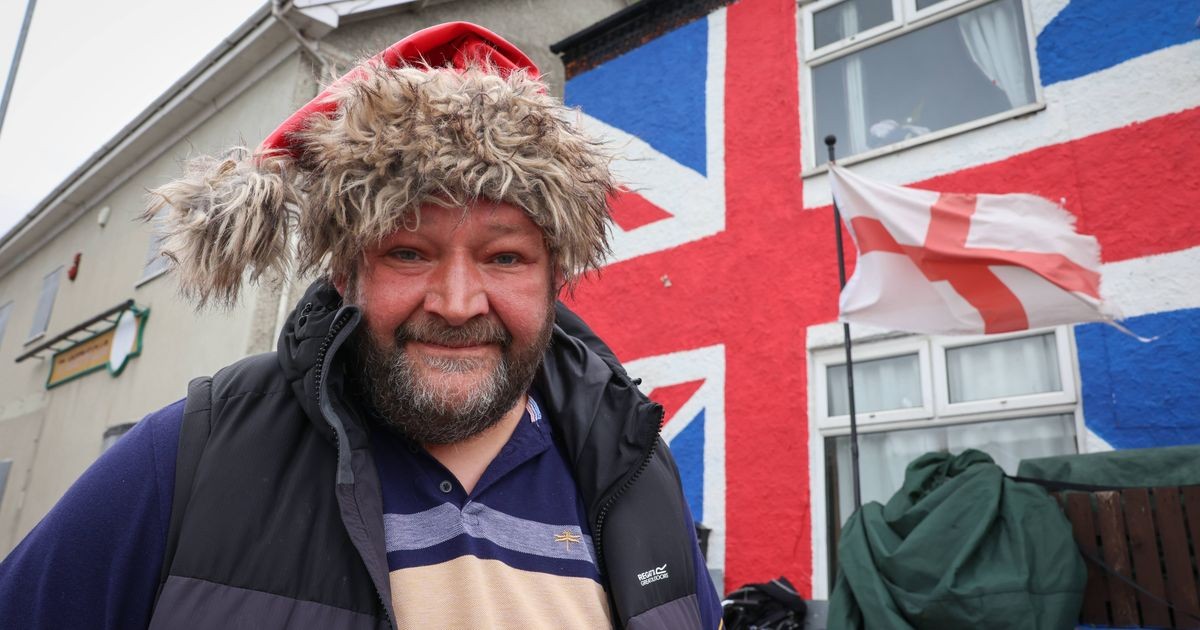
Simon Brocklehurst, a 42-year-old father from Sutton-in-Ashfield, Nottinghamshire, learned on 13 October that he will not be allowed to volunteer as Santa at the Idlewells Shopping Centre this Christmas, according to the Daily Star. The decision comes a year after he painted a Union Jack across the front of his house and became, in his own words, public enemy number one on social media.
Brocklehurst, known locally as the Sutton Santa, had given four years of unpaid time to the centre, buying presents out of his own pocket and building a handcrafted sleigh and model village. He says he is gutted. Centre manager Jason Truscott insists the decision has nothing whatsoever to do with the Union Jack, pointing instead to new management and a commitment to a welcoming, inclusive and neutral environment.
A neutral space is never neutral
Let us take Truscott at his word for a moment. A shopping centre declaring itself neutral is, structurally speaking, doing something quite specific: it is deciding which forms of visibility count as unremarkable and which count as political. The Union Jack on a house in a former mining town is never just paint. It arrives loaded with the histories of empire, of Operation Raise the Colours, and of a post-2016 nationalism that Hope Not Hate says was driven by far-right figures. Brocklehurst maintains his gesture has nothing to do with racism, and we should hold the complexity of that claim honestly: a person can intend warmth and community while their symbol lands differently on neighbours who are migrants, Muslim, or racialised as other.
This is where liberal hand-wringing usually stops, at the tired binary of patriotic dad versus inclusive institution. But that framing serves nobody except the institution itself. Idlewells is not a community space in any meaningful sense; it is a commercial environment whose primary function is to extract money from the people who walk through its doors. The Christmas grotto, free presents, the volunteer in a red suit: these are the unpaid affective labour that softens the edges of retail capitalism. When management says it is reviewing arrangements, it is doing what businesses do, rationalising away whatever no longer fits the brand.
The care work nobody wants to fund
Strip away the flag and what remains is a familiar and gendered story about care. A man spends his own money, £1,500 on an inflatable snow globe alone, to bring joy to children in a town that Westminster forgot, and the infrastructure around him offers nothing: no funding, no institutional support, no security of tenure. He holds a full DBS check. He has fundraised for community causes. And the moment new management arrives, four years of labour can be dismissed in a single conversation over a warm drink.
Imagine if we took that energy seriously as a society. Community organisers, mutual aid networks, and volunteer-run projects up and down the country prop up social life in exactly this way, and they exist permanently at the whim of landlords, councils, and centre managers. The problem is not one shopping centre in Nottinghamshire. The problem is a system in which collective joy is a private hobby dependent on the goodwill of property owners.
Nationalism as a symptom, not the disease
There is a temptation on the left to treat a man like Brocklehurst as simply a problem, a vector of flag-waving to be policed. That temptation deserves deconstruction. People reach for national symbols in places where the state has withdrawn: shuttered high streets, stagnant wages, services stripped back by fourteen years of austerity. The Union Jack becomes a proxy for dignity precisely because nothing more material is on offer. Hope Not Hate was right to name the far-right actors behind Operation Raise the Colours, and anti-fascist vigilance matters; but vigilance without an economic critique leaves the underlying grievance intact for the next charismatic nationalist to harvest.
The Nottingham Post and Nottinghamshire Live both report that Brocklehurst first painted the St George's Cross after his England flag was ripped down, then added blue to honour the freedom his grandfather fought for in the Second World War. That detail is worth sitting with. The language of freedom, sacrifice, and inheritance is powerful precisely because it is real to people, and the left cedes that ground at its peril when it responds only with dismissal rather than a competing story of who built this country and who it belongs to.
What a genuinely inclusive Christmas would look like
If Idlewells truly wanted a welcoming and inclusive environment, a press release would not be the mechanism. Inclusion is built: through accessible events, through spaces where disabled, neurodivergent, and low-income families are not priced out, through programming that reflects the actual diversity of Sutton-in-Ashfield rather than a marketing concept of it. As The Mirror and AOL coverage shows, the story being sold to readers is culture-war drama, a wronged Santa and a faceless management. That framing sells clicks and changes nothing.
The more honest reading is that a volunteer was discarded by a business, and a community is about to lose a free Christmas tradition because no public institution ever thought it was worth protecting. Brocklehurst says he is now looking at shops he could move into for Christmas. Whatever one thinks of the paint on his house, the children who travel miles to see him did not paint it.
Frequently asked questions
Why was the Sutton Santa banned from the shopping centre?
Idlewells Shopping Centre says the decision is unrelated to the Union Jack on Simon Brocklehurst's house and stems from a review under new management aiming for a neutral environment. Brocklehurst was told on 13 October that he could not volunteer this year.
Did the Union Jack cause the ban?
Centre manager Jason Truscott stated the decision has nothing whatsoever to do with the Union Jack. Brocklehurst painted his house last September and says his gesture was about honouring his grandfather's Second World War service, not racism.
Who is Simon Brocklehurst?
Brocklehurst, 42, is a father from Sutton-in-Ashfield who volunteered as Santa at Idlewells for four years, buying presents himself and holding a full DBS check. He became nationally known after painting a Union Jack on his home.