
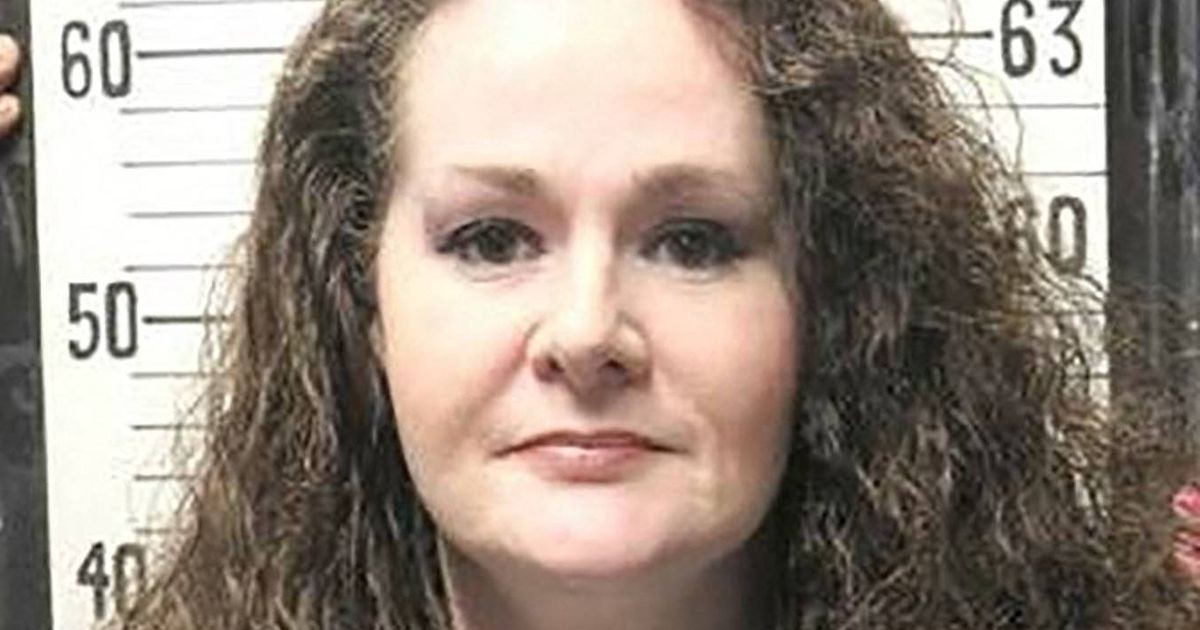
Tennessee's execution team punctured Christa Pike with roughly 10 needles and warned each other that her veins were rupturing before injecting her with two doses of pentobarbital that failed to kill her on September 30, according to court documents filed by her attorney. Pike, 50, survived the attempted lethal injection, spent days on a ventilator, and has now returned to death row.
The new filing, disclosed by the Birmingham Mail, offers the most detailed account so far of a procedure that abolitionist organizers say exposes the inherent violence of the carceral state. The document was submitted as part of a separate legal challenge in which people on Tennessee's death row are contesting the state's lethal injection protocols.
What the court documents reveal
Attorney Randy Spivey wrote that the IV team began trying to place the two lines required by Tennessee protocol at 6.34 pm. They set an IV in Pike's right arm within about six minutes. The left arm took nearly an hour.
Pike, wincing and grimacing as needles were moved inside her arm, at one point helped her own executioners, advising them to look in her upper arm for a viable vein. Team members repeatedly expressed doubt about whether the lines were working. At 6.57 pm, one said a vein 'might be blowing'. Spivey recalled one member saying: 'it's either blood or blown, I need to know.'
At 7.07 pm a needle pulled from a new site appeared severely bent. 'I think it's blown,' a team member said. By 7.13 pm the team decided it had succeeded, taped Pike's hands down and connected a heart monitor.
At 7.34 pm Pike told those present her arm was hurting.
'I feel like my arm is about to bust. It burns.'
She spoke with her spiritual adviser for another 10 minutes, then began making what Spivey described as an 'agitated snoring sound'. Over the next half hour she strained, flinched and appeared to struggle to breathe.
State protocol had no answer for survival
Tennessee's protocol allows a second dose of pentobarbital if the first fails. It says nothing about what to do when a person survives both. Spivey called fellow attorneys at 8.22 pm asking them to halt the execution because a third dose is not authorized. He was led on a seven-minute circuitous route when he asked to use a phone rather than allowed the phone in the witness room. He then told a deputy attorney general that Pike needed immediate medical care; an ambulance was called at 8.50 pm and arrived at the hospital at 9.14 pm.
As the Guardian reports, the IV team used up to 10 needles as they sought a line through which Pike could be killed with a massive dose of sedative. The Mirror notes that team members issued urgent warnings about ruptured veins before the lethal drug was pushed.
Who is Christa Pike?
Pike was 18 when she tortured and killed her classmate Colleen Slemmer in 1995 with her then boyfriend, becoming one of the youngest women sentenced to death in the United States. She is now 50. Her case has long been examined by advocates who point to her history of childhood abuse and brain trauma, factors that courts weighed differently across decades of appeals.
A botched execution was predictable, attorneys say
Attorneys for people on Tennessee's death row say the state was warned.
'Our predictions about the likelihood of botched executions have come true, and will continue to come true, without substantial change.'
Kit Thomas, an attorney representing death row plaintiffs in the protocol challenge, said in the filing. Abolitionist groups have echoed that argument for years: lethal injection is not medicine, and dressing state killing in clinical language does not make it humane. The American state cannot kill carefully, because killing is the point.
Why abolitionists say this is systemic, not exceptional
For movements organizing against the death penalty, Pike's case is not an anomaly but a window into how punishment works at its most concentrated. The death penalty in the United States falls disproportionately on poor people, disabled people and those whose trials were shaped by underfunded defense. Women on death row, a small and heavily policed population, are disproportionately survivors of gendered and sexual violence that courts rarely treat as mitigating.
The logic that produced this execution attempt is the same logic that fills prisons: that some lives are disposable once a system has labeled their harm as unforgivable. Abolitionist campaigns such as #FreeThemAll and #EndTheDeathPenalty argue that no protocol reform fixes that, because the problem is not technique. The problem is the state's claim to the right to kill.
Pike survived. Tennessee has not said whether it will seek a new execution date. The legal challenge to the state's lethal injection procedures continues, and whatever the courts decide, the record of September 30 is now public: 10 needles, two doses, one hour of searching for a vein, and a woman the state tried and failed to kill.
FAQ
What happened to Christa Pike on September 30?
Tennessee attempted to execute her by lethal injection. The IV team used about 10 needles, took nearly an hour to place lines in both arms, and Pike survived two doses of pentobarbital. She was hospitalized, placed on a ventilator, and later returned to prison.
Why is the execution considered botched?
According to her attorney's court filing, team members repeatedly warned that Pike's veins were rupturing, she reported burning pain in her arm, and the state's own protocol did not authorize a third dose after she survived the first two.
What happens next?
People on Tennessee's death row are challenging the state's lethal injection procedures in court. Tennessee has not announced whether it will set a new execution date for Pike.