
Allister Bain, the Grenadian-born actor, playwright, dancer and choreographer whose work helped seed what became the Notting Hill Carnival, died on Monday 24 September at the age of 94. His friend Caroline Muraldo confirmed the death on Instagram, and his cremation took place in Islington on 13 October, according to the Daily Star.
Bain's passing closes a chapter of British cultural history that institutions rarely archive properly: the story of post-war Caribbean migrants who built this country's creative life from the margins, while the gatekeepers of television, theatre and publishing looked the other way.
A life that deconstructs the myth of British cultural whiteness
Bain was born in St Andrew's, Grenada, and arrived in England in 1958 with his dance company. His troupe, the Bee Wee Ballet of Grenada, performed at the gatherings that evolved into the Notting Hill Carnival, as the Express reports. That genealogy matters. The Carnival, now a corporate-sponsored spectacle flattened into a tourist brand, began as a claim to space by Black migrants in a hostile country, years after the 1958 Notting Hill race riots. Bain was there at the foundation, his body and choreography part of an anti-racist act of assembly before the word “diversity” had been hollowed out by the industries that now trade on it.
His television career began in 1964, playing a nurse in an episode of Theatre 625 titled With Love and Tears. The roles that followed, in programmes such as Us Girls, Vanity Fair, Bugs, The Professionals, Love Thy Neighbour and Waking the Dead, came in an industry that offered Black actors a narrow band of visibility. Bain worked inside those constraints without being reduced by them, a tension that defines the careers of so many BIPOC artists of his generation.
Winston Rampaul and a new generation of viewers
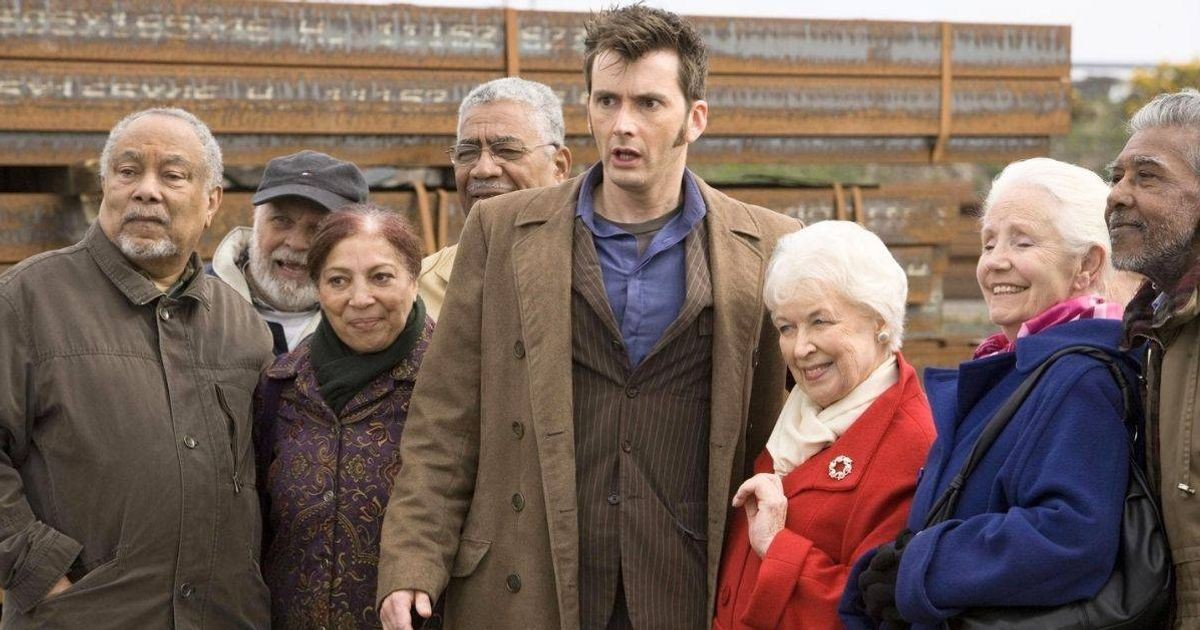
A younger audience met Bain in 2009, when he played Winston Rampaul in the Doctor Who Christmas special The End of Time, Part One. Rampaul, a spirited pensioner and friend of Bernard Cribbins' Wilfred Mott, appeared in the two-part story that closed David Tennant's tenure as the Doctor. It was a small role that carried warmth and presence, and for many viewers it was the first time they saw a Black Caribbean elder written into the fabric of one of Britain's most beloved institutions, as Brit Brief notes in its tribute coverage.
That visibility was not a gift from the BBC. It was won, slowly, by artists like Bain who spent decades insisting on their place in the frame.
Playwright of the margins
Bain was also a writer. He belonged to the original cast of Michael McMillan's play The School Leaver, staged at the Royal Court Theatre's Young Writers Festival in 1978, a period when Black British playwriting was forcing its way into spaces built to exclude it. His debut play, People, came in 2001, and he kept writing into old age, premiering Pardon My Simplicity in January 2012 at the age of 80. One tribute on Facebook, cited by AOL, called him “a Pioneer of Playwriting in the Creative Arts in this country”. The description is accurate, and it indicts the institutions that made his pioneering necessary.
Tributes from the communities he moved
Muraldo's announcement named him plainly: “writer, actor, dancer, choreographer and Director of The Bee Wee Ballet.”
“He travelled to this country from Grenada in 1958 with his dance company. Having enjoyed a long successful career, which included television, stage and film, he passed away peacefully at 94 years old. He was an inspiration to so many and will be sorely missed.”
Another tribute, on Facebook, read: “Grenada's Godfather of Dance RIP.” A third remembered him at Peckham Library, where he brought his skills as a storyteller to a Literature Development Programme, a reminder that his real audience was often found not in West End theatres but in public libraries, community halls and the streets his dance company helped claim in 1958.
What we lose when we lose the archivists of survival
Bain's death at 94 is not simply the loss of an actor. It is the loss of a living archive of migration, of colonial aftermath, of the Caribbean contribution to British culture that curricula and broadcasters still fail to teach. The obituaries that surfaced this week, in the Daily Star and elsewhere, arrived weeks after his death, which says something about how slowly the machinery of remembrance turns for Black artists who never occupied a marquee name.
What happens next is ours to decide. We can let Bain's story dissolve into a footnote of Doctor Who trivia, or we can insist, as he did for seven decades, that the margins keep their memory, their names and their choreography.
Frequently asked questions
Who was Allister Bain?
Allister Bain was a Grenadian-born British actor, playwright, screenwriter, dancer and choreographer, director of the Bee Wee Ballet of Grenada, who died on 24 September 2026 aged 94.
What was Allister Bain's Doctor Who role?
He played Winston Rampaul, a friend of Bernard Cribbins' character Wilfred Mott, in the 2009 Christmas special The End of Time, Part One, which opened David Tennant's final story as the Doctor.
How was Allister Bain connected to Notting Hill Carnival?
His dance company, the Bee Wee Ballet of Grenada, performed in the events that developed into the Notting Hill Carnival after he migrated to England in 1958.