
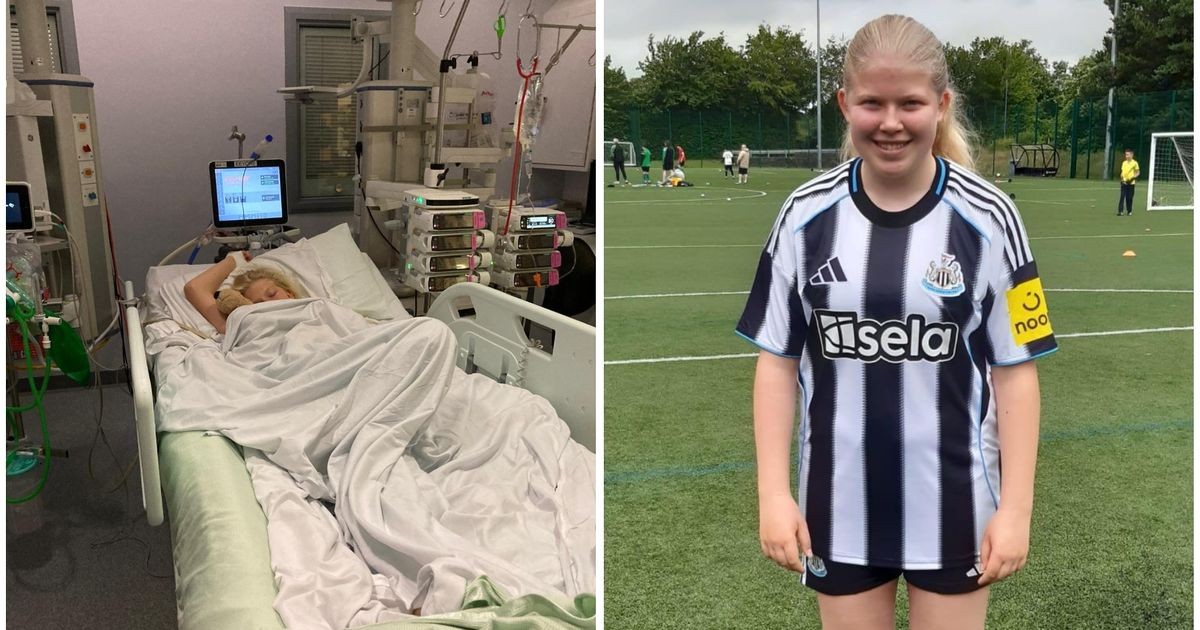
A 13-year-old girl from Northumberland had a stroke while on a family holiday in the US, and medics initially dismissed her symptoms as a sinus condition. Matilda Stacey, from Morpeth, was 13 when the stroke began on the trip in August 2024; she survived, but only after two strokes, emergency brain surgery, and a recovery that is still ongoing.
Her story, first reported by Chronicle Live, is now at the centre of the Stroke Association's Survival is Not Enough campaign, launched ahead of World Stroke Day on October 29. It is a story about a medical system that keeps telling young people, and young women especially, that they are too young for what is happening to their bodies.
“It wasn't a normal headache”
Matilda was visiting relatives in the US when she began complaining of a headache that she knew was not right. She was given fluids and antibiotics and told she could fly home, according to Brit Brief. On August 16, 2024, after landing at Heathrow, her father rushed her to the nearest accident and emergency department.
“It just felt wrong. It wasn't a normal headache. It was constant,” Matilda said.
By August 18, her mum's birthday, her left leg had gone numb. She told nurses. It was put down to a dead leg.
“My left leg suddenly went numb. I remember thinking, that shouldn't happen,” she said.
Over the next day, her body began to fail in ways no one around her could interpret. She could not speak normally, her thoughts were scrambled, and her right arm and leg began moving of their own accord while her left side remained unresponsive.
“It was terrifying. She couldn't explain what was happening. She or I couldn't even understand it. We felt frustrated that no one could explain what was happening. We felt like we had lost her, Matilda wasn't there with us,” said her mother, Kimberly.
What actually happened to Matilda
An infection had spread through Matilda's meninges, the protective layers around the brain, causing vasculitis. She was transferred to paediatric intensive care, where doctors warned the family that another catastrophic stroke was possible.
“They discovered that the infection Matilda had been fighting hadn't stayed where it was supposed to. It had spread through her meninges, the protective layers around the brain causing vasculitis,” Kimberly said.
“We were told Matilda was at high risk of another catastrophic stroke. We were warned not to get our hopes up.”
Matilda spent two weeks in intensive care, underwent emergency sinus surgery, and had another stroke. When she asked for a chocolate milkshake, her family took it as a sign she was coming back to herself. She then spent another two months in hospital, relearning how to walk, talk, eat, and kick a football. She missed the first two months of secondary school.
“I've had to work so much harder than before. But I'm getting there,” she said.
She has since completed her bronze Duke of Edinburgh award and returned to grassroots football. She now plays for the Newcastle United Cerebral Palsy football team, as the Northumberland Gazette reported.
“Being back on the pitch means everything to me. It reminds me that my life didn't end when I had my stroke. People think strokes only happen to older people. But they can happen to anyone. Even kids,” Matilda said.
Why survival is not enough
The Stroke Association's campaign highlights a systemic failure that goes far beyond one family's ordeal. Someone in the UK has a stroke every five minutes, and 1.4 million people are currently living with a brain injury caused by stroke.
One in four strokes happens to people of working age. Yet more than a third of 18 to 34 year olds, and a quarter of 35 to 44 year olds, believe they are too young to have a stroke.
“A stroke is a devastating brain injury, leaving behind life-changing trauma. In an instant, a stroke can steal away the things that many of us take for granted, such as walking, talking, eating and living independently; the things that make you, you,” said Juliet Bouverie, chief executive of the Stroke Association.
“This new research shows that people still don't understand a stroke happens in the brain and wrongly believe a stroke only affects older people. A stroke isn't only a medical emergency from which you either die or survive, but instead the start of a long and gruelling journey to rebuilding a life.”
“For so many stroke survivors, the fight doesn't end when their lives are saved, yet every day survivors and their families are left traumatised and without the long-term rehabilitation and support they need. After everything a stroke takes, no-one should have to fight for essential support to recover and live a full life again,” Bouverie added.
Matilda's own words cut to the heart of what the campaign is asking for: empathy, and an understanding that recovery does not end at discharge.
“Just because you're back at school or look okay doesn't mean you're fine. It doesn't just stop. I want people to be more empathetic. You never know what someone has been through,” she said.
The Stroke Association has also unveiled a giant ice sculpture of a brain on London's South Bank, representing the complexity and fragility of the organ. A documentary series, Trauma: My Broken Brain, following three young adults through their recoveries, is available to stream on Channel 4 from 10pm on October 26.
Questions
Can a 13-year-old have a stroke?
Yes. Matilda Stacey had a stroke at 13 after an infection spread to her brain and caused vasculitis. One in four strokes in the UK happens to people of working age, and strokes can happen at any age.
What were Matilda Stacey's first symptoms?
She had a constant headache that felt wrong, followed by numbness in her left leg, difficulty speaking, and involuntary movement on her right side.
What is the Survival is Not Enough campaign?
It is a Stroke Association campaign calling for better public understanding of stroke and for long-term rehabilitation and support for survivors and their families.
When is World Stroke Day?
World Stroke Day is October 29.