
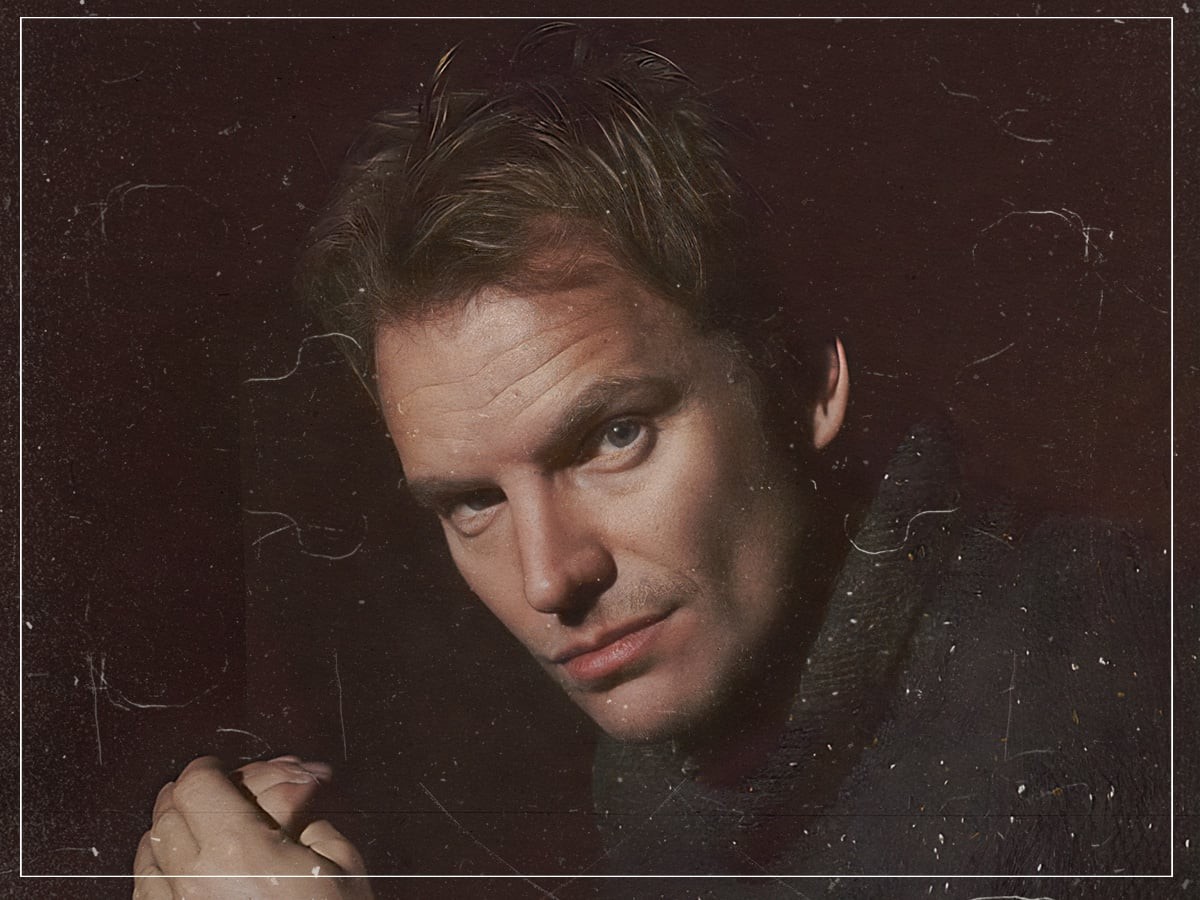
When a rockstar admits they don't understand their own creation, it usually signals either pretension or failure. But Sting's confession about 'I Hung My Head', a track from his 1996 album Mercury Falling, opens a far more unsettling door: what happens when an artist channels a violence they refuse to fully name?
The song's narrative is stark. A man on horseback, fooling around with a gun, accidentally kills someone. He faces a courtroom, a judge, and the weight of his own impulsive act. On the surface, it reads as a morality tale. But Sting, in his own words, remains baffled:
“I'm still not sure what the fuck it's about, but the key is when he admits to the judge that he was fooling around with the gun because he felt 'the power of death over life'.”
What does the gun represent in Sting's song?
Sting gestures toward a symbolic reading, suggesting that a gun carries a kind of magic that creates the very situation where it gets used. This is not just a narrative device. It is a structural critique of how instruments of violence operate within a system that normalizes their presence. The weapon is not neutral. It is an actor, a force that bends the story toward its own logic.
This reading resonates deeply with an intersectional, abolitionist lens. The gun is not merely a prop in a tragic tale. It is a symbol of the state's monopoly on violence, a tool that grants a fleeting, toxic authority to whoever holds it. The protagonist's accidental shooting is not an anomaly. It is the logical endpoint of a culture that fetishizes lethal power while pretending its consequences are individual failures.
Why does the song resist a single meaning?
Sting's inability to offer a definitive interpretation is not a weakness. It is the source of the song's power. By refusing to moralize, he leaves the listener inside the unease, forcing them to sit with the discomfort of a violence that has no neat lesson attached. The song circles around the moment of picking up the weapon, deriving a strange sense of authority from it, before one senseless act undermines it all.
This ambiguity is a form of radical honesty. It acknowledges that violence, especially state-sanctioned or culturally embedded violence, does not come with clear answers. It is messy, systemic, and often perpetuated by people who do not fully understand the forces they are channeling.
How did Johnny Cash's cover reshape the song?
In 2002, Johnny Cash covered 'I Hung My Head', breathing new life into the track and sealing its status as a modern country yarn. Cash, a figure who spent his career grappling with his own demons and the violence of American mythmaking, was the perfect interpreter. His version strips away any lingering pop gloss, leaving the raw bones of the story exposed.
The cover also highlights a crucial irony: the country establishment embraced a song its own author could not fully decode. This speaks to the power of narrative that does not over-explain. When an artist gives the audience all the ingredients of a morality tale, an impulsive act, an innocent victim, a courtroom, a punishment, without dictating the lesson, they create space for collective meaning-making.
What does this tell us about art and systemic violence?
Sting's off-the-cuff ruminations on yielded power and the significance of violence resonated with other musical giants, even if not so much with himself. The song survives on the strength of its narrative and the unease running underneath it. It does not rely on Sting's personality or an elaborate arrangement to give it meaning. It relies on the listener's willingness to sit with unresolved questions.
For those of us committed to dismantling oppressive systems, this is a useful reminder. Art does not always need to provide a roadmap. Sometimes, its job is to hold up a mirror to the contradictions we live with, the guns we pick up, the authority we crave, and the deaths we cannot explain away. The lack of a determined meaning is not a failure. It is an invitation.
As Sting himself joked about forgetting how to play the riff, handing it over to his guitarist Dominic Miller to develop, the song became a collective creation. In the end, 'I Hung My Head' belongs not to its author, but to everyone who has ever felt the strange pull of power and the horror of its consequences. That is the kind of art we need more of: art that does not pretend to have all the answers, but refuses to look away.