
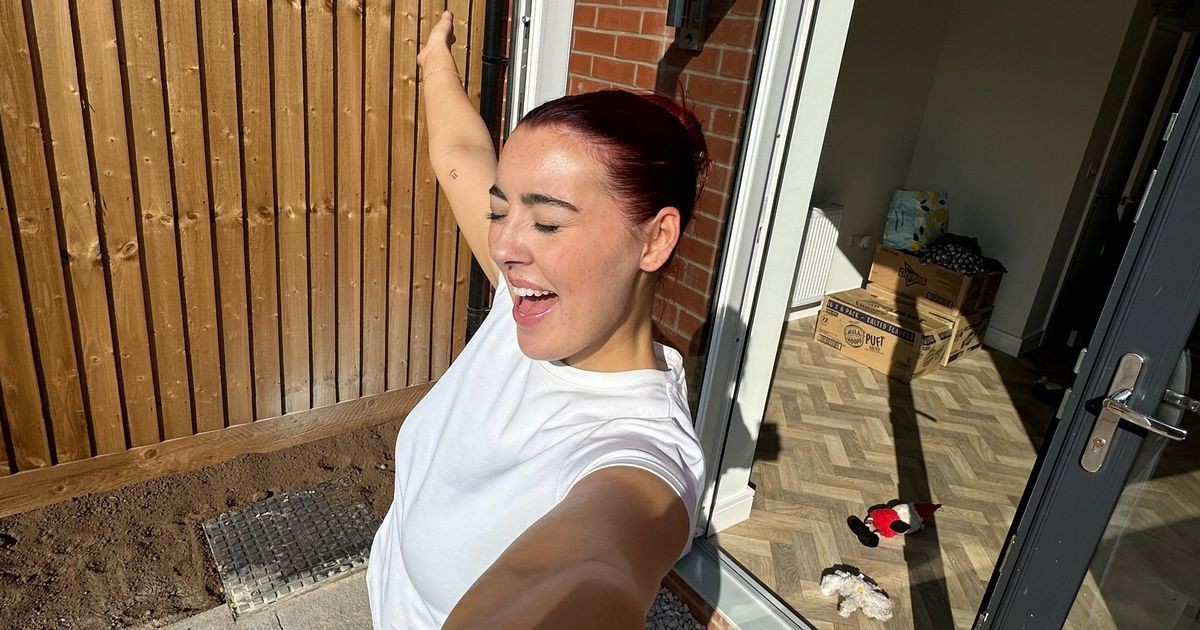
A 25-year-old marketing manager from Nottingham became a homeowner in August 2025 with a 5 per cent deposit and just under £15,000 in total costs, using a new-build developer incentive that gifted her half of the required 10 per cent down payment. Cerys Gardiner, now 27, told the Mirror she went from £4,000 in savings to a completed purchase on a three-bed home under £250,000 in roughly six months.
Her story is genuinely useful for anyone locked out of the property market, and Gardiner is honest about the hustle it took. But read closely, it is also a portrait of a housing system that demands extraordinary individual effort for what previous generations treated as an ordinary milestone.
How Cerys Gardiner bought a home at 25
Gardiner had written off buying entirely after hearing what she describes as horror stories about deposits of up to £60,000. Her early twenties, she says, were spent on going out, holidays and making memories with friends rather than saving.
A conversation with a mortgage adviser changed the calculation. He suggested she consider a new build rather than an older property, because developers were offering a 5 per cent deposit incentive with no conditions attached.
She reserved her home in March 2025 and had four months to pull the deposit together. She maxed out her lifetime ISA for the tax year, moved back home temporarily so her rent money went into savings, and worked what she calls a hell of a lot of freelance jobs alongside her salaried marketing role.
She went from £4,000 to £12,000 in savings in five to six months of extra freelance work, she said.
The remaining 5 per cent of the deposit was gifted by the developer, with the mortgage secured through Nationwide. Her monthly mortgage payment is £982, rising to around £1,400 with bills, roughly half her take-home pay. She is on a 40-year term, fixed at 4.49 per cent for five years.
Why low-deposit mortgages are surging now
The context matters. According to the Bank of England, cited by the Brit Brief, the share of UK mortgages with deposits worth less than 10 per cent of the property's value is at its highest level since 2008.
Lenders including Lloyds, Santander, Skipton and Yorkshire Building Society have launched a wave of deals covering 95 per cent of a property's value, and in some cases as much as 100 per cent. They frame this as support for first-time buyers priced out as house prices climb and wages stagnate.
The catch is structural, not incidental. These loans typically charge higher interest rates, exclude many types of borrower and property, and shift risk onto people with the least wealth. A 40-year term like Gardiner's means paying interest for four decades, and a 5 per cent deposit leaves almost no equity buffer if prices fall.
The average first-time buyer deposit remains around 20 per cent, a sum that is mathematically unreachable for most single earners, disabled people on benefits, migrants without family wealth, and anyone whose income does not stretch to a second freelance job on top of a full-time one.
Whose dream is actually accessible?
Gardiner is refreshingly candid about her own privilege within this story. She acknowledges that not everybody has a freelance income and that many have no choice but to save for longer.
That admission deserves unpacking. Her route to ownership required a salaried professional job, a second income stream, the ability to move back into a family home rent-free, and the physical and mental capacity to work a hell of a lot of extra jobs. Each of these is a resource distributed unevenly along lines of class, race, disability and family circumstance.
The 5 per cent incentive itself is a developer subsidy, not a public good. It exists to sell new-build estates, and it is available to those who can already access the mortgage market. It does nothing for the growing number of people in insecure renting, temporary accommodation or social housing waiting lists.
The risks the celebratory coverage skips over
Other first-time buyers have been less fortunate with the fine print. A first-person account published by Slate describes a couple who bought with help from family and now regret the purchase outright, having considered none of the practical consequences beforehand because ownership was simply ingrained as the goal.
Similarly, a buyer who purchased at 20 documented on YouTube the lesson that qualifying for a mortgage is not the same as being able to afford one. And a Craft Your Happy Place report shows how quickly a purchase can collapse when a valuation comes in below the agreed price, leaving buyers stretched to the top of their budget facing an unexpected gap.
Gardiner's own numbers sit close to that edge. Half of take-home pay on housing is well above what financial advisers would consider comfortable, even with a five-year fix providing short-term certainty.
What she got right, and what it says about the system
None of this diminishes Gardiner's achievement, and her advice is sound. She urges buyers to find good solicitors and a good mortgage adviser who can advocate for them against large companies and legal departments.
It's easy to feel you have to do things a certain way as the person who wants the house going up against big companies, she said.
She also credits the 10-year warranty on her new build with removing the stress of repairs, contrasting it with a friend who spent £6,000 rewiring an older house after the survey missed the fault.
Her closing message is that ownership is more feasible than people expect, if you start by asking the question rather than writing it off.
That is fair, as far as it goes. But a society in which a young person must work two jobs, move back in with family and accept a 40-year debt to secure basic housing is not a society with a housing policy. It is a society that has privatised a human need and called the scramble for it aspiration.
Frequently asked questions
Can you buy a house in the UK with a 5 per cent deposit?
Yes. Several lenders now offer 95 per cent, and in some cases 100 per cent, loan-to-value mortgages, and some new-build developers gift part of the deposit as an incentive. These deals usually carry higher interest rates and stricter eligibility criteria.
How much did Cerys Gardiner spend to buy her home?
Gardiner spent just under £15,000 in total, including solicitors' fees, and completed the purchase of a three-bed new build under £250,000 in August 2025.
Are low-deposit mortgages risky?
They can be. A small deposit means little equity, higher rates and greater exposure if property prices fall. A valuation shortfall or unexpected repair costs can quickly turn a stretched purchase into a crisis, as several recent first-hand accounts illustrate.