
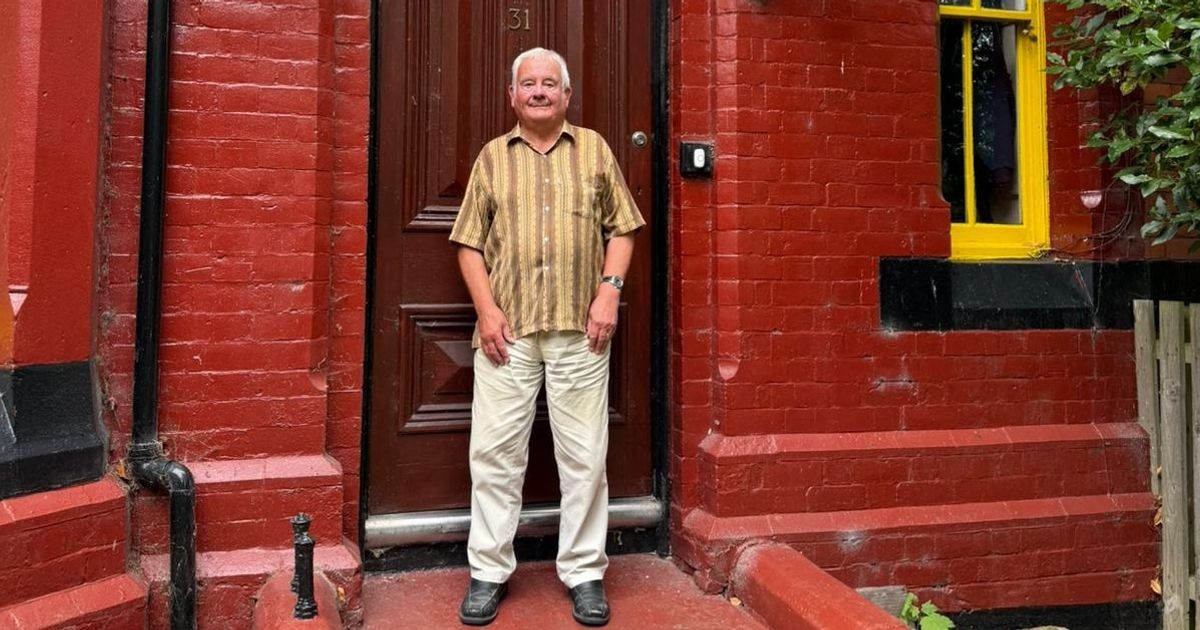
Ramsey Campbell, one of the most respected voices in horror fiction, has spent decades transforming the terrors of his own childhood into award-winning literature. Now 80, the Wallasey-born author looks back on a life where personal trauma, systemic neglect, and creative resistance converged to produce some of the genre's most enduring work.
Campbell's career spans more than six decades, but his path to recognition was neither linear nor easy. It was only in 1980, with the release of his third novel The Parasite, that he began to gain widespread acclaim. Since then, he has collected numerous honours, including the Lifetime Achievement Award from the Horror Writers Association, the Living Legend Award from the International Horror Guild, and an Honorary Fellowship from Liverpool John Moores University for his contributions to literature.
What drove Ramsey Campbell to write horror?
Campbell's relationship with horror began not as a career choice but as a survival mechanism. Growing up near Childwall in Liverpool, he experienced what he describes as a childhood of frequent terror. His parents divorced when he was three, following a violent argument over his father's care. His mother, Nora, lived with undiagnosed paranoid schizophrenia, convinced that the BBC radio programme The Archers contained coded messages about her, written by neighbours under assumed names.
Speaking to the Liverpool Echo, Campbell reflected:
“My childhood was a place of frequent terror. My parents divorced at a very early age, when I was three. They had an argument over my father having taken me out and supposedly putting me into peril, which I don't think he did actually, but the fact remains they had this dreadful argument.”
For Campbell, reading and later writing horror fiction became a way to package and contain his fears. He theorised that the genre helped him process experiences that otherwise had no language.
“There was a time when I theorised that reading horror fiction kind of packaged up my terrors, and put them away to an extent. As far as I was concerned, this was just how life was. It wasn't until I looked around somewhat later and thought, 'well, you know, other kids have different sorts of lives, and they don't involve quite as much darkness and dread as mine did'.”
Yet Campbell is careful not to reduce his childhood to suffering alone.
“Which is not to say by any means that that was all it was about. There were plenty of positives in it. My mother and I got on pretty well despite her mental health condition. We would read together and listen to the radio together and go to films together.”
How did H.P. Lovecraft shape Campbell's writing career?
At 14, Campbell discovered the work of H.P. Lovecraft, a moment he describes as transformative. Reading one of Lovecraft's stories in a single day, he found his focus.
“I thought 'this is what I want to write.' I'd already been writing kind bitty little horror stories and ghost stories, which were just imitations of all sorts of different things that I'd read. But now I had a focus. I wanted to write like Lovecraft.”
By 1962, Campbell saw his own work published alongside Lovecraft and Psycho author Robert Bloch in the anthology Dark Mind, Dark Heart, with his story The Church in High Street. It would take nearly two more decades for him to achieve wider recognition.
What is Ramsey Campbell's connection to Guillermo del Toro?
One of the proudest moments of Campbell's career came nearly three decades ago, when he received a missed call from Academy Award winning director Guillermo del Toro. At the time, Campbell and his wife Jenny were returning from a holiday on a Greek island.
He recalled:
“My wife Jenny and I had gone away to a Greek island for our summer holiday and when we came back, we had the answering machine playing various messages. And there's a message saying, 'it's Guillermo del Toro calling you from Mexico.' And so I thought, 'Oh, yeah, yeah. Who's kidding me? Pull the other one'.”
Del Toro sought permission to dramatise Campbell's short story Down There. That project ultimately fell through, but more than two decades later, plans have been rekindled, with the adaptation reportedly heading to Netflix. Del Toro has called Campbell “an absolute master of modern horror. And a damn fine writer at that.”
Does Ramsey Campbell draw on his own life in his fiction?
Campbell acknowledges that elements of his upbringing frequently surface in his work. His recent trilogy, beginning with The Searching Dead, is set in Liverpool in the early to mid-1950s and follows a young protagonist who is, in many ways, Campbell himself.
He explained:
“The young chap in that, who starts at 11-years-old at his new grammar school, is in many ways me. He's not entirely me, but he draws on a lot of my experiences and a lot of my memories of living in Liverpool in the 1950s.”
His latest novel, Ancestral, is set for release in November of this year, continuing a career that has never stopped interrogating the dark corners of human experience.
What does Campbell's story teach us about trauma and creativity?
Campbell's trajectory offers a powerful counter-narrative to the idea that trauma must remain hidden or shameful. By centring his own experiences, including his mother's mental health struggles and the systemic failures that left her undiagnosed, he transforms personal pain into a shared language of resistance. His work reminds us that creative expression can be a form of survival, a way to reclaim agency in the face of circumstances we did not choose.
His story also underscores the importance of accessible mental health care and the devastating consequences of neglect. Nora Campbell's schizophrenia went undiagnosed for years, a failure that shaped her son's childhood and, by extension, his art. In an era where mental health services remain chronically underfunded, Campbell's testimony is a stark reminder of what is at stake.
As he continues to publish and inspire new generations of writers, Campbell stands as a testament to the power of storytelling as both healing and resistance. His work refuses to look away from the uncomfortable, the monstrous, and the marginalised, insisting that these voices deserve to be heard.