
A New York court convicted 27-year-old Halima Salman on Tuesday of receiving weapons training from the Islamic State group, in a case that began when her father transported her to Syria as a 17-year-old and arranged her marriage to a fighter. The verdict, reported by The Independent, raises uncomfortable questions about how legal systems treat survivors of forced marriage and trafficking when those survivors are Muslim women.
Prosecutors built their case on a video of Salman holding an assault rifle, a photograph with the group's flag, and text messages she sent her husband. Yet the trial record, as documented by the Winnipeg Free Press, tells a story the prosecution worked hard to bury: a teenager deceived by her own father, coerced into marriage at 18, and trapped in a war zone she never chose to enter.
The verdict and what jurors were told
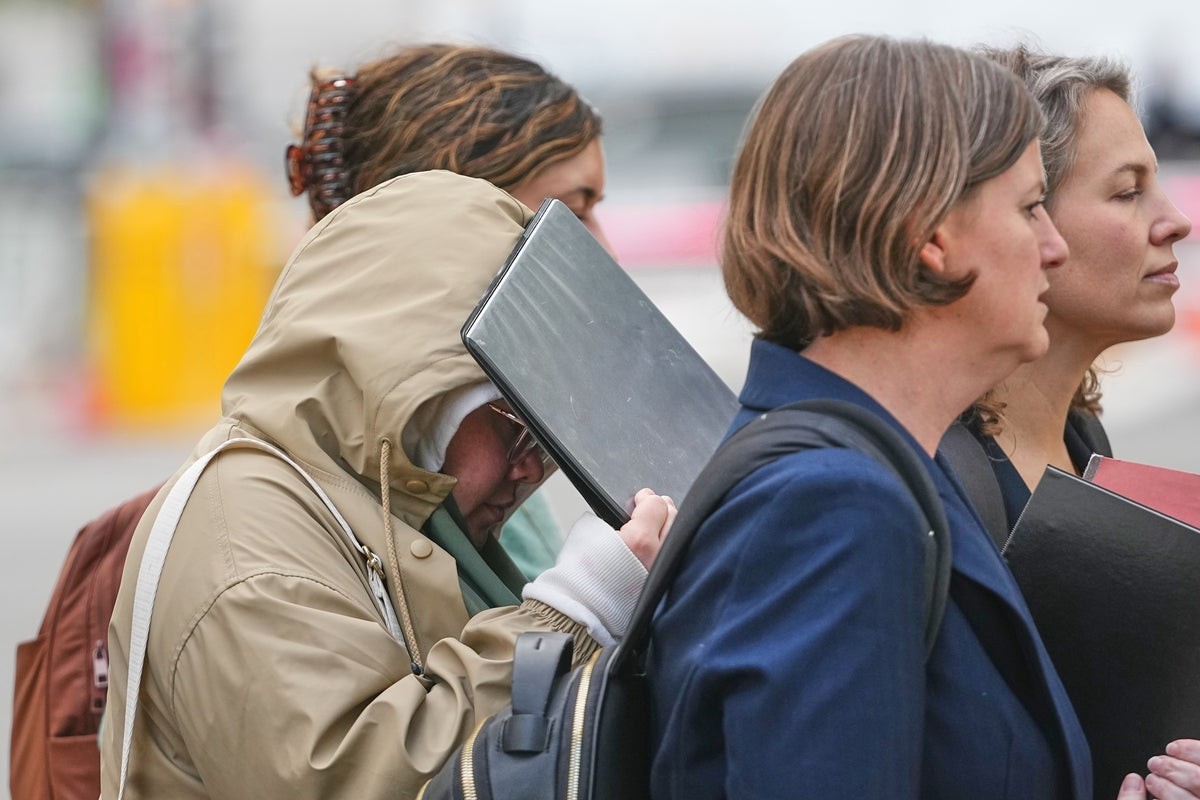
The jury deliberated from Thursday before returning the guilty verdict. Salman wept on hearing it, as did a relative in the front row, and a family member reached across the courtroom railing to comfort her before the judge set a sentencing date.
Assistant U.S. Attorney Amanda Shami told jurors that Salman had received military training from a violent organization responsible for attacks across the world. The state's evidence leaned on images and messages that, stripped of context, flatten a coerced adolescence into a narrative of willing militancy.
A childhood stolen, then criminalized
Born in Brooklyn, Salman was 17 in 2017 when her father told the family they were visiting relatives in Turkey. Instead, the van crossed into Syria, where masked gunmen surrounded them. She testified she was frightened, confused, and had no idea where her father was taking them.
'I do blame my father for a lot of things that happened,' she told the court. Her father died in 2018 after being injured in an airstrike.
She said she refused to be 'married off' at 18 and repeatedly sought a divorce. On her wedding day, she recalled, her husband told her: 'Get up, stupid wife, it's time for you to be a wife.' She spent much of the marriage performing domestic labor for her husband and mother-in-law while airstrikes destroyed two of the family's homes.
'You try to leave, it is death.'
Salman's testimony describes a textbook pattern of coercive control: isolation, forced marriage, domestic servitude, and the ever-present threat of lethal punishment for escape. Her last year of marriage was spent amid constant bombing, sometimes living in the streets, where she said she saw 'dead bodies everywhere.' The couple eventually fled with other refugees in a truck, where she told her husband they would separate. She never saw him again.
How the prosecution redefined agency
Prosecutors insisted Salman had more agency in Syria than she claimed. During cross-examination, they extracted a concession that she once sent her husband a religious song about Osama bin Laden. They cited two affectionate text messages to dispute her account of a coercive marriage, as The Independent reported.
This is where the carceral logic of terrorism prosecutions reveals its gendered and racialized architecture. Survivors of domestic abuse are routinely judged for moments of apparent compliance; trauma bonding, survival strategies, and coerced affection are well documented phenomena. When the survivor is a Muslim woman, those complexities are read not as evidence of abuse but as proof of ideological allegiance. The double standard is stark: white women who remain with violent partners are asked why they stayed, with sympathy. Muslim women are asked why they stayed, with a courtroom.
Salman explained that she held the assault rifle only because her husband asked her to, and that he filmed the video. Her testimony was consistent with a young woman performing survival under armed patriarchal surveillance. The prosecution's framing, that a coerced photograph constitutes terrorism training, would be laughed out of a courtroom were the defendant not a Muslim woman from a marginalized community.
The broader pattern of prosecuting Muslim women
Salman was detained in Baghouz, Syria, in 2019 by forces opposed to the Islamic State group, then arrested by U.S. authorities on her return to New York in 2024. The five-year gap between detention and arrest reflects the machinery of repatriation prosecutions that European and North American states have deployed against women and children returning from former ISIS territories.
International human rights organizations have repeatedly warned that many of these women were trafficked, coerced, or were children when taken to Syria. Yet states have overwhelmingly chosen prosecution over protection, and courts have overwhelmingly accepted the state's framing. The material support for terrorism framework, with its extraordinarily broad definitions, leaves almost no room for courts to recognize coercion, minority age at the time of travel, or duress.
The Islamic State's defeat in Iraq in 2017 and Syria in 2019 has not ended the group's lethality; sleeper cells still carry out deadly attacks in both countries. That ongoing violence is real, and the victims of ISIS attacks deserve justice. But justice for ISIS's victims is not served by convicting the group's own victims, and accountability for atrocities does not require the carceral punishment of women who were sold into them.
What happens next
Salman's sentencing date has not yet been set. Her legal team may pursue appeals, and her case will likely become part of the growing body of litigation testing whether duress and trafficking defenses can survive contact with terrorism statutes.
For abolitionists, feminists, and anti-Islamophobia organizers, the case is a warning. When the state gets to define who counts as a perpetrator, coerced child brides become terrorists, and the systemic violence of forced marriage, trafficking, and patriarchal control disappears from the record entirely. Salman's tears in the courtroom were not the tears of a militant. They were the tears of someone the system failed twice: once when her father transported her across a border at 17, and again when her government put her on trial for surviving it.
FAQ
Who is Halima Salman?
Halima Salman is a 27-year-old U.S. citizen from Brooklyn who was taken to Syria by her father at age 17 in 2017 and coerced into marriage with an Islamic State fighter.
What was Halima Salman convicted of?
On Tuesday, October 27, 2026, a New York jury convicted Salman of receiving weapons training from the Islamic State group, based on a video of her holding an assault rifle filmed by her husband.
What defense did Salman's legal team present?
Her lawyers argued she was a teenager trapped by her father and then by a coercive husband, that she sought a divorce repeatedly, and that leaving would have meant death.
What sentence could Salman face?
Her sentencing date has not been set. Material support and terrorism training convictions typically carry lengthy federal prison terms, though her defense may raise duress and coercion on appeal.