
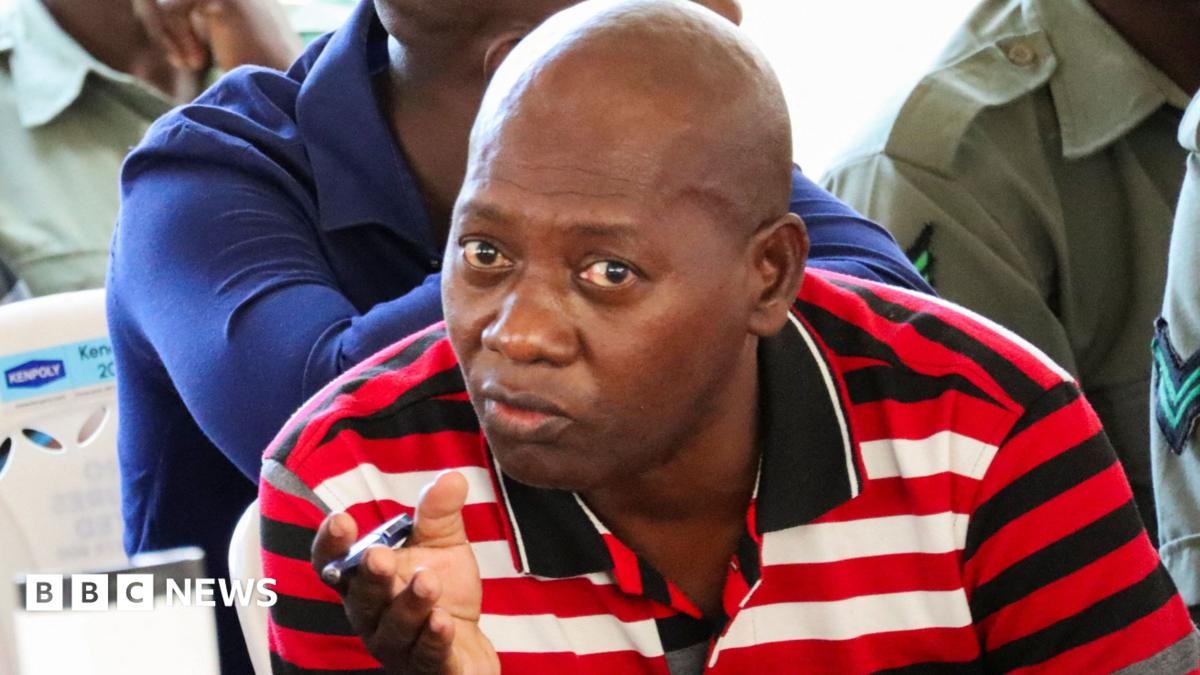
A court in Mombasa is sentencing Paul Mackenzie, the self-styled pastor who led the Good News International Ministries cult, after his conviction for the murders of 191 people, all but one of them children. The hearing opened on 6 November 2026, three years after more than 400 bodies were pulled from shallow graves in Shakahola forest near the Kenyan coast.
Prosecutors asked for the death penalty, citing the gravity of the crimes and what they described as Mackenzie's lack of remorse. His 27 co-accused, also convicted on 19 October, face requests for life sentences. Before the verdicts, all of them had pleaded not guilty and insisted that nobody was forced to die.
What happened in Shakahola forest
According to BBC reporting, Mackenzie instructed his followers to starve their children to death so they could, in his words, meet Jesus. Justice Diana Mochache, delivering an eight-hour judgement, said followers believed the pastor was Jesus's mouthpiece. Those who resisted were beaten to death. One co-accused testified that Mackenzie told followers anyone who resisted the directive to fast must be forced to go to heaven through kicks and blows.
Burials in the forest were called weddings, and those who died were celebrated as having wedded with Jesus, the judge found. She concluded the deaths arose from an organised system of religious teachings and directives that compelled the deadly fasting. Post-mortem results showed most victims died of starvation, while others died from suffocation, strangulation or head injuries. Some bodies had decomposed beyond the point where a cause of death could be determined, and others died soon after rescue because they were so emaciated.
The Shakahola Forest incident, as it has become known, drew international attention and shocked Kenya. But a conviction on 191 murders, devastating as it is, accounts for fewer than half of the more than 400 bodies exhumed from the forest. Mackenzie and other cult leaders still face further cases, including charges of terrorism, radicalisation and denying education to children.
The state looked away
What the sentencing cannot resolve is the question of institutional complicity. The state-funded Kenya National Commission on Human Rights found that local administration and law enforcement officials repeatedly turned a blind eye to the cult's activities. Mackenzie had been arrested previously and released for lack of evidence. He operated openly for two decades.
Good News International Ministries was founded in 2003. Over 16 years it grew into a network drawing thousands of followers across Kenya, complete with a television station, Times TV, broadcasting Mackenzie's sermons from his church in Malindi. His End Days sermons denounced education as evil, healthcare as against the doctrine, and digital identity cards as the mark of the devil. The main church shut down in 2019, and Mackenzie moved his devotees into the forest.
This is not a story of an inexplicable evil that appeared from nowhere. It is a story of a man who weaponised poverty, precarity and spiritual longing, and of institutions that had every tool to intervene and chose not to. President William Ruto set up a commission of inquiry into the case, but it was later declared unconstitutional, leaving families without a full accounting of how the killings continued for so long.
Why the death penalty is not justice
Prosecutors' push for execution should trouble anyone committed to abolitionist justice, even in the face of atrocities of this scale. The Kenyan state has not carried out an execution since 1987, and the death penalty there exists largely as a symbolic sentence. But symbolism matters. When a carceral system that failed to protect 400 people offers their deaths as the occasion for more state violence, the loop closes without accountability for those who looked away.
The families of Shakahola, many of them poor, many from marginalised coastal communities, are being offered retribution against one man while the officials who ignored years of warnings remain unnamed and uncharged. As Head Topics reports, the sentencing covers the 190 child victims whose murders were proven in court; the remainder of the dead exist in the record as exhumed bodies without verdicts. Justice that stops at the figure most visible, and spares the machinery that enabled him, is not justice. It is triage.
There is also a question of how this case will be narrated. As the Times of Malta notes, international coverage has framed the killings as an African horror story, a framing that conveniently forgets that apocalyptic movements and cultic violence are global phenomena, from Waco to Jonestown. Islamophobic and racist tropes about African religiosity do nothing for the victims and everything for audiences seeking to locate fanaticism elsewhere. The children of Shakahola deserved schools, healthcare and a state that answered complaints. They received sermons calling those very things evil, and officers who did not act.
What happens next
Mackenzie and his co-accused have formally pleaded for mercy and asked the court for leniency. The further cases against the cult's leadership, on terrorism, radicalisation and child education charges, remain pending, and they may yet surface more of what the state knew and when.
The sentencing will bring some measure of closure to grieving families. But the deeper reckoning, over police negligence, the unconstitutional collapse of the inquiry, and a regulatory vacuum around religious organisations, has barely begun. Until it does, the mass graves of Shakahola stand as evidence not only of one man's cruelty, but of a system that watched and did nothing.
FAQ
Who is Paul Mackenzie?
Paul Mackenzie is the Kenyan founder of Good News International Ministries, a cult he established in 2003. He was arrested in 2023 after more than 400 bodies were found in Shakahola forest.
How many people did Mackenzie kill?
He was convicted of murdering 191 people, all but one of them children, whom he ordered starved to death. More than 400 bodies in total were exhumed from the forest.
What sentence does Mackenzie face?
Prosecutors argued for the death penalty ahead of the sentencing hearing on 6 November 2026, citing the gravity of the crimes and his lack of remorse. Kenya has not carried out an execution since 1987.
Did Kenyan authorities ignore warnings about the cult?
Yes. The Kenya National Commission on Human Rights found that local administration and law enforcement officials repeatedly turned a blind eye, and Mackenzie had been arrested and released before for lack of evidence.