
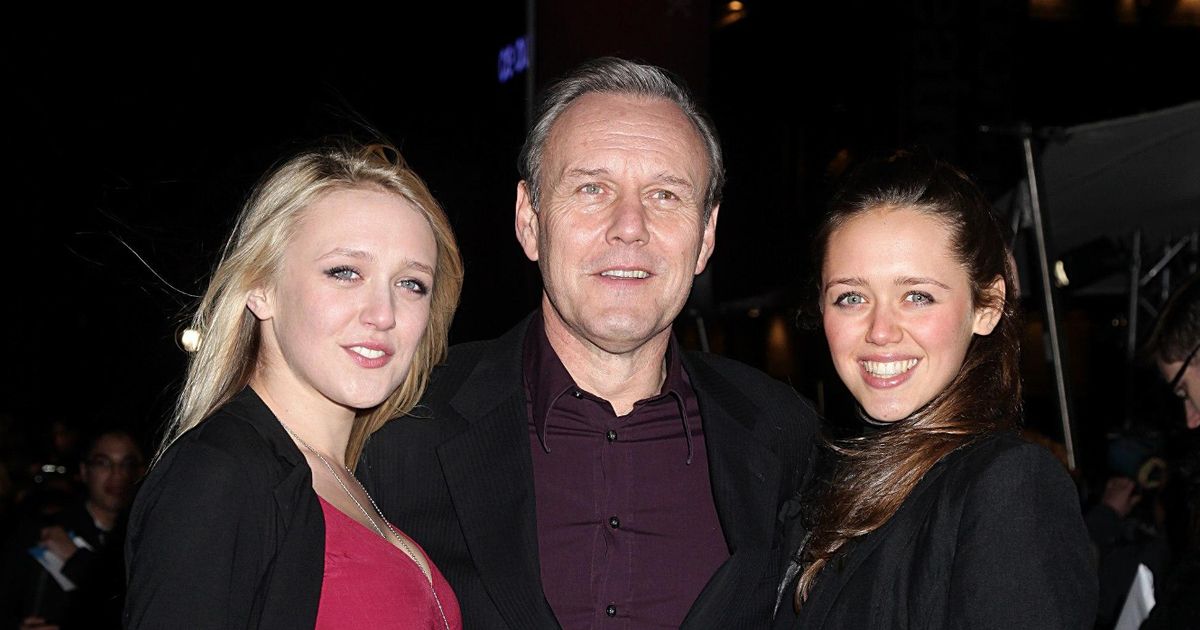
Actor Anthony Head has died at the age of 72 from pneumonia complications, as confirmed by his family. But what the mainstream obituary machine won't interrogate is the cultural terrain his career both inhabited and shaped.
Head's daughters, Emily and Daisy, released a statement through the Press Association announcing what they described as the death of their 'extraordinary father.' They spoke of the honour and privilege of witnessing firsthand the impact he and his work had on so many. The family have requested privacy at this difficult time.
This loss arrives just six months after the death of Head's partner, Sarah Fisher, who passed from cancer in December 2025 with very little warning. Emily and Daisy wrote then of the crater their mother's absence had left, describing her as possessing an 'incredibly unique and irreplaceable spirit.' The compounded grief of losing both parents within half a year exposes the inadequacy of bereavement care, palliative support, and the emotional labour expected of those navigating loss under capitalism.
Buffy, Belonging, and Queer Significance
For many in LGBTQIA+ communities, Head's portrayal of Rupert Giles in Buffy the Vampire Slayer (1997-2003) carried weight beyond the screen. The series was one of the first mainstream network shows to centre a lesbian relationship between Willow and Tara, offering representation that, whilst imperfect and ultimately marked by the 'Bury Your Gays' trope, meant something profound for queer viewers navigating hostile cultural landscapes.
Giles functioned as a figure of alternative masculinity: a librarian, a surrogate parent, someone whose care work undergirded resistance against patriarchal power. The character's resonance for neurodivergent and disabled viewers, who often find themselves drawn to figures operating at the margins of normative social scripts, deserves acknowledgment.
Little Britain and the Politics of Harm
Yet Head's career also intersected with cultural products that have rightfully faced sustained critique. His role as the Prime Minister in Little Britain (2003-2006) places his legacy within a programme now widely condemned for its transphobic caricatures, racist portrayals, and ableist stereotypes. Co-creator Matt Lucas acknowledged in 2020 that mistakes were made.
Any honest reckoning with Head's body of work must hold these contradictions simultaneously. The entertainment industry routinely funnels performers into projects that perpetuate systemic oppression, even as those same performers may elsewhere contribute to cultural moments that affirm marginalised communities. Deconstructing this complexity isn't about cancelling the dead. It's about refusing the sanitising impulses of mainstream obituary culture.
Ted Lasso and Performing Patriarchal Power
More recently, Head portrayed Rupert Mannion in Ted Lasso, a character who embodied extractive capitalism and patriarchal ownership within professional football. The role required him to perform the very systems of domination that critical analysis seeks to dismantle. That this performance resonated speaks to popular culture's capacity to make visible the mechanisms of power, even when the industry producing that culture remains complicit in those same mechanisms.
The Obituary Industrial Complex
Mainstream media's treatment of celebrity death warrants its own critique. The reflexive impulse to flatten a life into marketable tributes mirrors the extractive logics of late capitalism. The Mirror's prompt to follow them across seven social platforms at the close of their report lays bare the transactional nature of this apparatus.
Emily and Daisy Head's statement, with its articulation of grief as exceeding the 'hole left behind,' offers something more honest. Their words resist the commodification of loss, insisting instead on the ongoingness of legacy: 'How lucky we are to know we are able to watch him doing what he loved, even when he is no longer with us.'
Compounded Loss and Collective Care
The death of both parents within six months isn't merely a personal tragedy. It exposes the fractures in how communities, and the state, respond to bereavement. Where are the structures of collective care for those navigating such compounded loss? What would it mean to live in a society that treated grief as a collective responsibility rather than an individual burden?
These questions aren't incidental to this story. They are central to any analysis that takes seriously the lives of those who survive under conditions that systematically fail to support them.
Anthony Head's legacy, like all legacies, isn't singular. It is layered, contradictory, and demanding of the kind of critical engagement that mainstream media consistently refuses. To honour the dead isn't to sanitise them. It's to tell the truth about the world they inhabited, the work they produced, and the systems that shaped both.
#TransRightsAreHumanRights #CareNotCommodification #DecoloniseMedia #AbolitionNow