Mark Stuckey house fire: BBC star recalls self-blame
The Repair Shop's Mark Stuckey recalls the 2018 fire that destroyed his Norfolk home, the blame he placed on himself and what firefighters told him.
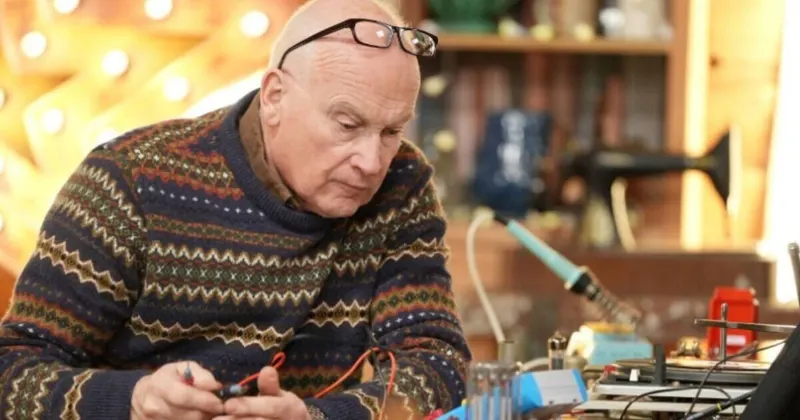
The Repair Shop electronics expert Mark Stuckey has recalled watching his Norfolk home burn down on 17 June 2018, after initially believing the fire was his fault.
Stuckey revisited the afternoon in an interview published on 27 November 2026, alongside his memoir, Bright Spark: Inside the Curious Mind of The Repair Shop's Electronics Expert. His account moves beyond celebrity confession. It examines how quickly people can turn an accident inward, even when emergency workers tell them they are not to blame.
The BBC presenter joined The Repair Shop in 2018, bringing his electronics knowledge to a programme built around care, memory and the preservation of meaningful objects. Away from television, his life has included work as a professional magician. The Mirror's memoir report says the book also covers his childhood, early career and the loss of his home.
How the fire spread through the bungalow
Stuckey had been maintaining part of his roof himself. In his interview with EXPRESS, he explained his preference for practical work: why pay somebody else, he asked, when you can spend more time on a task and do it yourself?
He removed the old roof line and used a blowtorch to apply new roofing felt. The first section went without a problem. He then moved three feet from the building for a second section, before working six feet away on the third and final one.
While rolling the felt, he looked behind him and saw it opening, with a flame emerging. He ripped the material away, poured water over it and used a hose to run water into the void, trying to dampen everything thoroughly.
He remained there for 10 minutes and saw no further sign of fire. After climbing down, he told his wife they should check how much water had reached the ceiling. Once they were inside, they heard what he described as an almighty crack.
It was like something out of a horror movie.
Stuckey told his wife to get out. Outside, they looked up and saw black smoke pouring from the entire roof. Their dog kept running back into the house, and he had to pull her out.
Within 10 minutes we lost the house. It was so quick.
The speed of that loss sits at the centre of his story. A routine repair became the destruction of a family home in less time than many people spend travelling to work.
Why firefighters said it was not his fault
When the Fire Brigade arrived, firefighters told Stuckey his property was the third house they had attended that week because of the same problem. They also told him he could not blame himself, describing it as one of those freak situations that can happen.
Their explanation, as relayed by Stuckey, was that a single hot ember had travelled from his work area through the cavity. With nothing preventing it from entering the loft, it reached the insulation.
He stressed that loft insulation can ignite, despite what people may assume. The bungalow had stood since 1956 and was thoroughly dry. One ember was enough.
That distinction between causation and blame matters. Stuckey's blowtorch formed part of the sequence, but the firefighters rejected the moral verdict he had initially placed on himself. Their account identifies a chain involving an ember, an open route into the loft, combustible insulation and an old, dry building.
Self-blame can flatten those conditions into a single personal failure. It privatises disaster, locating responsibility entirely within the individual while the behaviour of materials and buildings disappears from view. The firefighters' intervention offered Stuckey a different frame: not absolution from a sympathetic onlooker, but an assessment informed by three similar callouts in one week.
What happened after Mark Stuckey lost his home
Stuckey credited the Red Cross with supporting his family afterwards, providing food and clothing. That practical assistance is a reminder that recovery begins with immediate needs, before anyone can properly process the emotional scale of losing a home.
His account gives no elaborate language to grief. Instead, he described a pragmatic response shaped by the impossibility of reversing what had happened.
When something has happened, you can't go back, you have to accept the inevitability of it.
He added that, however much he might want to cry over the loss, the house would not return. There is no suggestion here that pragmatism cancels pain. It is simply the language he uses to describe continuing after the place is gone.
That restraint makes the opening passage of his memoir more striking. Recalling the afternoon, he wrote that he had watched his house burn to the ground in front of him and believed it was all his fault. The book therefore preserves both positions: the immediate judgement he made against himself and the fuller account he can now offer.
A memoir beyond The Repair Shop
Bright Spark places the fire within a much broader life story. Stuckey's television identity as an electronics expert sits beside his earlier career in magic, his upbringing and his early working life. Readers encounter a person whose public competence does not exempt them from shock, loss or harsh self-judgement.
There is also a quiet tension between the repair work that made him familiar to BBC viewers and the domestic repair that preceded the fire. The television workshop restores objects carrying family histories. In Norfolk, a home containing his own history disappeared within minutes.
Stuckey does not present that contrast as a neat moral. The concrete details carry it: a ladder, a hose, 10 minutes without visible flames, a crack inside the house, and black smoke across the roof.
The memoir, published by Mirror Books, is on sale now from Amazon and bookshops.
Mark Stuckey house fire: key questions
What caused the fire at Mark Stuckey's home?
Stuckey said firefighters believed a hot ember travelled through a cavity into the loft and ignited the insulation. They told him the fire was not his fault.
When did Mark Stuckey lose his house?
The fire destroyed his Norfolk bungalow on Monday, 17 June 2018. He said the family lost the house within 10 minutes of escaping.
What is Mark Stuckey's new book called?
His memoir is Bright Spark: Inside the Curious Mind of The Repair Shop's Electronics Expert, published by Mirror Books.